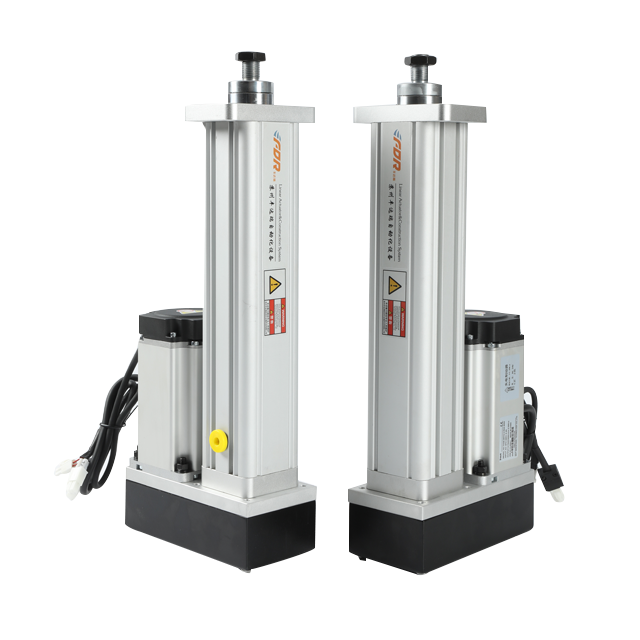
This article compares ball screw and roller screw for 6DOF motion platforms with real 3000-hour test data. Learn their difference in durability, rigidity and motion fidelity, and find out which actuator fits your flight simulation or industrial test project.
Many automation projects suffer from oil leakage, unstable positioning and high‑cost maintenance caused by hydraulic and pneumatic cylinders. Based on real‑world test data, this article analyzes the comprehensive advantages of servo electric cylinders in positioning accuracy, energy consumption and maintenance. It presents three practical retrofit cases including motion simulation platforms, press‑fit testing and clean‑room automation. Common technical pitfalls such as thrust selection, side load and inertia matching are also covered, helping engineers judge whether electric‑cylinder upgrade is suitable for their projects.
How to avoid common 6‑DOF motion‑platform selection pitfalls? This article addresses misrepresented specs, payload‑stroke confusion, improper drive‑system choices and application mismatch. Learn to differentiate nominal vs real‑world performance and match servo‑actuator solutions for your project.
Confused about choosing electric servo 6DOF platform or hydraulic Stewart platform? This blog shows real test data on operating cost, service life, noise, maintenance expense, with factory product photos & comparison charts to help simulator buyers make cost-effective decisions.
This customer success case focuses on a private high-end flight simulation project. Traditional pneumatic and hydraulic motion platforms suffer from obvious latency, unstable precision, loud noise, troublesome maintenance and poor software compatibility, which ruin immersive flight experience. This article introduces how the 6-DOF Stewart platform driven by servo electric cylinders addresses those pain points. Equipped with roller screw servo actuators, millisecond synchronous control and exclusive flight washout algorithm, the fully electric platform delivers lifelike motion feedback, operates quietly without oil leakage and requires minimum maintenance. It achieves seamless connection with MSFS, P3D and other mainstream flight simulation software, becoming an ideal upgrade solution for home-built private flight cockpits.