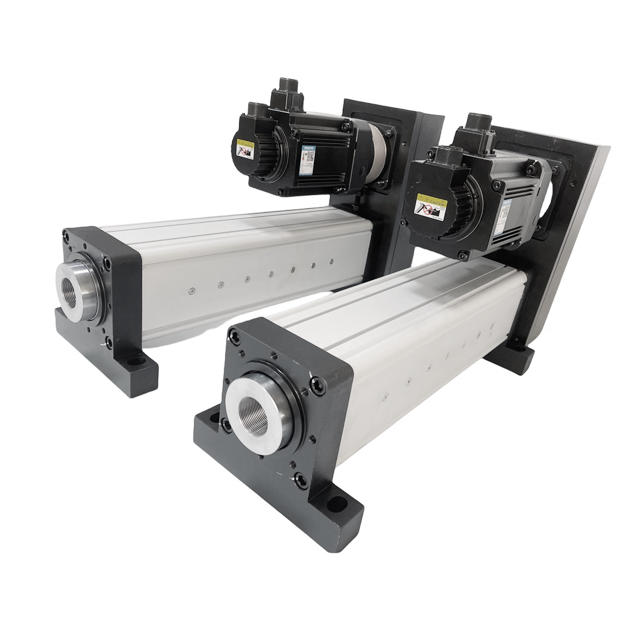
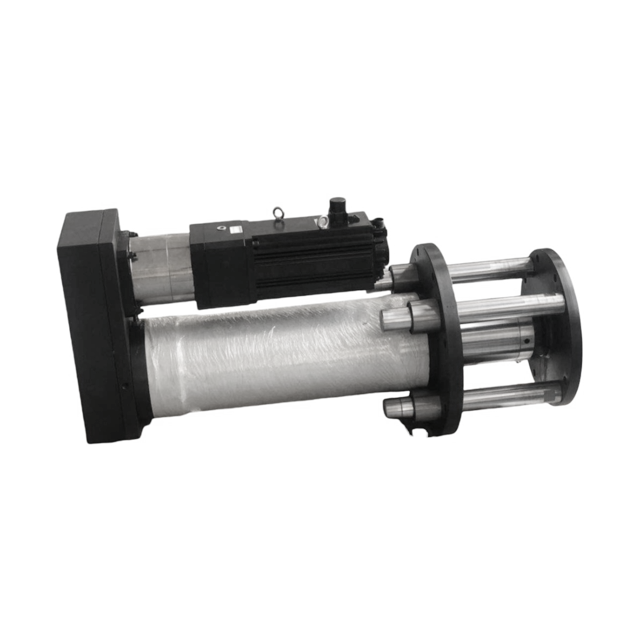
Are you struggling to choose the right electric actuatorfor your project? Selecting the correct actuator is essential for optimal performance in automation. In this article, we’ll explore a 5-step guide to sizing linear electric actuators. You’ll learn how to determine force, speed, stroke, and environmental requirements to ensure reliable operation.
Understanding Electric Actuator Sizing
Key Factors in Sizing Electric Actuators
When sizing electric actuators, several key factors come into play. These include force requirements, speed, stroke length, and environmental conditions. Each of these elements influences the actuator's performance and longevity.
Force Requirements: This is the most critical factor. You need to determine both static and dynamic forces acting on the actuator. Static force is the weight of the load, while dynamic force comes from acceleration and deceleration during operation.
Speed: The required speed of the actuator affects how quickly it can move the load. This is often measured in mm/s or inches/s. Remember, higher speeds can lead to increased wear and tear.
Stroke Length: This refers to the distance the actuator must travel to complete its task. It's essential to choose an actuator that can accommodate the required stroke length.
Environmental Conditions: Consider where the actuator will operate. Factors like temperature, humidity, and exposure to contaminants can affect performance. Ensure the actuator is rated for the specific conditions it will face.
Common Mistakes in Sizing
Many engineers make common mistakes when sizing electric actuators. Here are a few to watch out for:
Ignoring Safety Factors: Always include a safety margin. A factor of 1.5 to 2 times the calculated requirements is advisable to handle unexpected loads or conditions.
Overlooking Dynamic Forces: Focusing solely on static loads can lead to underestimating the forces during acceleration and deceleration, resulting in actuator failure.
Neglecting Environmental Impact: Failing to account for environmental conditions can lead to premature wear or failure. Always check the actuator's IP rating and ensure it matches the operational environment.
Importance of Accurate Sizing
Accurate sizing of electric actuators is vital for several reasons:
Performance: An appropriately sized actuator will operate efficiently, providing the necessary force and speed without strain.
Longevity: Proper sizing reduces wear and tear, extending the actuator's lifespan and reducing maintenance costs.
Cost Efficiency: Oversized actuators can be unnecessarily expensive. By sizing correctly, you save on initial costs and operational expenses.
Safety: Properly sized actuators reduce the risk of failure, which can lead to safety hazards in automated systems.
Step 1: Determine Force Requirements for Electric Actuators
Static and Dynamic Forces
When sizing electric actuators, the first step is to determine the force requirements. This involves understanding both static and dynamic forces.
Static Forces: This is the force needed to hold a load in a stationary position. For example, if you're lifting an object, the static force equals the weight of that object, which is calculated using the formula:
Static Force=Mass×Gravity
Dynamic Forces: These come into play when the load accelerates or decelerates. To calculate dynamic forces, use Newton's second law of motion:
Dynamic Force=Mass×Acceleration
Acceleration can be found by dividing the desired speed by the time it takes to reach that speed.
Triangular Movement Profiles require the highest acceleration forces since they go from zero to peak speed and back to zero instantly.
Trapezoidal Movement Profiles ramp up to speed gradually, reducing peak force requirements.
Calculating Force Requirements
To calculate the total force requirement for an actuator, consider both static and dynamic forces. Add the static force to the dynamic force to get the total force needed.
Here's a simple example:
If you have a load of 10 kg (which exerts a static force of about 98 N) and you want to accelerate it to 1 m/s⊃2;, the dynamic force would be 10 N. Therefore, the total force requirement would be:
Total Force=Static Force+Dynamic Force=98N+10N=108N
Safety Factors in Force Calculations
In engineering, it's crucial to account for unexpected conditions. This is where safety factors come in. A common practice is to apply a safety factor of 1.5 to 2 times the calculated force requirements. This ensures that the actuator can handle unexpected loads or conditions without failure. For example, if your total force requirement is 108 N, you should size your actuator to handle between 162 N and 216 N.
Summary of Key Points
Determine both static and dynamic forces acting on the actuator.
Use appropriate formulas to calculate total force requirements.
Always include a safety factor to account for unexpected conditions.
By carefully calculating these forces, you can ensure that your electric actuator will perform reliably in your application.
Step 2: Define Speed and Stroke Requirements
Once you have determined the force requirements for your electric actuator, the next step is to define the speed and stroke requirements. This is crucial for ensuring that the actuator can effectively meet the demands of your application.
Understanding Stroke Length
Stroke length is the total distance the actuator needs to travel to complete its task. Measure this distance carefully, as it directly influences the selection of the actuator. If the required stroke length exceeds the actuator's capabilities, it won't be able to perform effectively.
For example, if your application requires a stroke length of 500 mm, you must select an actuator capable of accommodating at least that distance. Always consider a little extra length to account for any unforeseen circumstances or adjustments.
Required Speed Calculations
Next, consider how quickly the actuator needs to move the load. This speed is usually measured in millimeters per second (mm/s) or inches per second (in/s). It's essential to note that speed and force often work against each other. Generally, higher speeds can result in lower force capabilities due to mechanical limitations.
To calculate the required speed, think about the following:
Acceleration: How quickly does the actuator need to reach its maximum speed?
Deceleration: How fast does it need to stop?
Both acceleration and deceleration contribute to the overall speed requirements and can significantly impact the actuator's performance.
Movement Profiles: Triangular vs. Trapezoidal
Understanding the movement profile is vital for calculating speed requirements. There are two common profiles:
Triangular Movement Profile: This profile features rapid acceleration, reaching peak speed almost instantly, and then decelerating back to zero. While this profile allows for faster movement, it requires higher forces during acceleration and deceleration, which can lead to increased wear on the actuator.
Trapezoidal Movement Profile: This profile ramps up to speed gradually, maintains a constant speed for a duration, and then decelerates. This approach reduces peak forces and is generally easier on the actuator. It’s often preferred for applications requiring smoother operation and less mechanical stress.
Step 3: Verify Speed Requirements Against Actuator Limits
When selecting an electric actuator, it's essential to ensure that the speed requirements align with the actuator's limits. This step is crucial for maintaining performance and preventing mechanical failures. Here, we will go through three critical checks to verify speed requirements against actuator limits.
Check 1: Critical Speed vs Maximum Speed
Every actuator has a critical speed, which is the maximum speed at which it can operate without experiencing resonance or vibration issues. This critical speed is influenced by the stroke length and the configuration of the screw supports.
To find this critical speed, refer to the actuator datasheet. If your stroke length differs from the standard, you can calculate the actual critical speed using this formula:
Vcrl=Vcrstd⋅(ls2lstd2)
Where:
Vcrstd = Standard critical speed from the datasheet (mm/s)
lstd = Standard stroke length (mm)
ls = Your actual stroke length (mm)
Make sure your maximum cycle speed is below this critical speed. Exceeding it could lead to vibrations, which can cause premature wear or even failure of the actuator.
Check 2: Peak Output Speed vs Required Maximum Speed
Next, check the peak output speed of the actuator. This is the maximum speed the actuator can achieve at its peak performance. Each gear ratio in the actuator will have a different peak output speed.
To ensure compatibility, verify that the peak output speed (Vpmax) exceeds your required maximum speed (Vmax). The datasheet will provide this information, and it's crucial because higher force gear ratios often trade off against maximum speed capabilities.
Check 3: Continuous Output Speed vs Average Speed
Finally, consider the continuous output speed versus the average speed required during operation. Continuous output speed refers to the speed the actuator can maintain over extended periods without overheating.
To calculate the average speed across the entire cycle, use the formula:
Vm=ttot∑(vi⋅ti)
Where:
vi = Speed at each step of the cycle (mm/s)
ti = Time spent at that speed (s)
ttot = Total cycle time (s)
Ensure that the continuous output speed rating (Vcmax) for your selected gear ratio exceeds this average speed. If it doesn't, the actuator may overheat or fail during operation.
Duty Cycle Considerations
Don't forget about the duty cycle, which indicates how long the actuator can operate before needing to cool down. For example, a 25% duty cycle means the actuator runs for 25% of the time and is idle for the remaining 75%. If your application requires frequent operation, ensure you select an actuator rated for a higher duty cycle to avoid overheating.
In summary, verifying speed requirements against actuator limits is crucial for ensuring reliable and efficient operation. By checking critical speed, peak output speed, and continuous output speed, you can confidently select an actuator that meets your application's demands.
Step 4: Verify Force Requirements and Environmental Conditions
In this step, it's essential to ensure that the electric actuator can handle the forces it will encounter during operation without buckling, overloading, or failing over time. This verification involves a series of checks to confirm the actuator's capabilities against the expected operational conditions.
Check 1: Buckling Force vs. Maximum Force
Long strokes under compression can lead to buckling, similar to how a column can buckle under excessive weight. The actuator's datasheet typically provides the standard buckling force (Fbstd) based on its bearing configuration. If your stroke length differs from the standard, you can calculate the actual buckling force using this formula:
Fbl=Fbstd⋅(ls2lstd2)
Where:
Fbl = Actual buckling force (N)
lstd = Standard stroke length (mm)
ls = Your actual stroke length (mm)
Make sure the calculated buckling force exceeds your maximum required force (Fmax) with a comfortable margin. It's crucial to note that longer strokes will significantly reduce buckling strength since the stroke length is squared in the denominator of the equation.
Check 2: Peak Axial Force vs. Required Maximum Force
For each gear ratio available, verify that the peak axial force rating (Fpmax) exceeds your maximum required force (Fmax). The actuator's datasheet will show these limits for each gear ratio and drive stage. Ensuring that the actuator can handle peak forces is vital to prevent mechanical failure during operation.
Check 3: Continuous Axial Force vs. Average Force
Just like speed, calculating the average force across your cycle is essential to verify it doesn’t exceed continuous ratings. Use the following formula to find the average force:
Fm=3ttot∑(Fj3⋅nj⋅tj)
Where:
Fj = Force at each step of the cycle (N)
nj = Number of direction changes at that force level
tj = Time spent at that force (s)
ttot = Total cycle time (s)
Check that the continuous axial force rating (Fcmax) for your chosen gear ratio exceeds this calculated average force. This ensures the actuator can operate reliably without overheating or failing.
Environmental Conditions
Understanding the environment where the actuator will operate is just as important. Consider factors such as temperature, humidity, dust, and exposure to chemicals. These elements can significantly affect the actuator's performance and lifespan.
Temperature: Ensure the actuator can handle the expected temperature range. Extreme temperatures can lead to material degradation or mechanical failure.
Humidity and Dust: Look for actuators with appropriate IP ratings. For example, an IP67 rating can handle dust and brief water exposure, while IP68 offers better protection for harsher conditions.
Corrosive Environments: If the actuator will be exposed to chemicals, consider options with protective coatings or sealed construction to prevent damage.
Life Expectancy
Finally, consider how many cycles the actuator needs to perform throughout its life. Ball screw designs typically last longer and provide better precision than lead screw models, but they often come at a higher initial cost. If your application requires millions of cycles, this factor becomes critical in your selection process.
Step 5: Calculate Power Requirements for Electric Actuators
Mechanical Power Calculations
Calculating the mechanical power requirements for an electric actuator is crucial for ensuring it meets your application's demands. Power is the rate at which work is done, and for actuators, it’s essential to match this with the mechanical needs of your system.
To calculate the mechanical power for each step in your actuator's cycle, use the formula:
Pj=1000vj⋅Fj
Where:
Pj = Power at this step (W)
vj = Speed at this step (mm/s)
Fj = Force at this step (N)
This calculation gives you the power in Watts. Repeat this for each step in your actuator's cycle to determine the maximum power required.
Matching Specifications to Available Models
Once you have calculated the power requirements, the next step is to compare your findings with available actuator models. Check the actuator datasheet for key specifications, including:
Force Range: Ensure the actuator can handle the required force, which can range from 2000N to 40000N or more, depending on your application.
Control Modes: Look for options like on-off, modulating, or continuous operation to match your needs.
System Integration: Consider if you need intelligent control or fieldbus options for automation.
Environmental Protection: If your application is in a hazardous location, check for explosion-proof housing.
Power and Physical Requirements
Alongside power calculations, ensure that the actuator's voltage and current requirements align with your power supply. Key considerations include:
Peak Current Draw: This occurs during acceleration when the actuator pulls maximum power. Ensure your power supply can handle this demand.
Physical Fit: Check dimensions in both retracted and fully extended positions to ensure the actuator fits your installation space.
Mounting Space: Consider space for mounting brackets and any pivoting hardware.
Cable Routing: Allow room for maintenance access and proper cable management.
Mounting Style and Safety Features
Verify that the actuator's mounting configuration suits your application. Common options include:
Clevis Mounts: Ideal for pivoting applications.
Flange Mounts: Best for fixed installations.
Trunnion Mounts: Used when rotation around the actuator’s centerline is needed.
Look for built-in safety features like electrical limit switches, which stop travel automatically to prevent overtravel damage. If precise control is necessary, consider position feedback options.
Iterate if Necessary
If you find that none of the available models meet your requirements, consider adjusting your specifications. You might reduce speed or acceleration to lower force demands or modify the mounting geometry for better mechanical advantage. Alternatively, switching actuator technologies, such as from lead screw to ball screw, may resolve multiple issues at once.
Conclusion
This guide outlines a five-step process for sizing linear electric actuators. It begins with determining force requirements, considering both static and dynamic forces. Next, defining speed and stroke requirements is crucial for optimal performance. Verifying these requirements against actuator limits ensures reliability. Additionally, calculating power requirements helps match the actuator to your application. FDR offers high-quality electric actuators that deliver exceptional performance, longevity, and safety. Their products are designed to meet diverse operational demands effectively.
FAQ
Q: What is an electric actuator?
A: An electric actuator is a device that converts electrical energy into mechanical motion, commonly used to control movements in various applications.
Q: How do I size an electric actuator?
A: To size an electric actuator, determine the force requirements, speed, stroke length, and environmental conditions that will affect its performance.
Q: Why is accurate sizing of electric actuators important?
A: Accurate sizing of electric actuators ensures efficient performance, longevity, cost savings, and reduces the risk of mechanical failure.
Q: What are the benefits of using electric actuators?
A: Electric actuators offer precise control, energy efficiency, low maintenance, and ease of integration into automated systems.
Q: How do I troubleshoot an electric actuator?
A: Troubleshooting an electric actuator involves checking for power supply issues, verifying connections, and ensuring that force and speed requirements are met.