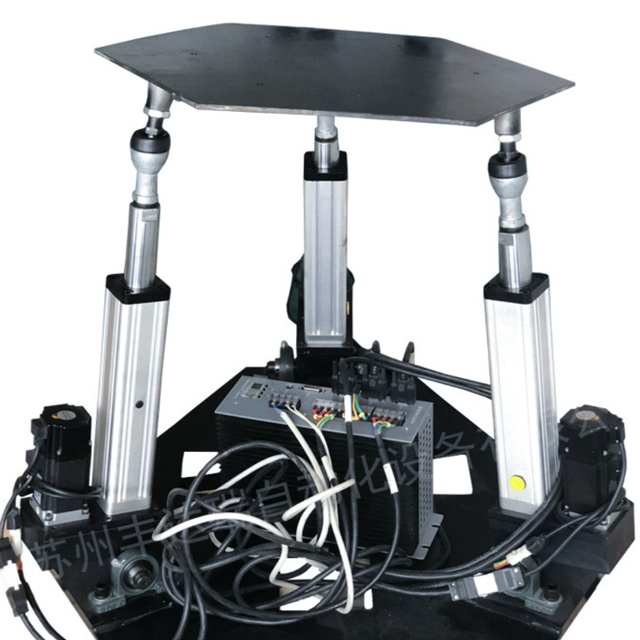
Have you ever wondered how flight simulators create such realistic experiences? The secret lies in the three-axis motion base. This technology is crucial for enhancing simulation and training across various fields.
In this post, we’ll explore what a three-axis motion base is, its importance, and the diverse applications it supports.
Understanding Degrees of Freedom in Motion Platforms
Explanation of 2DOF, 3DOF, and 6DOF
When diving into motion platforms, it’s crucial to understand the concept of Degrees of Freedom (DOF). This term describes the number of independent movements a motion platform can simulate.
2DOF (Two Degrees of Freedom): This configuration typically allows for pitch and roll movements. Imagine a simple setup where the platform tilts forward and backward (pitch) and side to side (roll). 2DOF platforms are often used in entry-level gaming and basic simulators, providing a fundamental sense of motion but lacking the immersive experience found in more advanced systems.
3DOF (Three Degrees of Freedom): This system includes pitch, roll, and yaw. The addition of yaw enables the platform to rotate left and right, enhancing the realism of simulations. 3DOF platforms are popular in racing and flight simulators, as they create a more engaging experience by simulating the dynamics of motion more accurately. Users can feel the effects of turning and tilting, making it a preferred choice for enthusiasts.
6DOF (Six Degrees of Freedom): This is the most advanced configuration, incorporating pitch, roll, yaw, heave (up and down), sway (side to side), and surge (forward and backward). 6DOF platforms offer the most immersive experience, allowing users to feel every movement as if they were in a real vehicle. These systems are used in professional training, advanced gaming, and research applications, providing unparalleled realism.
Comparison of Motion Capabilities
The differences in motion capabilities among 2DOF, 3DOF, and 6DOF platforms can significantly affect user experience.
2DOF: Limited to basic tilting movements, which may not fully engage users in high-speed scenarios or complex maneuvers.
3DOF: Provides a more dynamic experience, allowing users to feel the effects of acceleration, braking, and turning. This setup is ideal for users looking for a balance between cost and immersion.
6DOF: Offers the highest level of realism, simulating all aspects of motion. This system is perfect for training pilots, drivers, or operators in high-stakes environments where precision is crucial.
Applications for Each Degree of Freedom
Each type of motion platform serves different applications based on its degrees of freedom:
2DOF Applications: Suitable for casual gaming and basic simulators. It provides a good entry point for users new to motion platforms.
3DOF Applications: Commonly used in racing simulators and flight training. This configuration enhances the experience by allowing users to feel realistic motions, making it a popular choice for enthusiasts and semi-professionals.
6DOF Applications: Essential for professional training environments, research, and high-end gaming. Users benefit from full-motion simulation, making it ideal for applications requiring intense realism and precision.
In summary, understanding the degrees of freedom in motion platforms helps users choose the right system for their needs. Whether for casual gaming or professional training, knowing the differences ensures a more fulfilling experience.
Key Features of Three Axis Motion Bases
Load Capacity and Motion Range
One of the most critical aspects to consider when selecting a three-axis motion base is its load capacity. This refers to the maximum weight the platform can support while maintaining performance and stability. The load capacity can vary significantly, with platforms designed for standard applications typically accommodating weights from 100 kg to 5000 kg. For specialized uses, such as heavy-duty testing or aerospace applications, some systems can handle even more, exceeding 50 tons.
The motion range is equally important. It defines how far the platform can move in different directions, including heave (vertical movement), sway (side-to-side movement), and surge (forward and backward movement). A well-designed motion base should offer a broad motion range to enhance realism. For example, a platform with a heave range of up to 300 mm and sway/surge of ±150 mm can provide a more immersive experience, making users feel every bump and turn as if they were in a real vehicle.
Speed, Accuracy, and Refresh Rate
Speed and accuracy are essential for creating a realistic simulation experience. A high-quality motion platform should feature a refresh rate of at least 200 Hz. This means the system can respond almost instantly to user inputs, which is crucial during fast-paced scenarios like racing or flight simulations. Low latency ensures that the movements feel smooth and natural, enhancing immersion.
Precision is also vital. High-resolution sensors and advanced control systems work together to ensure accurate motion replication. For instance, the FDR Auto Industry 6DOF Motion Platform utilizes precision servo control to deliver quick and accurate motion cues. This technology allows users to experience lifelike movements, significantly improving the overall simulation experience.
Noise and Vibration Control
Noise and vibration control are often overlooked but play a crucial role in user experience. A motion platform should operate quietly, minimizing distractions during use. High-quality materials, such as stressproof steel or ETD150, help reduce unwanted noise and vibrations. The FDR Auto Industry 6DOF Motion Platform, for example, is designed to maintain low vibrations even under heavy loads, ensuring a more enjoyable and focused experience.
Moreover, effective noise and vibration control contributes to the longevity of the motion base. Platforms designed for easy maintenance and equipped with durable components will require less frequent repairs, keeping operational costs down.
Summary of Key Features
Load Capacity: Ranges from 100 kg to over 5000 kg, depending on the application.
Motion Range: Should provide a broad range of movement for enhanced realism.
Speed and Accuracy: High refresh rates (200 Hz or more) ensure quick response times.
Noise and Vibration Control: Essential for user experience and equipment longevity.
By focusing on these key features—load capacity, motion range, speed, accuracy, and noise control—you set the stage for a successful simulation experience. The right three-axis motion base, combined with a reliable motion capture system, can transform training, simulation, or R&D environments.
Components of a Three Axis Motion Base
Actuators: Role and Importance
Actuators are the heart of a three-axis motion base. They convert electrical signals into physical movements, enabling the platform to replicate realistic motions like pitch, roll, and yaw. High-quality actuators are essential for achieving precision and responsiveness in simulations. They must be robust enough to handle continuous use and varying loads, ensuring smooth operation during intense training sessions or gaming experiences.
For example, servo motors are commonly used in motion platforms for their quick response times and accuracy. The integration of advanced actuator technology not only enhances motion fidelity but also contributes to the overall durability of the system. When selecting a motion platform, consider the type and quality of actuators, as they directly impact the realism of the simulation.
Sensors: Enhancing Precision
Sensors play a critical role in maintaining precision within a three-axis motion base. They continuously monitor the platform's position and movement, providing real-time feedback to the control systems. This data is vital for adjusting actuator movements to ensure that the platform responds accurately to user inputs.
High-resolution sensors, such as optical or magnetic encoders, can significantly improve the responsiveness of the motion system. They enable the platform to detect even minor changes in movement, allowing for a seamless simulation experience. For instance, in flight simulators, sensors help replicate the subtle shifts in an aircraft's orientation, enhancing the realism of the training environment.
Control Systems: Synchronization and Algorithms
Control systems are the brains behind the operation of a three-axis motion base. They utilize advanced algorithms to synchronize the actuators and sensors, ensuring that all movements are executed smoothly and accurately. The control system processes sensor data and adjusts actuator inputs in real-time, creating a feedback loop that enhances the overall user experience.
Modern control systems often incorporate machine learning techniques to adapt to user behavior. This adaptability allows the platform to predict movements and adjust accordingly, further enhancing immersion. For example, in a racing simulator, the control system can adjust the platform's response based on the driver's actions, making the experience feel more lifelike.
In summary, the components of a three-axis motion base—actuators, sensors, and control systems—work together to create an immersive and realistic simulation experience. When investing in a motion platform, it's crucial to evaluate these components to ensure optimal performance and user satisfaction.
Applications of Three Axis Motion Bases
Flight Simulation Training
Three-axis motion bases play a pivotal role in flight simulation training. They replicate the critical movements of an aircraft, allowing trainees to experience realistic pitch, roll, and yaw. This immersion is essential for pilots learning to handle various flight conditions, from takeoffs to turbulence. The ability to simulate real-world dynamics without leaving the ground significantly enhances training effectiveness. For instance, pilots can practice emergency maneuvers safely, gaining valuable experience that translates directly to real-world flying.
Racing Simulators
In the realm of racing simulators, three-axis motion bases elevate the gaming experience by providing realistic feedback. Users can feel every bump, turn, and acceleration, making the simulation feel more like real racing. The motion platform allows for dynamic responses to driving inputs, which helps racers improve their skills. For example, when a user turns sharply, the platform tilts accordingly, simulating the weight transfer of a real car. This realistic motion enhances immersion, allowing racers to develop their instincts and reactions in a controlled environment.
Virtual Reality Integration
As virtual reality (VR) technology continues to evolve, integrating three-axis motion bases into VR experiences has become increasingly popular. The combination of VR headsets and motion platforms creates a fully immersive environment. Users can physically feel the movements of their virtual surroundings, enhancing the realism of the experience. For example, in a VR racing game, the motion platform can simulate the forces felt during a race, allowing users to experience the sensation of speed and movement. This integration not only boosts user engagement but also has applications in training scenarios, such as flight simulation and emergency response training, where realistic motion is crucial.
In summary, three-axis motion bases are versatile tools that enhance training in flight simulation, improve racing experiences, and create immersive virtual reality environments. Their ability to replicate realistic movements makes them invaluable across various applications, from entertainment to professional training.
Tip: Consider how the integration of motion platforms can enhance your specific application, whether it's for training, gaming, or research, to maximize the benefits of realism and immersion.
Choosing the Right Three Axis Motion Base
Assessing Your Needs and Budget
When it comes to selecting a three-axis motion base, the first step is to clearly define your needs and budget. Think about what you plan to use the motion platform for. Are you a casual gamer, a serious racing enthusiast, or perhaps involved in professional training? Each application demands different features and capabilities.
Use Cases: For gaming, a 2DOF or 3DOF platform might suffice. However, if you're into flight simulation or advanced training, consider a 6DOF system for a more immersive experience.
Budget: Motion platforms vary widely in price. Entry-level systems can start around $1,500, while high-end models may exceed $6,000. Keep in mind additional costs for software, maintenance, and any necessary upgrades.
Tip: Create a list of your top priorities, such as immersion level, load capacity, and compatibility with existing systems. This will help you narrow down your options effectively.
Comparing Different Models
Once you have a clear understanding of your needs and budget, it's time to compare different motion base models. Here are some key factors to consider:
Load Capacity: Ensure the platform can support the weight of your equipment. Some platforms can handle loads from 100 kg to over 5000 kg, depending on the application.
Degrees of Freedom (DOF): As discussed earlier, different setups offer varying levels of motion realism. A 3DOF system provides pitch, roll, and yaw, while a 6DOF system adds heave, sway, and surge for a complete experience.
Speed and Accuracy: Look for platforms with a high refresh rate (200 Hz or more) to ensure quick response times. This is particularly important for racing and flight simulations where precision is key.
Tip: Use comparison tables to evaluate different models side by side. This visual aid allows you to easily see which platforms meet your criteria.
Evaluating Manufacturer Reputation
Choosing a reputable manufacturer is crucial for ensuring you get a quality motion platform. Here are some tips for evaluating manufacturers:
Track Record: Look for companies with a solid history in the motion simulation market. Established brands often provide better support and reliability.
Certifications: Check for international certifications like ISO 9001, CE/FCC, and DIN EN 13814. These ensure the manufacturer adheres to safety and quality standards.
Customer Reviews: Read reviews from other users to gauge satisfaction levels. A high volume of positive feedback indicates a reliable product.
Tip: Reach out to manufacturers and ask about their warranty and support services. A strong service plan can save you time and money in the long run.
By carefully assessing your needs, comparing models, and evaluating manufacturers, you can confidently choose the right three-axis motion base for your application. This investment will enhance your simulation experience, whether for gaming, training, or research.
Maintenance and Care for Motion Platforms
Regular Maintenance Practices
To ensure the longevity and performance of a three-axis motion platform, regular maintenance is crucial. Here are some key practices to adopt:
Routine Inspections: Schedule periodic checks of the platform's components, including actuators, sensors, and control systems. Look for signs of wear and tear, loose connections, or any unusual noises during operation.
Cleaning: Dust and debris can accumulate over time, affecting performance. Regularly clean the platform, focusing on sensitive areas like sensors and actuators. Use a soft cloth and appropriate cleaning solutions to avoid damage.
Lubrication: Some motion platforms require lubrication of moving parts. Follow the manufacturer's guidelines on which lubricants to use and how often to apply them. Proper lubrication reduces friction and extends the life of mechanical components.
Software Updates: Keep the control software up to date. Manufacturers often release updates that improve performance, fix bugs, and enhance compatibility with new applications. Regularly check for and install these updates.
Troubleshooting Common Issues
Even with regular maintenance, issues may arise. Here are some common problems and how to troubleshoot them:
Unresponsive Movements: If the platform fails to respond, check the power supply and connections. Ensure that all cables are securely plugged in and that the control software is running properly.
Inconsistent Motion: If movements are jerky or inconsistent, inspect the actuators and sensors. They may require recalibration or replacement. Also, ensure that the control algorithms are functioning correctly.
Excessive Noise: Unusual sounds can indicate mechanical issues. Check for loose parts or lack of lubrication. If the noise persists, consult the manufacturer for further diagnosis.
Software Glitches: If you experience software-related issues, restart the control system and check for updates. If problems continue, reach out to technical support for assistance.
Optimizing Performance Over Time
To maximize the performance of your motion platform, consider these additional tips:
Load Management: Always adhere to the platform's load capacity. Overloading can lead to mechanical failures and reduced performance. If you plan to use heavier equipment, ensure your platform can handle it.
Environmental Conditions: Keep the platform in a stable environment. Temperature fluctuations and humidity can affect electronic components. Ensure adequate ventilation to prevent overheating during extended use.
User Training: Proper training for users is essential. Ensure that operators understand how to use the platform correctly and follow safety protocols. This reduces the risk of mishandling and extends the platform’s life.
Documentation: Maintain a maintenance log to track inspections, repairs, and software updates. This documentation can help identify patterns and inform future maintenance needs.
By implementing these maintenance practices, troubleshooting effectively, and optimizing performance, you can ensure that your three-axis motion platform remains reliable and performs at its best over time.
Future Trends in Three Axis Motion Bases
Emerging Technologies and Innovations
The landscape of three-axis motion bases is rapidly evolving, driven by technological advancements that enhance realism and user experience. One significant trend is the integration of artificial intelligence (AI) and machine learning into motion platforms. These technologies enable systems to analyze user behavior and predict movements, allowing for real-time adjustments that enhance immersion. For instance, if a user is driving in a racing simulator, the system can anticipate sharp turns and adjust the motion accordingly, creating a more lifelike experience.
Another exciting development is the incorporation of haptic feedback systems. These systems provide tactile sensations that complement the motion, allowing users to feel vibrations, bumps, and other effects that further immerse them in the simulation. For example, in a flight simulator, haptic feedback can simulate turbulence, giving pilots a realistic sense of flying conditions.
Integration with AI and Machine Learning
As AI and machine learning technologies continue to mature, their application in three-axis motion bases will become increasingly sophisticated. These systems will not only adjust to user inputs but also learn from them over time. By analyzing patterns in how users interact with the motion platform, the system can optimize its performance to deliver a more personalized experience.
Imagine a racing simulator that adapts to your driving style. If you tend to take corners aggressively, the platform can adjust its response to provide more feedback during those maneuvers, enhancing your ability to react quickly. This level of customization can significantly improve training outcomes, making it easier for users to develop their skills in a safe environment.
Expanding Applications Across Industries
The applications of three-axis motion bases are expanding beyond traditional sectors like gaming and flight simulation. Industries such as healthcare, automotive, and defense are beginning to adopt these technologies for training and research purposes.
In healthcare, motion platforms can simulate surgical procedures, allowing medical professionals to practice techniques in a controlled environment. This not only improves their skills but also reduces the risks associated with real-life procedures. Similarly, in automotive testing, engineers can use motion bases to evaluate vehicle performance under various conditions, ensuring safety and reliability before vehicles hit the market.
Moreover, the entertainment industry is also exploring new ways to integrate motion platforms into immersive experiences. Theme parks and virtual reality arcades are increasingly using these technologies to create attractions that provide visitors with thrilling, realistic experiences. The combination of motion platforms and VR can transport users into entirely new worlds, enhancing engagement and satisfaction.
Conclusion
This article explores motion platforms for driving simulators, focusing on three-axis motion bases. Understanding degrees of freedom is essential, with options ranging from 2DOF to 6DOF. Each configuration offers unique immersive experiences, suitable for casual gaming or professional training. Key features include load capacity, motion range, speed, and noise control. When selecting a motion base, consider your needs and budget. FDRprovides high-quality motion platforms that enhance realism and engagement, making them an excellent choice for various applications. Explore FDR's options to find the perfect fit for your simulation needs.
FAQ
Q: What is a three axis motion base?
A: A three axis motion base is a motion platform that simulates pitch, roll, and yaw movements, enhancing the realism of simulations in applications like racing and flight training.
Q: How does a three axis motion base enhance user experience?
A: A three axis motion base enhances user experience by providing realistic feedback during simulations, allowing users to feel the effects of acceleration, turning, and other dynamics.
Q: Why should I choose a three axis motion base over a 2DOF or 6DOF system?
A: A three axis motion base offers a balanced level of immersion and cost, making it ideal for enthusiasts who want a realistic experience without the complexity of a 6DOF system.
Q: What is the typical cost of a three axis motion base?
A: The cost of a three axis motion base can range from $1,500 for entry-level models to over $6,000 for high-end systems, depending on features and capabilities.
Q: How can I troubleshoot common issues with my three axis motion base?
A: To troubleshoot, check power connections, inspect actuators and sensors for calibration, and ensure the control software is functioning properly if you encounter unresponsive movements.