Have you ever wondered how flight simulators create such realistic experiences? The secret lies in 6DOF motion platforms. These innovative systems offer six degrees of freedom, crucial for simulating real flight dynamics.
In this article, we’ll explore what 6DOF motion platforms are, their importance in flight simulation, and their diverse applications. Get ready to dive into the mechanics behind these cutting-edge technologies!
Understanding the Mechanics of 6DOF Motion Platforms
Degrees of Freedom Explained
A 6DOF motion platform stands for "six degrees of freedom," which means it can move in six different ways. This capability is crucial for creating realistic simulations in flight training, gaming, and various other applications. The six degrees of freedom are:
Pitch: This movement tilts the platform forward or backward, simulating the nose-up or nose-down motion of an aircraft.
Roll: This rotation occurs side to side, mimicking the tilt of an aircraft's wings during turns.
Yaw: This rotation happens around the vertical axis, representing the left or right movement of the aircraft's nose.
Heave: This vertical movement simulates the up-and-down motion, akin to an aircraft climbing or descending.
Sway: This lateral movement shifts the platform side to side, replicating the feeling of lateral acceleration.
Surge: This forward and backward movement mimics acceleration and deceleration during flight.
Understanding these movements is essential for engineers and developers when creating flight simulators or training devices. Each degree of freedom contributes to the overall realism and effectiveness of the simulation.
Components of a 6DOF Motion Platform
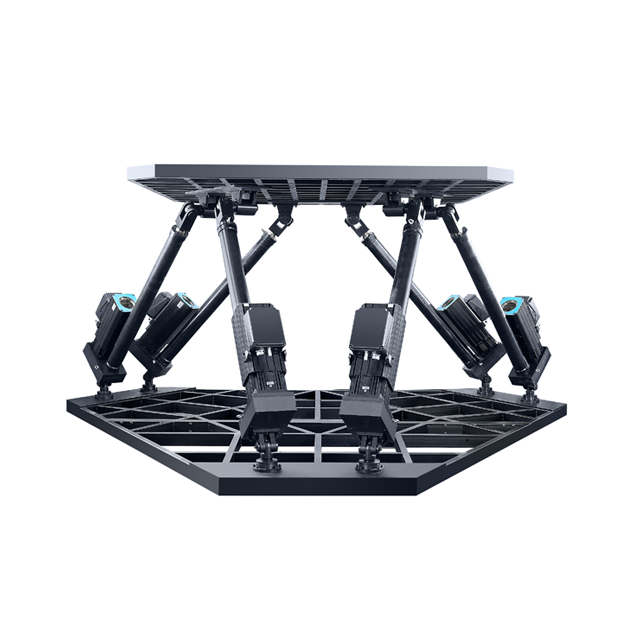
A 6DOF motion platform consists of several key components that work together to achieve realistic motion:
Actuators: These are the driving force behind the platform's movements. They convert electrical signals into mechanical motion, allowing for precise control of each degree of freedom.
Control System: This software manages the actuators and processes input from the simulation environment. It ensures that the platform responds accurately to user commands and mimics real-world dynamics.
Sensors: These devices monitor the platform's position, speed, and acceleration. They provide feedback to the control system, allowing for real-time adjustments to maintain accuracy.
Frame Structure: The physical frame holds all components together. It must be sturdy enough to support the platform's weight and withstand dynamic forces during operation.
Together, these components create a cohesive system that delivers realistic motion feedback to users, enhancing the training or entertainment experience.
How 6DOF Platforms Work
6DOF platforms operate through a combination of mechanical and electronic systems. When a user interacts with a simulation, the control system interprets these inputs and sends commands to the actuators.
Input Processing: The control system receives data from the simulation, including the desired movements and forces acting on the aircraft.
Actuator Response: Based on this data, the control system calculates how each actuator should move to replicate the desired motion.
Feedback Loop: Sensors continuously monitor the platform's position and movement. This data is sent back to the control system, creating a feedback loop that allows for real-time adjustments.
This process ensures that the motion platform closely mimics the real-life dynamics of flight, providing users with an immersive experience.
In summary, a 6DOF motion platform combines advanced technology to create a realistic simulation environment. Understanding its mechanics is essential for developers and users alike, as it directly impacts the quality of training and the overall experience.
The Role of 6DOF Motion Platforms in Flight Simulators
Importance of Motion Cueing Systems
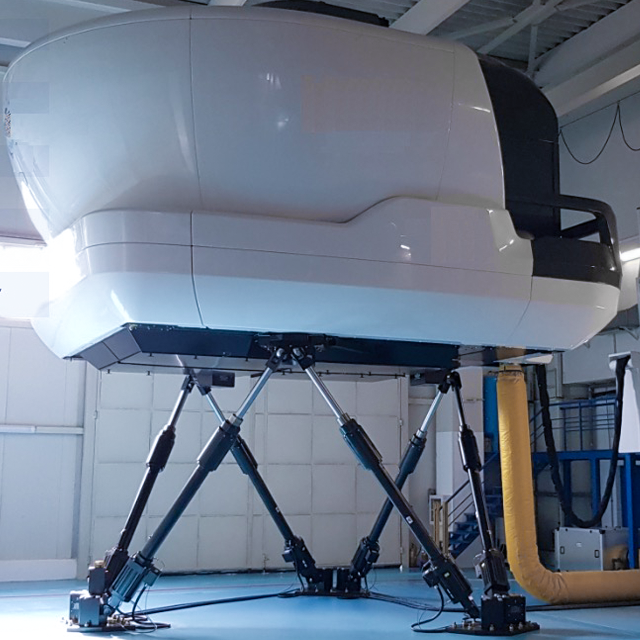
Motion cueing systems are vital for modern flight simulators. They provide pilots with essential vestibular feedback, simulating the physical sensations of flight. This feedback is crucial because it complements visual and instrument data, giving pilots a comprehensive sense of the aircraft's movement.
When a pilot maneuvers an aircraft, they rely not only on what they see but also on how their body feels the motion. For instance, during turbulence or sudden changes in acceleration, motion cueing systems recreate these sensations, allowing pilots to react appropriately. The accuracy of these cues is particularly important for landing scenarios, where the feeling of descent must align with the simulator's simulated rate.
In rotary-wing aircraft, such as helicopters, motion feedback becomes even more significant. Helicopter pilots depend on a variety of motion cues, including vibrations produced by the main rotor. These cues are essential for understanding the helicopter's dynamic state, helping pilots identify both normal and abnormal operating conditions.
Feedback Mechanisms for Pilots
Feedback mechanisms in 6DOF motion platforms ensure pilots receive accurate and timely information about the aircraft's behavior. This feedback includes motion cues, visual displays, and auditory signals. The integration of these elements creates a more immersive and realistic training environment.
For example, when a pilot executes a sharp turn, the motion platform tilts and sways, simulating the forces experienced in real flight. This physical sensation is critical for training, as it helps pilots learn to manage their aircraft's dynamics effectively. Additionally, the feedback mechanisms must be fine-tuned to ensure that the timing, intensity, and direction of the cues accurately reflect the aircraft being simulated.
Realism in Flight Simulations
The realism offered by 6DOF motion platforms is unparalleled. By simulating all six degrees of freedom—pitch, roll, yaw, heave, sway, and surge—these platforms create a convincing experience that closely mirrors actual flight. This level of realism is essential for effective pilot training, as it prepares them for real-world scenarios.
In a flight simulator, the ability to replicate the nuances of flight dynamics can significantly enhance training outcomes. Pilots can practice emergency procedures, navigate through challenging weather, and refine their skills in a controlled environment. The more realistic the simulation, the better prepared pilots will be for actual flight conditions.
Moreover, the integration of advanced motion cueing systems enhances the overall user experience, making training sessions more engaging and effective. As pilots experience realistic motion cues, they develop muscle memory and situational awareness, which are crucial for successful flight operations.
Applications of 6DOF Motion Platforms
Aerospace Training and Simulation
6DOF motion platforms play a crucial role in aerospace training and simulation. They provide a realistic environment for pilots to practice and hone their skills. By simulating the full range of aircraft movements—pitch, roll, yaw, heave, sway, and surge—these platforms create an immersive training experience. This realism is essential for pilots to develop muscle memory and situational awareness.
In flight simulators, trainees can experience various flight scenarios, including turbulence, emergency landings, and navigation through adverse weather conditions. The ability to replicate these situations allows pilots to prepare for real-world challenges without the risks associated with actual flight. For instance, a pilot can practice handling an aircraft during a simulated engine failure, gaining valuable experience that can save lives in real situations.
Automotive Testing and Development
The automotive industry also benefits significantly from 6DOF motion platforms. They are used to test vehicle dynamics, suspension systems, and overall performance. By replicating real-world driving conditions, engineers can assess how vehicles respond to various forces and movements. This is especially important for electric vehicles (EVs), which have unique dynamics due to their weight distribution and instant torque delivery.
For example, during a test, a 6DOF motion platform can simulate a vehicle navigating a winding road while experiencing acceleration and braking. Engineers can observe how the suspension reacts to bumps and turns, allowing them to make necessary adjustments to improve handling and comfort. This testing helps manufacturers create safer and more efficient vehicles, ultimately enhancing the driving experience for consumers.
Entertainment and Virtual Reality
In the entertainment sector, 6DOF motion platforms are revolutionizing the way users experience virtual reality (VR) and gaming. These platforms enhance immersion by providing physical feedback that matches the visual experience. Users can feel every tilt, turn, and bump, making the simulation more lifelike.
For instance, in VR gaming, a player can physically lean to dodge obstacles or feel the rush of speed during a racing game. This level of interaction increases engagement and enjoyment, leading to a more satisfying experience. Theme parks also utilize 6DOF motion platforms for rides, providing thrilling experiences that simulate flight or high-speed chases.
Moreover, as technology advances, the applications of 6DOF motion platforms continue to expand. They are now being used in training simulations for various fields, including military operations and emergency response scenarios, where realistic motion feedback is essential for effective learning.
Tip: When selecting a 6DOF motion platform for aerospace or automotive applications, consider platforms that offer customizable settings to adapt to specific testing needs and environments.
Advantages of Using 6DOF Motion Platforms
Enhanced User Experience
6DOF motion platforms significantly enhance user experience across various applications, from flight simulation to entertainment. By providing motion in six degrees of freedom, they allow users to feel every tilt, turn, and bump, creating a more immersive environment. This realism engages users emotionally and physically, making them feel as if they are genuinely flying, driving, or experiencing a virtual reality scenario.
For instance, in flight simulators, pilots can experience realistic sensations during maneuvers, such as turbulence or rapid acceleration. This feedback helps them develop muscle memory and situational awareness, essential skills for real-world flying. Similarly, in gaming, players report heightened excitement and engagement when using motion platforms, as they can feel the impact of in-game actions, enhancing their overall enjoyment.
Improved Training Outcomes
The use of 6DOF motion platforms in training environments leads to improved learning outcomes. By simulating real-world dynamics, these platforms allow trainees to practice essential skills in a controlled setting. This is particularly beneficial in fields such as aviation, where accurate motion cues are critical for pilot training.
For example, a pilot training on a 6DOF motion platform can practice emergency procedures and complex maneuvers without the inherent risks of actual flying. The realistic feedback they receive helps them understand the aircraft's behavior in various scenarios, leading to better preparedness for real-life situations. Studies have shown that trainees using these platforms often outperform those trained in traditional settings, underscoring the effectiveness of immersive training.
Versatility Across Industries
6DOF motion platforms are not limited to aviation; their versatility extends to various industries. They find applications in automotive testing, military training, and even entertainment. In automotive testing, for instance, engineers can use these platforms to simulate road conditions and evaluate vehicle dynamics, improving safety and performance.
In the entertainment industry, theme parks and VR experiences utilize 6DOF motion platforms to create thrilling rides and immersive environments. Users can feel every twist and turn, enhancing the overall experience. This adaptability makes 6DOF motion platforms a valuable tool across multiple sectors, catering to diverse needs and applications.
Moreover, as technology advances, the potential applications for 6DOF motion platforms continue to grow. They are being integrated into research and development for new technologies, such as autonomous vehicles and advanced robotics, further showcasing their versatility and importance in modern industries.
Challenges and Solutions in 6DOF Motion Platforms
Engineering Challenges with Payloads
Handling payloads in 6DOF motion platforms presents unique engineering challenges. As the weight increases, maintaining precision and stability becomes crucial. Heavy loads can cause structural deformation, strain on actuators, and control instability. Engineers must design platforms using robust materials and advanced control systems to ensure smooth operation without compromising performance.
One common solution is employing parallel kinematic designs, like Stewart platforms. These designs distribute loads evenly across actuators, enhancing stability. Additionally, high-strength alloys and reinforced frames support the weight while allowing for dynamic movement. Integrating high-resolution sensors provides real-time feedback, enabling adjustments to maintain motion fidelity, even under demanding conditions.
Addressing Precision and Stability Issues
Precision and stability are vital for the effectiveness of 6DOF motion platforms. Without accurate motion control, testing outcomes can be unreliable. Engineers tackle this by implementing advanced damping mechanisms and feedback loops. These systems counteract unwanted vibrations and oscillations, ensuring consistent motion.
Moreover, using high-resolution sensors helps monitor position, velocity, and acceleration across all six degrees of freedom. This data allows the control system to make real-time adjustments, maintaining the platform's intended motion path. As a result, engineers can achieve the desired accuracy necessary for effective testing and training.
Future Trends and Innovations
Looking ahead, several trends are shaping the future of 6DOF motion platforms. The integration of AI-powered control systems is one significant advancement. These systems learn from real-time data, optimizing actuator responses and improving motion accuracy, especially under heavy loads. This reduces the need for manual tuning, enhancing repeatability.
Another trend is the use of lightweight composite materials. These materials maintain structural strength while reducing the platform's weight. This change allows for faster and more energy-efficient motion, which is particularly beneficial in heavy-duty testing environments.
Sensor technology is also evolving. Next-generation sensors, like high-resolution encoders and inertial measurement units (IMUs), provide ultra-precise feedback. When combined with edge computing, these sensors enable real-time adjustments, ensuring stability during complex multi-axis motions.
In summary, addressing engineering challenges in 6DOF motion platforms requires innovative solutions. By focusing on precision, stability, and embracing emerging technologies, engineers can create platforms that meet the demands of various industries while enhancing testing accuracy and reliability.
Installation and Maintenance of 6DOF Motion Platforms
Step-by-Step Installation Guide
Installing a 6DOF motion platform can seem daunting, but breaking it down into manageable steps makes the process smoother. Here’s a detailed guide to help you through the installation.
Unpacking and Preparing Your 6DOF Motion Platform
Inspect the Package: Carefully check the components against the packing list. Look for:
Frame parts (legs, base plates)
Motors and actuators (labeled for positions)
Fasteners (bolts, nuts, washers)
Electrical cables and connectors
Control boxes (preset voltage)
Additional accessories (seat mounts, brackets)
Organize Your Workspace: Set up a clean, well-lit area with enough room to lay out all parts. Gather necessary tools like hex wrenches, screwdrivers, and a torque wrench.
Safety Precautions: Ensure safety by keeping children and pets away from the assembly area. Avoid fully tightening bolts until the entire frame is assembled to allow for adjustments.
Initial Assembly Steps
Frame Assembly: Start by connecting the main frame components. Use the provided bolts to join parts, keeping them loose for adjustments. Ensure the frame is aligned before tightening.
Mounting Motors and Actuators: Once the frame is in place, mount the motors according to their labels. Ensure they are securely fastened but not over-tightened. Connect actuators to the motor shafts.
Securing the Base: Attach the base plates using longer bolts. Ensure stability and security to support dynamic motion.
Wiring and Electrical Setup
Connecting Cables: Connect power and sensor cables to the motors. Ensure each motor’s power plug matches the control box port. Use cable ties to organize wiring.
Voltage Settings: Check the voltage settings on control boxes to match your local power supply. This step is critical to prevent damage.
Testing Electrical Connections: Power on the control boxes and check for indicator lights. Run initial motor tests through the control software to confirm proper response.
Finalizing Structure and Testing Movement
Attaching the Seat: Securely attach the seat to the platform using the provided bolts. Avoid mounting electronic controllers at this stage to prevent balance issues.
Balancing the Platform: Ensure the platform rests evenly on all actuators without excessive sagging. Adjust rod lengths or mounting points to achieve a balanced position.
Performing Movement Tests: Test the platform’s movement through its full range. Observe for smooth motion and listen for unusual noises. If issues arise, inspect mechanical connections and wiring.
Regular Maintenance Practices
Regular maintenance is essential to ensure the longevity and performance of your 6DOF motion platform. Here are some key practices:
Routine Inspections: Regularly check for loose bolts, wear on cables, and any signs of mechanical strain. Address issues promptly to prevent further damage.
Software Updates: Keep the motion control software and firmware updated. This ensures compatibility and improved functionality.
Calibration Checks: Recalibrate the platform after any adjustments or repairs. This helps maintain accuracy and responsiveness.
Cleaning: Keep the platform clean of dust and debris, especially around moving parts. This prevents wear and keeps the system operating smoothly.
Troubleshooting Common Issues
Motor Overheating: If motors overheat, check for mechanical binding and ensure proper ventilation. Balance the platform to reduce strain.
Connection Problems: Verify all cable connections are secure. Inspect for any damaged cables that may cause intermittent issues.
Calibration Errors: Follow the calibration wizard in the motion control software. Check sensor alignment and adjust software parameters as needed.
Conclusion
6DOF motion platforms enhance flight simulations by providing realistic motion feedback. They simulate movements like pitch, roll, and yaw, crucial for training pilots. Future developments may include AI integration and lightweight materials, improving performance and adaptability. FDR specializes in advanced motion systems, offering precise control and reliability. Their products enhance training experiences, ensuring pilots gain essential skills in a safe environment. As technology evolves, FDR remains committed to delivering innovative solutions for various industries.
FAQ
Q: What is a 6DOF motion platform?
A: A 6DOF motion platform is a system that can move in six different ways—pitch, roll, yaw, heave, sway, and surge—providing realistic motion feedback for flight simulators and other applications.
Q: How does a 6DOF motion platform enhance flight simulations?
A: A 6DOF motion platform enhances flight simulations by accurately replicating aircraft movements, allowing pilots to experience realistic sensations during maneuvers, which improves training outcomes.
Q: Why are 6DOF motion platforms important for pilot training?
A: 6DOF motion platforms are important for pilot training because they provide essential vestibular feedback, helping pilots develop muscle memory and situational awareness in a controlled environment.
Q: What are the typical costs associated with a 6DOF motion platform?
A: The cost of a 6DOF motion platform can vary widely based on features, size, and technology, typically ranging from a few thousand to tens of thousands of dollars.
Q: How do I troubleshoot common issues with a 6DOF motion platform?
A: To troubleshoot a 6DOF motion platform, check for loose connections, inspect for mechanical binding, and ensure the platform is properly calibrated for accurate performance.