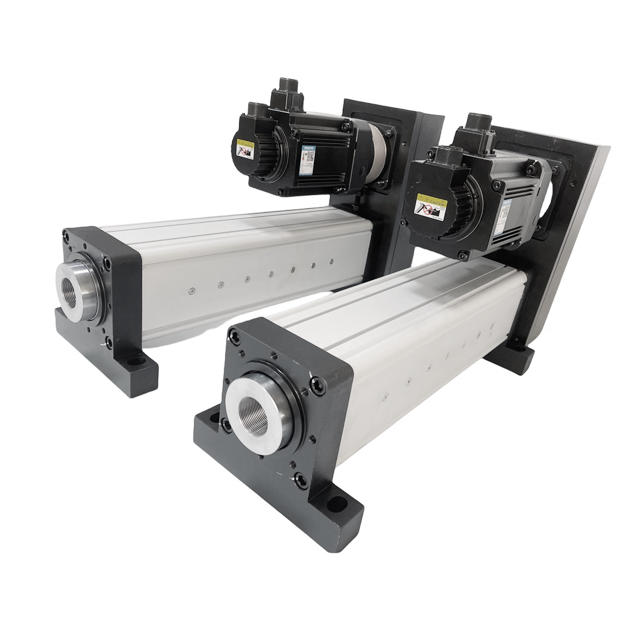
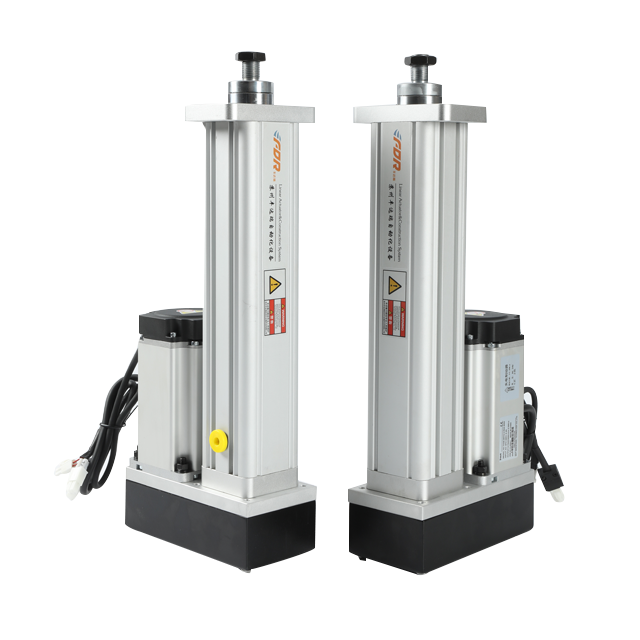
Have you ever wondered how electric actuators work? These devices are crucial for automating tasks in various industries. Understanding them can enhance performance and efficiency.
In this article, we’ll explore the definition, components, and applications of electric actuators. You’ll also learn about the importance of calculating moment loads on these devices for optimal operation.
Importance of Moment Loads in Electric Actuators
Definition of Moment Loads
Moment loads, also known as torque loads, are the forces that cause an object to rotate around an axis. In electric actuators, these loads arise from various sources, including the weight of the load, acceleration, and deceleration during operation. Understanding moment loads is crucial because they can significantly affect the performance and longevity of the actuator. When a load is applied at a distance from the actuator's pivot point, it creates a rotational effect, which can lead to bending or twisting. This is critical in applications where precision and reliability are paramount.
Impact of Moment Loads on Performance
The performance of electric actuators is directly influenced by the moment loads they experience. When moment loads exceed the actuator’s specifications, several issues can arise:
Reduced Efficiency: Excessive moment loads can lead to increased energy consumption as the actuator struggles to maintain its performance.
Wear and Tear: Higher moment loads result in greater stress on mechanical components, accelerating wear and potentially leading to premature failure.
Loss of Precision: When moment loads are too high, it can impact the actuator's ability to position accurately, compromising the quality of the application.
By accurately calculating and managing moment loads, engineers can ensure the actuator operates efficiently and effectively, thereby extending its service life.
Consequences of Exceeding Moment Load Specifications
Exceeding the moment load specifications can have severe consequences for electric actuators:
Mechanical Failure: Continuous exposure to excessive moment loads can cause structural components to fail. This might manifest as bent shafts, broken gears, or damaged bearings.
Operational Downtime: Mechanical failures often lead to unexpected downtime, which can be costly in industrial settings. Repairs or replacements usually require time and resources that could have been better spent on productive activities.
Increased Maintenance Costs: As moment loads exceed specified limits, the frequency of maintenance increases. This not only raises costs but also diverts attention from other critical tasks within the operation.
Safety Hazards: In extreme cases, failing to account for moment loads can lead to safety hazards, especially in applications involving heavy or hazardous materials. A malfunctioning actuator could pose risks to workers and equipment.
By understanding the importance of moment loads and their implications, engineers can select appropriate actuators and design systems that minimize these loads, ensuring safe and efficient operation.
Calculating Moment Loads on Electric Actuators
Overview of Calculation Methods
Calculating moment loads on electric actuators is essential for ensuring their reliable operation. These calculations help determine how much torque the actuator can handle without exceeding its specifications. The process involves understanding both static and dynamic loads that the actuator will experience during operation.
When calculating moment loads, engineers typically use several methods. The most common include:
Static Load Calculation: This involves assessing the forces acting on the actuator when it is at rest. The static moment load can be calculated using the formula:Mstatic=m⋅g⋅Lwhere m is the mass of the load, g is the gravitational acceleration (approximately 9.81 m/s⊃2;), and L is the distance from the pivot point to the center of gravity of the load.
Dynamic Load Calculation: This method accounts for forces acting on the actuator during motion, including acceleration and deceleration. The dynamic moment load is calculated using:Mdynamic=m⋅a⋅Lwhere a is the acceleration of the load.
Combined Load Calculation: Sometimes, both static and dynamic loads need to be considered. This is especially true in applications where the actuator experiences varying loads during operation.
Static vs Dynamic Moment Loads
Understanding the difference between static and dynamic moment loads is crucial:
Static Moment Loads: These occur when the actuator is stationary. The load's weight creates a moment that can lead to bending or twisting if it exceeds the actuator's specifications.
Dynamic Moment Loads: These arise during movement. As the actuator accelerates or decelerates, additional forces come into play. These can be significantly higher than static loads, especially during rapid movements.
Formula for Calculating Moment Loads
The moment load can be calculated using several formulas depending on the application:
1. Pitching Direction Moment (M_P)
M_P = m × a × H
Where H is the overhung distance in the direction of the load.
2. Yawing Direction Moment (M_Y)
M_Y = m × a × L
Where L is the overhung distance in the lateral direction.
3. Rolling Direction Moment (M_R)
M_R = m × g × L
After calculating the moments in each direction, they can be compared to the actuator's permissible moments to ensure safe operation.
The combined moment ratio should be less than or equal to 1:
This ensures the actuator operates within its limits, preventing mechanical failure.
Factors Affecting Moment Loads in Electric Actuators
Load Positioning and Center of Gravity
The positioning of the load on an electric actuator significantly influences the moment loads experienced during operation. When the center of gravity of the load is aligned directly above the actuator's pivot point, the moment load is minimized. However, if the load is offset, it creates an additional moment that the actuator must counteract. This is particularly critical in applications where precision is required. For instance, if a load is mounted on an actuator with its center of gravity extending outward, the moment increases, leading to higher stress on the actuator.
To ensure optimal performance, it’s vital to calculate the exact position of the center of gravity relative to the actuator. Engineers often use diagrams and modeling software to visualize these forces and adjust the load positioning accordingly.
Actuator Size and Mass Capacity
The size and mass capacity of an actuator play a crucial role in its ability to handle moment loads. Larger actuators, designed to carry heavier loads, can manage higher moment loads due to their structural integrity. They typically have a greater mass capacity and can withstand the forces exerted by dynamic operations, such as acceleration and deceleration.
When selecting an actuator, consider the following:
Diameter and Stroke Length: Larger diameter actuators can handle greater pressures, which translates to higher force output. Stroke length also affects how far the actuator can extend, impacting the overall moment load.
Material Strength: The materials used in the actuator's construction influence its ability to withstand moment loads. High-strength materials can endure greater loads without deforming.
For example, if an actuator is rated for a specific load but is too small for the application, it may fail prematurely due to excessive moment loads.
Installation Orientation and Its Effects
The orientation of the actuator during installation can drastically change the moment loads it experiences. Actuators can be installed in various orientations—horizontal, vertical, or at an angle. Each orientation affects how moment loads are distributed:
Horizontal Installations: In a horizontal setup, gravity acts downward, but lateral forces can create additional moment loads if the load is not evenly distributed.
Vertical Installations: Vertical setups may experience increased moment loads due to gravitational forces acting on the load, especially during lifting operations. The actuator must be capable of handling these forces without exceeding its dynamic permissible moment.
Angled Installations: When actuators are installed at an angle, the effective moment arm changes. This can either increase or decrease the moment load, depending on the angle and the position of the load.
Understanding these factors allows engineers to make informed decisions during the design and installation phases. Proper alignment and orientation can significantly reduce the risk of failure and extend the actuator's lifespan.
Selecting the Right Electric Actuator
Criteria for Selection
Choosing the right electric actuator is crucial for the success of any automation project. Here are some key criteria to consider:
Load Requirements: Understand the load specifications, including weight, center of gravity, and any dynamic forces that may affect the actuator. This ensures the actuator can handle the operational demands.
Operating Environment: Consider environmental factors such as temperature, humidity, and exposure to dust or moisture. Select actuators with appropriate IP ratings to ensure durability and reliability.
Speed and Stroke Length: Determine the required speed and stroke length for your application. The actuator must meet the specific motion requirements to ensure efficiency.
Mounting Orientation: The actuator's installation orientation can affect its performance. Be aware of how horizontal, vertical, or angled installations will influence moment loads and overall functionality.
Control System Compatibility: Ensure the actuator is compatible with your control systems. This includes electrical specifications, communication protocols, and feedback mechanisms.
Evaluating Load Requirements
When evaluating load requirements, it’s essential to consider both static and dynamic loads:
Static Loads: These are the weights supported by the actuator when it is stationary. Calculate the static moment load using the formula:Mstatic=m⋅g⋅Lwhere m is the load mass, g is gravitational acceleration, and L is the distance from the pivot point.
Dynamic Loads: These occur when the actuator is in motion. Evaluate the forces acting during acceleration and deceleration. Use the formula:Mdynamic=m⋅a⋅Lwhere a is the acceleration of the load.
Understanding both types of loads helps in selecting an actuator that can handle the expected operational stresses without failure.
Understanding Manufacturer Specifications
Always refer to the manufacturer’s specifications for the actuator you are considering. Key specifications include:
Maximum Load Capacity: The maximum weight the actuator can handle safely.
Permissible Moment Loads: The maximum moment loads in different directions (pitching, yawing, rolling) the actuator can withstand.
Speed Ratings: The maximum speed at which the actuator can operate effectively.
Duty Cycle: The operational time versus rest time, which affects the actuator's lifespan and performance.
By thoroughly reviewing these specifications, you can ensure the actuator you select is suitable for your application and will perform reliably over time.
Installation Considerations for Electric Actuators
Best Practices for Installation
Installing electric actuators correctly is crucial for their performance and longevity. Here are some best practices to consider:
Follow Manufacturer Guidelines: Always refer to the installation manual provided by the manufacturer. This includes specifications for mounting, wiring, and load limits.
Ensure Proper Alignment: Actuators must be aligned correctly with the load. Misalignment can lead to increased wear and reduced efficiency. Use alignment tools or fixtures during installation to help achieve this.
Secure Mounting Points: Ensure that all mounting points are secure. Loose mounts can cause vibrations and misalignment, leading to mechanical failure.
Consider Environmental Conditions: Assess the installation environment. Factors like temperature, humidity, and exposure to chemicals can affect actuator performance. Choose actuators with appropriate environmental ratings.
Plan for Maintenance Access: Design the installation for easy access to the actuator for future maintenance. This includes considering space for tools and personnel.
Use Proper Wiring Techniques: Ensure electrical connections are secure and insulated. Use appropriate cable management to prevent wear and tear on wires.
Common Mistakes to Avoid
Avoiding common installation mistakes can prevent future issues:
Ignoring Load Specifications: Always verify that the actuator can handle the load it will be subjected to. Exceeding load limits can lead to early failure.
Neglecting Moment Load Calculations: Failing to calculate moment loads before installation can result in improper actuator selection. This can lead to performance issues or damage.
Overlooking Center of Gravity: Not considering the load's center of gravity can create excessive moment loads. Always position loads to minimize moment arms.
Inadequate Support Structures: Ensure that the actuator is mounted on a stable structure. Inadequate support can lead to instability and performance issues.
Skipping Testing Procedures: After installation, always conduct tests to ensure proper operation. This includes checking for smooth movement and verifying load handling capabilities.
Maintenance Tips for Longevity
Regular maintenance is essential for electric actuators to ensure they operate efficiently and last longer. Here are some tips:
Regular Inspections: Perform routine checks for wear, alignment, and secure mounting. Look for signs of excessive wear or damage.
Lubrication: Keep moving parts lubricated according to the manufacturer's recommendations. This reduces friction and wear.
Monitor Performance: Keep track of actuator performance, including speed and load handling. Any changes can indicate underlying issues.
Clean the Area: Maintain a clean environment around the actuator. Dust and debris can interfere with operation and cause wear.
Plan for Replacement: Be proactive about replacing components that show signs of wear. This can prevent unexpected breakdowns.
By following these best practices, avoiding common mistakes, and implementing a solid maintenance plan, you can ensure the optimal performance and longevity of electric actuators in your applications.
Examples of Moment Load Calculations
Case Study: Horizontal Installation
When installing an electric linear actuator horizontally, it’s essential to understand how the load's position affects moment loads. For instance, consider an EASM4XD020ARAC actuator with a load overhung in the Y-axis direction. The dynamic permissible moment values for this actuator are:
Pitching direction (M_P): 16.3 N·m
Yawing direction (M_Y): 4.8 N·m
Rolling direction (M_R): 15.0 N·m
To calculate the pitching direction moment (M_P), we use the formula:
MP=(mw⋅α⋅H1)+(ma⋅α⋅H2)
Where:
mw: Load mass (1.5 kg)
ma: Arm mass (0.5 kg)
α: Acceleration (3.0 m/s⊃2;)
H1: Overhung distance for the load center of gravity (90 mm)
H2: Overhung distance for the arm center of gravity (65 mm)
Plugging in the values, we get:
Next, we calculate the yawing direction moment (M_Y):
MY=(mw⋅α⋅L1)+(ma⋅α⋅L2)
Where:
L1: Load center of gravity overhung distance in the Y-axis direction (150 mm)
L2: Arm center of gravity overhung distance in the Y-axis direction (100 mm)
Calculating gives:
The rolling direction moment (M_R) is calculated as follows:
MR=(mw⋅g⋅L1)+(ma⋅g⋅L2)
Where g is the gravitational acceleration (9.807 m/s⊃2;):
Now, we check if the calculated moments are within the permissible limits using the formula:
MPmax∣MP∣+MYmax∣MY∣+MRmax∣MR∣≤1
Substituting the calculated values:
16.3∣0.50∣+4.8∣0.83∣+15.0∣2.70∣=0.38≤1
Since the total is less than 1, the actuator can be safely used in this configuration.
Conclusion
Understanding moment loads is vital for the efficient operation of electric actuators. Proper calculations of static and dynamic loads ensure performance and longevity. Factors such as load positioning, actuator size, and installation orientation greatly influence moment loads. FDR offers advanced electric actuators designed to withstand these loads effectively. With their robust construction and precision engineering, FDR products provide exceptional value and reliability for various applications. Emphasizing moment load management can enhance performance and reduce maintenance costs in any automation project.
FAQ
Q: What is an electric actuator and how does it relate to moment loads?
A: An electric actuator is a device that converts electrical energy into mechanical motion. Moment loads affect its performance by influencing efficiency and longevity.
Q: How do I calculate moment loads for an electric actuator?
A: To calculate moment loads, use formulas for static and dynamic loads based on the mass of the load and its distance from the actuator's pivot point.
Q: Why is understanding moment loads important for electric actuators?
A: Understanding moment loads is crucial as exceeding specifications can lead to mechanical failure, reduced efficiency, and safety hazards.
Q: What are the benefits of accurately calculating moment loads on electric actuators?
A: Accurate calculations ensure optimal performance, extend service life, and reduce maintenance costs by preventing mechanical failures.
Q: How do I troubleshoot issues related to moment loads on electric actuators?
A: Check for misalignment, verify load specifications, and ensure proper installation to troubleshoot moment load-related issues effectively.