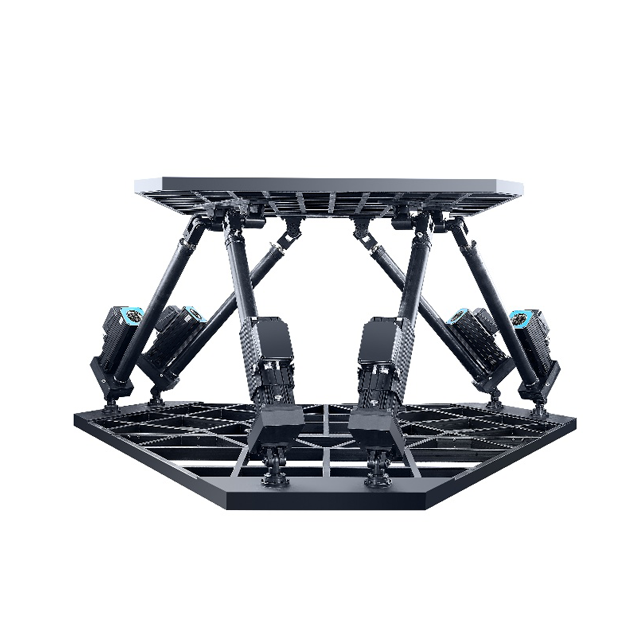
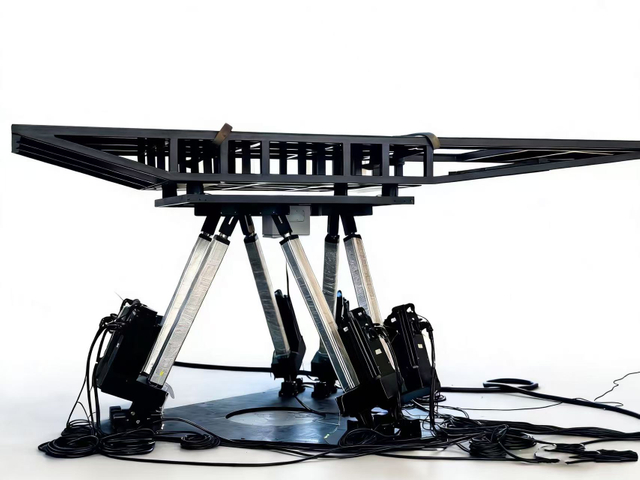
Have you ever wondered how flight simulators feel so realistic? The secret lies in the 6DOF motion platform, which offers six degrees of freedom for unmatched simulation experiences. In this article, we’ll explore what 6DOF motion platforms are, their significance in various industries, and the applications that make them essential for training and entertainment.
Understanding the Six Degrees of Freedom in 6DOF Motion Platforms
Explanation of Each Degree of Freedom
A 6DOF motion platform offers unparalleled movement capabilities, simulating real-world dynamics through six distinct degrees of freedom. Here’s a breakdown of each:
Pitch: This allows the platform to tilt forward or backward, mimicking the sensation of climbing or descending.
Roll: The platform pivots side to side, simulating the feeling of turning or leaning during a maneuver.
Yaw: This rotation around the vertical axis simulates left or right turning, enhancing directional changes.
Heave: The vertical movement enables the platform to move up and down, replicating sensations like acceleration or deceleration.
Surge: This movement allows the platform to slide forward and backward, simulating acceleration or braking.
Sway: The left and right movement mimics lateral shifts, similar to swaying during turns or navigating through obstacles.
This combination of movements provides users with a comprehensive experience, making simulations feel incredibly lifelike.
How 6DOF Enhances Simulation Realism
The integration of all six degrees of freedom significantly enhances the realism of simulations. For instance, in a flight simulator, a pilot can experience the nuances of pitch, roll, and yaw while also feeling the vertical shifts of heave and the lateral movements of sway. This comprehensive feedback allows users to react more naturally and intuitively, mirroring real-life responses to various scenarios.
Moreover, the ability to replicate complex movements—such as a sudden stop while turning—adds layers of realism that simpler platforms cannot achieve. Users often report heightened immersion and engagement, making 6DOF platforms a preferred choice for training and entertainment applications.
Comparative Analysis with 2DOF and 3DOF Platforms
When comparing 6DOF platforms to their 2DOF and 3DOF counterparts, the differences become evident:
2DOF Platforms: These systems typically offer movement in pitch and roll only. While they can simulate basic tilting motions, they lack the depth of realism provided by 6DOF platforms. Users may feel limited in their experience, as they cannot replicate the full range of motion found in real-world scenarios.
3DOF Platforms: Adding heave to the mix allows for vertical movement, which enhances realism compared to 2DOF systems. However, they still fall short of the full immersive experience provided by 6DOF platforms, which incorporate all six degrees of freedom.
In summary, while 2DOF and 3DOF platforms serve specific purposes, they cannot match the comprehensive simulation capabilities of a 6DOF motion platform. Users seeking the most realistic experience should consider investing in a 6DOF system for applications ranging from training to entertainment.
Tip: When evaluating motion platforms, prioritize those featuring all six degrees of freedom for the most immersive and realistic simulation experience.
Applications of 6DOF Motion Platforms
Use in Aerospace Training and Simulation
6DOF motion platforms play a critical role in aerospace training and simulation. They allow pilots to experience realistic flight conditions by simulating various maneuvers and environmental factors. For instance, during flight training, pilots can practice takeoffs, landings, and emergency procedures while feeling the physical sensations associated with these actions. The platform’s ability to replicate pitch, roll, yaw, heave, surge, and sway ensures that trainees develop muscle memory and situational awareness, which are vital for real-world flying.
Moreover, aerospace engineers utilize 6DOF platforms for testing aircraft components and systems. By simulating different flight scenarios, they can evaluate the performance and durability of wings, landing gear, and avionics under dynamic conditions. This leads to safer and more efficient aircraft designs.
Automotive Testing and Validation
In the automotive industry, 6DOF motion platforms are essential for testing vehicle dynamics and safety systems. Engineers can mount full vehicle chassis on these platforms to simulate real-world driving conditions. This includes testing how a car behaves during sharp turns, sudden stops, or when encountering road imperfections like potholes.
For example, a 6DOF platform can replicate the forces experienced during a high-speed corner while simultaneously applying braking forces. This allows engineers to analyze how suspension systems respond to complex multi-axis movements. The insights gained from these tests help manufacturers improve vehicle performance and enhance safety features, ultimately leading to better consumer products.
Entertainment and Virtual Reality Experiences
6DOF motion platforms are also widely used in the entertainment industry, particularly in virtual reality (VR) experiences and theme park rides. These platforms enhance immersion by providing users with realistic motion feedback. When combined with VR headsets, users can feel every tilt, turn, and drop, making the experience more engaging.
For instance, a VR roller coaster simulator can simulate the sensation of speed and gravity, allowing riders to experience exhilarating drops and twists without leaving the ground. This level of immersion is crucial for creating memorable attractions and gaming experiences that captivate audiences.
Research Applications in Engineering and Science
Beyond aerospace and automotive applications, 6DOF motion platforms are valuable tools in various research fields. Engineers and scientists use these platforms to study the effects of motion on different materials and structures. For example, researchers can simulate seismic activity to test the resilience of buildings and bridges against earthquakes.
In biomedical research, 6DOF platforms can simulate human movement for testing medical devices or rehabilitation equipment. By replicating real-life scenarios, researchers can gather data that informs the design and functionality of new technologies.
Overall, the versatility of 6DOF motion platforms makes them indispensable across multiple industries. Their ability to provide realistic simulations not only enhances training and testing but also fosters innovation in product development.
Benefits of Using 6DOF Motion Platforms
Enhanced User Engagement and Experience
6DOF motion platforms provide an immersive experience that significantly enhances user engagement. By simulating real-world movements—like pitch, roll, yaw, heave, surge, and sway—users feel as if they are truly part of the simulation. This heightened sense of realism is especially beneficial in training environments, such as flight simulators or driving experiences, where users can develop critical skills in a safe, controlled setting.
For instance, pilots training on a 6DOF platform experience the nuances of flight dynamics, allowing them to react instinctively to various situations. Similarly, gamers using these platforms report increased enjoyment and satisfaction, as the realistic feedback makes gameplay more thrilling. This level of engagement can lead to improved learning outcomes, as users are more likely to retain information and skills when they are fully immersed in the experience.
Improved Feedback and Learning Outcomes
The feedback provided by 6DOF motion platforms is crucial for effective learning. As users interact with the system, they receive instantaneous physical responses that correlate with their actions. This real-time feedback loop enables users to understand the consequences of their decisions more clearly.
In educational settings, for example, students using a 6DOF platform for engineering simulations can visualize and feel the effects of their designs in a tangible way. When testing structures under simulated conditions, they can observe how changes impact performance, leading to deeper insights and better design choices. The combination of visual and physical feedback accelerates the learning process, making it more efficient and impactful.
Versatility Across Various Industries
One of the standout benefits of 6DOF motion platforms is their versatility. They find applications across multiple industries, including aerospace, automotive, entertainment, and research.
Aerospace: Used for pilot training, these platforms simulate various flight conditions, helping pilots gain experience in a safe environment.
Automotive: Engineers utilize 6DOF platforms to test vehicle dynamics, enhancing safety and performance through realistic simulations of driving scenarios.
Entertainment: In theme parks and gaming, 6DOF platforms enhance user experiences by providing thrilling rides and immersive gameplay.
Research: Scientists and engineers use these platforms for experiments, such as simulating earthquakes or studying material behaviors under dynamic loads.
The adaptability of 6DOF motion platforms means they can be tailored to meet specific needs, making them a valuable investment across diverse fields.
Installation and Setup of 6DOF Motion Platforms
Unpacking and Preparing the Platform
When your 6DOF motion platform arrives, the first step is to unpack it carefully. This ensures you avoid damage and streamline the assembly process. Begin by inspecting all components against the packing list. Check for:
Frame Parts: Legs, base plates, and support beams.
Motors and Actuators: Typically labeled for left, right, or rear positions.
Fasteners: Bolts, nuts, and washers sorted in labeled bags.
Electrical Cables: Ensure there are no damages or disconnections.
Control Boxes: Confirm they are preset to your country’s voltage.
Accessories: Seat mounts or controller brackets if included.
If anything is missing or damaged, contact the supplier immediately. Setting up a clean, well-lit workspace is also vital. Gather essential tools like hex wrenches, screwdrivers, and a torque wrench. This organization reduces frustration and speeds up assembly.
Step-by-Step Assembly Instructions
Connecting the Frame Components: Start by assembling the main frame parts. Use the provided bolts to join these components. Keep bolts loose initially for adjustments. Ensure the frame is aligned using a square tool before tightening.
Mounting Motors and Actuators: With the frame in place, mount the motors and actuators. Position each motor according to the labels, ensuring they are securely fastened but not over-tightened. Connect the actuators to the motor shafts and frame.
Securing the Platform Base: Attach base plates to the frame using longer bolts. Double-check the tightness and alignment before moving on.
Wiring and Electrical Setup
Proper wiring is crucial for safe operation. Start by connecting power cables from control boxes to the motors. Each motor typically has a dedicated power cable, so match them carefully. Also, connect the sensor cables to their designated ports.
Before powering up, verify voltage settings on your control boxes match your local supply. Many platforms come with preset configurations, but it's essential to confirm them. Test the electrical connections without load by powering on the control boxes and checking for indicator lights.
Calibration for Optimal Performance
Calibration is key to ensuring your platform operates smoothly. Connect your 6DOF platform to a PC via USB or Ethernet. Launch the motion control software and navigate to the calibration section. Follow the calibration wizard to set zero positions and define travel limits for each actuator.
Perform test movements through the software interface to verify the platform’s response. Fine-tune parameters like motor speed and acceleration to achieve the desired performance.
Troubleshooting Common Issues with 6DOF Motion Platforms
Addressing Overheating Problems
Overheating is a common issue faced by users of 6DOF motion platforms. It can occur due to excessive load, insufficient ventilation, or prolonged operation. Here are some strategies to tackle this problem:
Monitor Temperatures: Regularly check the temperature of the motors. They should not exceed 70°C (158°F). Use thermal sensors or a simple touch test.
Ensure Proper Ventilation: Place the platform in a well-ventilated area. Avoid enclosing motors in tight spaces, as this can trap heat.
Inspect for Mechanical Binding: Check for any tight spots or misalignments in the rods and joints. These can create additional strain on the motors.
Balance the Platform: An unbalanced platform can lead to uneven load distribution, causing some motors to overheat. Adjust rod lengths or the position of the seat to achieve balance.
Limit Continuous Operation: Avoid leaving the platform powered on for extended periods without use. Continuous operation generates heat, so allow it to cool down periodically.
If overheating persists, consider upgrading to higher torque motors or adding cooling fans to improve airflow.
Fixing Electrical Connection Issues
Electrical connection problems can disrupt the operation of your 6DOF motion platform. Here’s how to troubleshoot:
Verify Connections: Check that all motor power and sensor cables are securely plugged into their respective ports. The control boxes are usually labeled for easy identification.
Avoid Mixing Cables: Never swap sensor or power cables between motors, as this can lead to damage or malfunction.
Inspect for Damage: Look for frayed wires or bent pins that could cause intermittent connections. Replace any damaged cables immediately.
Secure Cables: Use cable ties to organize and secure wiring. This prevents movement and accidental unplugging during operation.
Test with a Multimeter: If you suspect a connection issue, use a multimeter to measure continuity and voltage to ensure proper wiring.
Labeling cables during assembly can simplify future troubleshooting.
Resolving Calibration Errors
Calibration is crucial for ensuring that your 6DOF motion platform operates smoothly. Calibration errors can lead to jerky or incorrect movements. Here’s how to resolve these issues:
Follow the Calibration Wizard: Use the motion control software to guide you through the calibration process. Set zero positions for each actuator and define travel limits.
Check Sensor Alignment: Ensure that position sensors are installed correctly. Misaligned sensors can provide inaccurate feedback, leading to calibration errors.
Recalibrate After Adjustments: If you make any mechanical changes, such as adjusting the balance or adding accessories, recalibrate the platform.
Adjust Software Parameters: Fine-tune motor speed, acceleration, and damping settings to achieve smoother motion and reduce jitter.
Test with Known Inputs: Run basic movement commands to verify that the platform responds as expected.
Pay special attention to sensor wiring and signal quality during calibration to avoid issues.
Future Trends in 6DOF Motion Platforms
Emerging Technologies in Motion Platforms
The landscape of 6DOF motion platforms is evolving rapidly, driven by emerging technologies that enhance performance and broaden their applications. One significant trend is the integration of AI-powered control systems. These systems can analyze real-time data, optimizing actuator responses and improving motion accuracy, especially under heavy loads. This advancement reduces the need for manual tuning, making the platforms more user-friendly and efficient.
Another exciting development is the use of lightweight composite materials. These materials help decrease the overall weight of the platforms while maintaining structural strength. This is especially beneficial for heavy-duty industrial testing, where minimizing inertia improves responsiveness and reduces energy consumption.
Moreover, sensor technology is advancing as well. Next-generation high-resolution encoders and inertial measurement units (IMUs) provide ultra-precise feedback, allowing for real-time adjustments that enhance motion fidelity. These innovations ensure that motion platforms can operate smoothly and accurately, even during complex multi-axis movements.
AI Integration for Enhanced Performance
AI integration is transforming how motion platforms operate. By utilizing machine learning algorithms, these platforms can learn from previous movements and adapt to varying conditions. For example, if a platform experiences unexpected resistance, the AI can adjust the actuator responses to maintain smooth operation. This capability is particularly useful in applications requiring high precision, such as aerospace simulations or automotive testing.
Additionally, AI can facilitate predictive maintenance. By monitoring the performance of various components, the system can anticipate potential failures before they occur. This proactive approach minimizes downtime and extends the lifespan of the equipment, making it a valuable investment for businesses.
Potential for Modular Designs and Custom Configurations
Modularity is another trend gaining traction in the 6DOF motion platform market. Manufacturers are developing platforms that can be easily customized to meet specific industry needs. This includes interchangeable actuator modules and scalable payload capacities. Such flexibility allows companies to start with a smaller platform and upgrade as their testing demands grow.
For instance, a company might begin with a platform designed for light-duty applications and later upgrade to accommodate heavier loads or more complex movements. This adaptability ensures that businesses can invest wisely and align their equipment with changing requirements.
Furthermore, modular designs can simplify repairs and maintenance. Instead of replacing an entire platform, companies can swap out individual components, reducing costs and minimizing downtime.
Conclusion
6DOF motion platforms provide lifelike simulations through six degrees of freedom, enhancing experiences in aerospace, automotive, entertainment, and research. Their versatility and immersive feedback make them invaluable for training and testing. The future of these platforms looks bright with emerging technologies, AI integration, and modular designs. When selecting a motion platform, consider the unique benefits offered by FDR, as their products deliver exceptional value and adaptability for various applications.
FAQ
Q: What is a 6DOF motion platform?
A: A 6DOF motion platform is a system that simulates real-world dynamics through six distinct degrees of freedom: pitch, roll, yaw, heave, surge, and sway, providing an immersive experience.
Q: How is a 6DOF motion platform used in training?
A: A 6DOF motion platform is used in training to replicate realistic scenarios, allowing users, such as pilots or drivers, to develop essential skills in a controlled environment.
Q: Why should I choose a 6DOF motion platform over 2DOF or 3DOF?
A: A 6DOF motion platform offers a comprehensive simulation experience with all six degrees of freedom, enhancing realism compared to 2DOF and 3DOF platforms.
Q: What are the benefits of using a 6DOF motion platform?
A: Benefits of a 6DOF motion platform include enhanced user engagement, improved feedback during simulations, and versatility across various industries like aerospace and entertainment.
Q: What is the cost of a 6DOF motion platform?
A: The cost of a 6DOF motion platform varies widely based on features and specifications, typically ranging from a few thousand to tens of thousands of dollars.
Q: How do I troubleshoot overheating issues with my 6DOF motion platform?
A: To troubleshoot overheating issues, ensure proper ventilation, monitor motor temperatures, and check for mechanical binding or unbalanced loads.