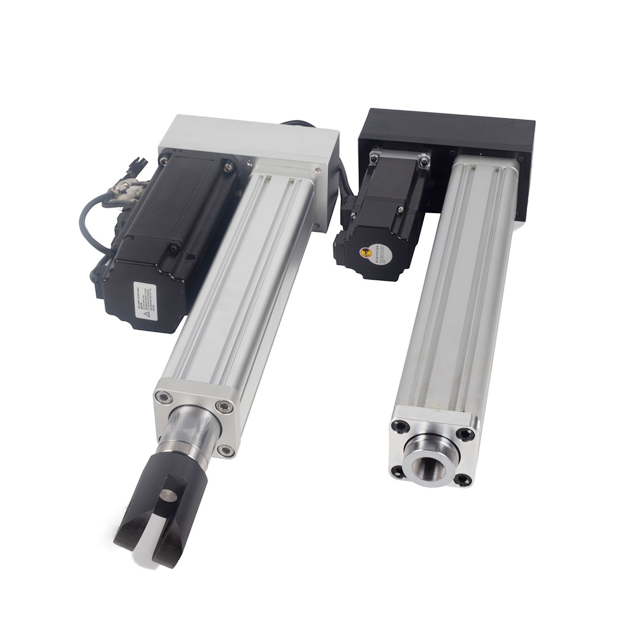
Have you ever wondered how much weight electric actuatorscan handle? Understanding their weight capacity is crucial for various applications. In this article, we’ll explore electric actuators, their static and dynamic load capacities, and why these factors matter. You’ll learn how to select the right actuator for your needs.
Understanding Static Load Capacity of Electric Actuators
What is Static Load Capacity?
Static load capacity refers to the maximum weight or force an electric actuator can support while stationary, without any motion. It’s also known as the holding load. This capacity is crucial for applications where an actuator must maintain a load in a fixed position for extended periods. For example, consider an actuator used in a locking mechanism or a support strut. If the static load capacity is exceeded, the actuator can suffer permanent damage, such as deformation of its housing or screw, leading to premature failure.
It's important to note that static load ratings are typically higher than dynamic load ratings. This is because static loads do not account for the stresses and strains that occur during movement. When selecting an actuator for static applications, always consult the manufacturer's specifications to ensure it meets your needs.
Applications Requiring Static Load Capacity
Static load capacity is essential in various applications across different industries. Here are some examples:
Industrial Equipment: Actuators that hold machinery parts in place during maintenance or operation.
Automotive: Used in trunk lids or hoods, where they must support the weight when closed.
Medical Devices: In hospital beds or surgical tables, actuators hold positions for patient safety.
Construction: Supporting temporary structures or scaffolding.
In each of these scenarios, the actuator must reliably hold the static load to ensure safety and functionality.
Consequences of Exceeding Static Load Limits
Exceeding the static load limits of an actuator can lead to several issues:
Permanent Damage: The actuator may experience deformation or failure of its components, leading to costly repairs or replacements.
Safety Risks: In applications like medical devices or automotive parts, failure can pose serious safety risks to users.
Operational Downtime: A malfunctioning actuator can halt operations, resulting in lost productivity and increased costs.
Reduced Lifespan: Constantly operating near or beyond the static load capacity can significantly reduce the actuator's lifespan.
Selecting an actuator with an appropriate static load capacity is vital to prevent these issues and ensure reliable performance in your application.
Dynamic Load Ratings of Electric Actuators
Definition of Dynamic Load Ratings
Dynamic load ratings refer to the maximum force an electric actuator can exert while in motion, either extending or retracting. This rating is critical for applications where the actuator is not just holding a load but actively moving it. Unlike static load capacity, which measures the actuator's strength when stationary, dynamic load ratings account for the stresses and strains that occur during movement. Understanding this rating is essential for ensuring that the actuator can perform its intended tasks without failure.
Factors Affecting Dynamic Load Capacity
Several factors influence the dynamic load capacity of electric actuators:
Motor Power: The power of the motor directly affects how much force the actuator can generate. More powerful motors can produce higher torque, allowing the actuator to handle heavier loads during operation.
Gear Ratios: The gear ratio within the actuator affects the torque multiplication. A higher gear ratio can provide more torque, thereby increasing the dynamic load capacity. However, this may slow down the actuator's movement speed.
Orientation: The orientation of the actuator plays a crucial role. For instance, when lifting loads vertically, the actuator experiences different stresses compared to horizontal applications. This can impact its effective load capacity.
Friction: The coefficient of friction in the system can also affect the dynamic load. Higher friction levels require more force to move the load, thus influencing the actuator's performance.
Material Quality: The materials used in constructing the actuator significantly impact its durability and load capacity. High-quality materials can withstand greater forces without failure.
Comparison of Static vs. Dynamic Load Ratings
Understanding the difference between static and dynamic load ratings is vital for selecting the right actuator. Static load ratings are generally higher because they measure the actuator's ability to hold a load without motion. In contrast, dynamic load ratings are lower due to the additional stresses placed on the actuator's components during movement. For example, if an actuator has a static load capacity of 1000 N, its dynamic load rating might be around 600 N. This difference highlights the importance of considering both ratings when selecting an actuator for a specific application.
In applications where the actuator is frequently moving loads, such as in robotics or conveyor systems, focusing on dynamic load ratings is essential. Selecting an actuator with an appropriate dynamic load capacity ensures reliable performance and reduces the risk of failure during operation.
Tip: Always refer to manufacturer specifications for both static and dynamic load ratings to ensure the actuator meets your application's requirements.
Factors Influencing the Load Capacity of Electric Actuators
Motor Power and Torque
The motor is the core component of an electric actuator, dictating its load capacity. Higher motor power translates to greater torque, which allows the actuator to lift or push heavier loads. For instance, a linear actuator equipped with a high-wattage DC motor can handle significantly more weight compared to one with a lower wattage. Think of it like a car engine: just as a more powerful engine can tow larger trailers, a robust motor enables the actuator to manage substantial forces.
Torque is essential because it’s the rotational force that the motor generates. The more torque an actuator has, the more weight it can move. When selecting an actuator, always consider the motor's specifications. It’s not just about the maximum load; understanding the torque curve can provide insights into how the actuator will perform under various conditions.
Gear Ratios and Their Impact
Gear ratios are another critical factor affecting load capacity. The gear system in an actuator modifies the motor's output, increasing its torque while reducing speed. For instance, a higher gear ratio means more torque, allowing the actuator to handle larger loads. However, this comes at the cost of speed; a trade-off that must be considered based on the application.
When evaluating gear ratios, it’s essential to match them to the task at hand. For applications requiring rapid movement, a lower gear ratio might be preferable. Conversely, if the primary need is to lift heavy loads, a higher gear ratio is ideal. Always check the actuator's specifications to ensure the gear ratio aligns with your load and speed requirements.
Material and Construction Quality
The materials used in an actuator’s construction significantly influence its load capacity. High-strength materials, such as steel, can withstand more stress than weaker alternatives like plastic. The internal components, including screws, bearings, and housings, must also be robust enough to handle the intended loads.
Quality construction ensures durability and reliability. Actuators built with precision engineering and high-quality materials are less likely to fail under load. When selecting an actuator, look for those with proven track records in demanding applications. Manufacturer specifications often provide insights into the materials used and their expected performance.
Types of Electric Actuators and Their Load Capacities
When selecting an electric actuator, understanding the different types and their respective load capacities is crucial. Electric actuators can be categorized based on their intended applications and the weight they can support. Below, we explore three main types: light-duty, medium-duty, and heavy-duty electric actuators.
Light-Duty Electric Actuators
Light-duty electric actuators are designed for applications where the load is relatively small. They are typically used in projects that require minimal force and movement. Common applications include:
Small-scale automation: Adjusting the position of displays or lightweight robotic arms.
Consumer electronics: Opening and closing lids or panels in devices.
Home automation: Controlling curtains or shades.
Load capacities for light-duty actuators usually range from a few kilograms up to around 50 kilograms. This makes them suitable for tasks where precision and low weight are priorities.
Medium-Duty Electric Actuators
Medium-duty electric actuators offer a balance between strength and versatility. They can handle a wider range of applications and are often employed in more demanding environments. Examples include:
Industrial machinery: Moving moderately heavy parts or components.
Automated doors: Opening and closing larger doors in commercial settings.
Medical devices: Adjusting hospital beds or other equipment that requires reliable movement.
Medium-duty actuators typically have load capacities ranging from 50 kilograms to 500 kilograms. This makes them ideal for applications where moderate force is needed without compromising speed or accuracy.
Heavy-Duty Electric Actuators
Heavy-duty electric actuators are the powerhouse of the actuator world. They are built to withstand significant loads and are often used in demanding environments. Applications include:
Construction equipment: Lifting and moving heavy materials on job sites.
Large-scale industrial automation: Handling heavy machinery and components.
Military applications: Operating equipment that requires robust performance under extreme conditions.
Heavy-duty actuators generally have load capacities starting from 500 kilograms and can exceed several tons. They are designed to endure high stress and provide reliable performance, making them suitable for critical applications.
Calculating Required Force for Electric Actuators
Understanding Force Calculations
Calculating the required force for electric actuators is essential for ensuring they perform optimally in various applications. The necessary force isn't just about the weight of the object being moved; it also involves several factors such as friction, angle of inclination, and desired acceleration.
To illustrate, let’s say you're lifting a 100 kg weight vertically. The force needed to lift it against gravity is approximately 980 Newtons (N). However, if you're pushing the same weight horizontally across a surface, the force calculation changes due to friction. The frictional force (f) can be calculated as the coefficient of friction (µ) multiplied by the normal force (N), which is affected by the weight of the object.
For example, if the coefficient of friction is 0.5, the force required to move the weight horizontally would be:
F>μ×W
This means the force from the actuator must overcome both the weight and any frictional resistance.
Incorporating Safety Factors
When selecting an actuator, incorporating a safety factor is a best practice. A common recommendation is to choose an actuator with a load capacity 20-30% higher than your calculated needs. This extra capacity accounts for unexpected resistance, shock loads, or variations in the system over time.
For instance, if your calculations suggest a required force of 1000 N, selecting an actuator with a capacity of 1200 N to 1300 N ensures reliability and longevity. This safety margin helps prevent actuator failure and costly downtime.
Selecting the Right Electric Actuator for Your Application
Assessing Load Requirements
When selecting an electric actuator, the first step is assessing your load requirements. This involves understanding both the weight of the object you need to move and any additional forces that may impact the actuator's performance. For instance, if you're lifting a heavy object, the actuator must not only support the weight but also account for factors like friction and gravitational forces.
To determine the right load capacity, start by calculating the total weight of the load. Then, consider factors such as:
Friction: If the load moves along a surface, you must factor in the frictional force, which can significantly affect the required force. For example, a load weighing 100 kg might require more force to move it across a surface due to friction.
Incline: If the actuator needs to lift the load at an angle, the calculations become more complex. You'll need to account for both the weight and the angle of inclination, which can increase the force needed.
Safety Factor: It's crucial to incorporate a safety margin. A common practice is to select an actuator with a load capacity 20-30% higher than your calculated needs to accommodate unexpected forces or variations over time.
Evaluating Environmental Conditions
Environmental conditions can significantly impact the performance and longevity of electric actuators. Factors to consider include:
Temperature: Extreme temperatures can affect the actuator's materials and performance. Ensure the actuator can operate within the required temperature range for your application.
Moisture and Dust: If the actuator will be exposed to moisture or dust, select one with appropriate ingress protection (IP) ratings. This ensures it can withstand harsh conditions without failure.
Vibration and Shock: In applications with high vibration or shock loads, choose actuators designed to handle these stresses. This is essential for maintaining performance and reliability over time.
Long-Term Reliability Considerations
When selecting an actuator, long-term reliability is key. You want an actuator that not only meets your immediate needs but also performs well over time. Consider these factors:
Material Quality: High-quality materials can withstand more stress and ensure durability. Look for actuators made from robust materials like steel or aluminum.
Manufacturer Reputation: Research manufacturers and their products. Reliable brands often provide detailed specifications and performance data, which can help you make informed decisions.
Maintenance Requirements: Some actuators require more maintenance than others. If your application demands continuous operation, consider low-maintenance options that can reduce downtime and total cost of ownership.
By thoroughly assessing load requirements, environmental conditions, and long-term reliability, you can select the right electric actuator for your specific application. This careful selection process helps ensure optimal performance and longevity.
Conclusion
Understanding the static and dynamic load capacities of electric actuators is crucial for selecting the right one. The static load capacity indicates how much weight an actuator can hold while stationary, while dynamic load ratings reflect its ability during movement. Proper selection prevents damage and ensures safety in various applications. For optimal performance, consider factors like motor power, gear ratios, and material quality. When in doubt, consulting experts can provide valuable insights. FDR offers high-quality electric actuators designed to meet diverse needs, ensuring reliability and efficiency in your applications.
FAQ
Q: What is an electric actuator and how does it work?
A: An electric actuator is a device that converts electrical energy into mechanical motion, allowing for precise control of movement in various applications.
Q: How much weight can an electric actuator hold?
A: The weight an electric actuator can hold depends on its static load capacity, which varies by type and specifications, typically ranging from a few kilograms to several tons.
Q: Why is static load capacity important for electric actuators?
A: Static load capacity is crucial because exceeding it can lead to permanent damage, safety risks, and operational downtime.
Q: What factors influence the load capacity of an electric actuator?
A: Factors include motor power, gear ratios, material quality, and environmental conditions.
Q: How do I calculate the required force for an electric actuator?
A: To calculate the required force, consider the weight, friction, and any incline, incorporating a safety margin of 20-30% for reliability.