Introduction
Have you ever wondered how automotive and aerospace components can withstand extreme vibrations and shocks? Six Degree of Freedom (6DoF) vibration testing is the answer.
In this article, we’ll explore how 6DoF systems simulate real-world stresses, ensuring the durability and performance of critical components. You’ll learn how these systems help manufacturers prepare their products for harsh environments, from vehicle parts to aircraft structures.
FDR offers advanced 6DoF testing solutions that provide precise and reliable simulations. Learn more about our products.
How 6DoF Vibration Test Systems Work
Shaker Tables and Multi-Axis Shakers
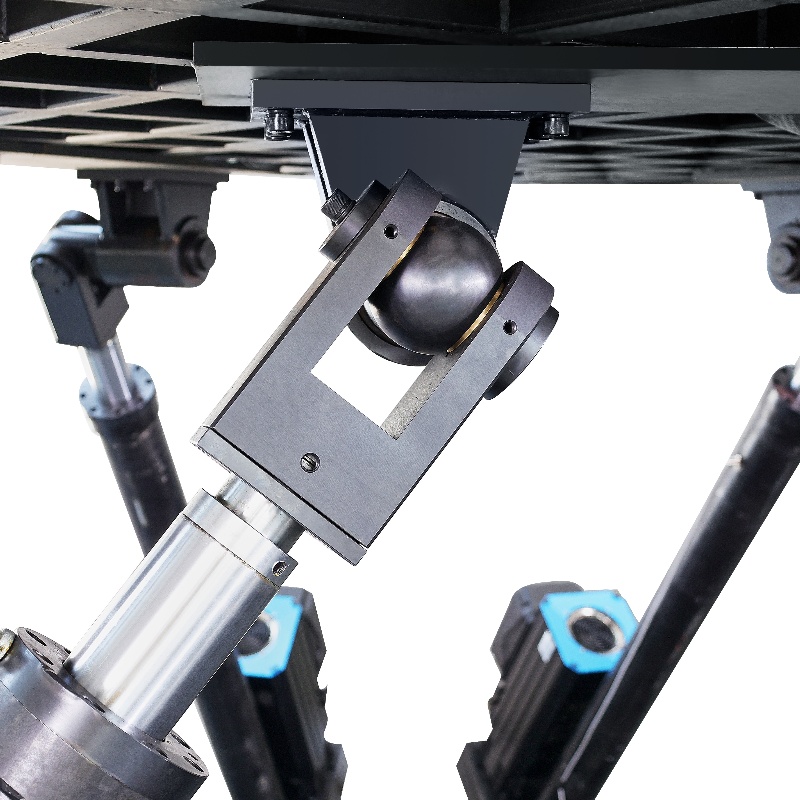
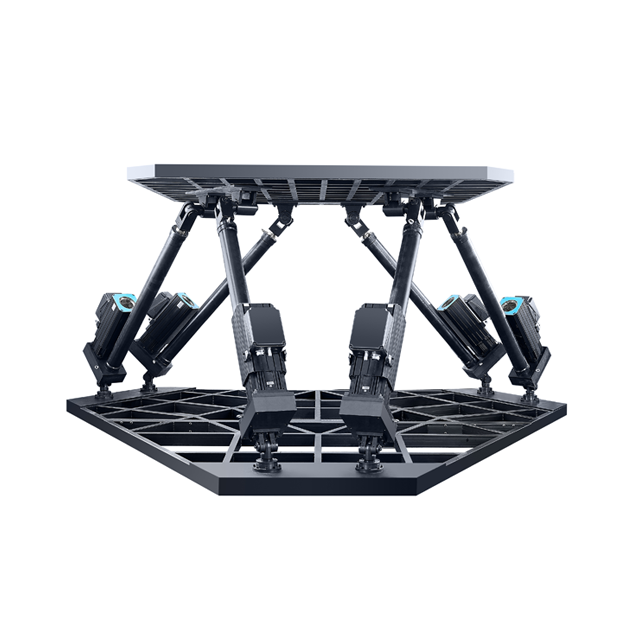
The core technology behind 6DoF vibration testing involves shaker tables and multi-axis shakers. These systems use multiple electrodynamic shakers to simulate motion across all six degrees of freedom—surge, sway, heave, pitch, roll, and yaw. By accurately controlling the motion in all directions, they replicate the real-world dynamic conditions that components experience.
In many modern test systems, including those used for automotive and aerospace components, high-load platforms that support up to 5000kg are crucial for realistic simulations. These platforms help ensure that large or heavy parts, such as automotive suspension components or aerospace panels, are tested under conditions that reflect their real-world application.
Hydrostatic Bearings and Controllers
Modern 6DoF systems incorporate hydrostatic bearings for smooth motion and minimal friction. These bearings are essential for maintaining high precision over long testing durations, reducing the need for frequent maintenance. The advanced control systems used in these vibration test systems allow for precise adjustments, ensuring that components are exposed to accurate vibration profiles.
For example, platforms used in automotive testing simulate road conditions with exactness, ensuring that vehicle parts, including suspension and tires, are subject to stress levels similar to those encountered in actual driving conditions. The precision offered by modern 6DoF systems allows manufacturers to simulate complex real-world conditions to improve product reliability.
Applications in Automotive and Aerospace Testing
Automotive Testing
6DoF vibration test systems are widely used in the automotive industry to replicate road conditions and evaluate the durability of components under dynamic conditions. These systems can test vehicle parts such as tires, suspension systems, and electronic components, ensuring they perform reliably over time. Additionally, electric vehicle batteries, which are exposed to intense vibrations, are also tested using these systems to simulate various driving scenarios.
The 6DoF systems allow for the simulation of harsh driving conditions, helping manufacturers identify weaknesses in their products and make the necessary improvements before mass production.
Aerospace Testing
In aerospace, 6DoF vibration testing is critical for ensuring that components can withstand the intense conditions they encounter during launch, re-entry, and flight. The technology replicates extreme vibrations caused by rocket launches or aerodynamic forces acting on aircraft parts.
Aerospace parts, including engines, fuselages, and satellite components, are put through these tests to simulate the impact of real-world stresses. By subjecting these components to highly accurate vibrations, manufacturers ensure that the parts can perform safely and reliably under harsh operating conditions.
Data Replication from Real Vehicles
One of the key advantages of modern 6DoF systems is their ability to replicate data captured from real-world vehicles. For instance, vibration data from actual road tests or flight simulations can be used to replicate those conditions precisely in the lab. This process allows for more accurate testing and ensures that the components are subject to the same stresses they will encounter in the field.
Benefits of 6DoF Vibration Test Systems
Realistic Simulations for Enhanced Durability
Moving beyond single-axis testing, 6DoF systems simulate complex multi-axis vibrations that components experience in real-world environments. These systems improve the accuracy of durability tests, ensuring components are designed to handle real-life conditions without failure.
For instance, in automotive testing, the platform can replicate various driving conditions including potholes, uneven roads, or harsh braking forces, allowing manufacturers to enhance the performance and safety of their vehicles.
Early Detection of Component Failures
6DoF vibration tests help identify weaknesses or potential points of failure in components before they are exposed to real-world stressors. By replicating dynamic conditions, these tests allow manufacturers to pinpoint issues early in the design process, reducing the risk of product failures and recalls.
This proactive testing process is especially important in critical industries such as aerospace, where safety is paramount, and failure is not an option.
Improved Design and Performance
Testing components under controlled, multi-axis conditions enables manufacturers to refine their designs for better performance. Data gathered from 6DoF vibration tests provides valuable insights that improve the overall quality, strength, and durability of automotive and aerospace parts.
These improvements in product design result in better performing vehicles and aircraft, which meet safety standards and customer expectations more effectively.
Integrated Environmental Testing
Many 6DoF systems are integrated with environmental chambers that can simulate temperature, humidity, and other factors along with vibration testing. This combination of environmental and mechanical stress testing ensures that components can perform under a variety of real-world conditions, making it a comprehensive testing approach.
Failure Type | How 6DoF Testing Helps | Example Components Tested |
Material Fatigue | Simulates prolonged stress to identify weak points | Vehicle suspension systems, aircraft parts |
Resonance Failure | Detects harmful vibration frequencies that can cause failure | Engine components, turbine blades |
Structural Weakness | Identifies points of failure under complex multi-axis stress | Aerospace frames, automotive chassis |
Examples of Leading 6DoF Vibration Test Systems
The Cube™ by Team Corporation
The Cube™ is an advanced 6DoF vibration test system known for its precision and high-frequency simulation capabilities. It is designed to handle a wide range of test profiles, from aerospace components to automotive parts, offering an immersive and accurate simulation environment.
This system’s ability to support heavy loads and high precision makes it ideal for testing large-scale components in industries that require stringent performance standards.
Sandia National Laboratories’ Large-Scale Testing System
Sandia’s large-scale 12-shaker system is designed for aerospace testing, providing highly accurate vibration simulations. With the capability to simulate complex mechanical systems under dynamic motion, it is used for testing parts like satellite systems and spacecraft components.
This system exemplifies the high precision and versatility required for advanced aerospace testing.
Data Physics-Controlled Systems
Used by NASA and other aerospace organizations, the Data Physics-controlled 6DoF systems are utilized for testing large aerospace components such as rocket systems and aircraft parts. These systems replicate extreme vibration conditions, ensuring that aerospace components can survive harsh operational conditions.
Feature | The Cube™ by Team Corporation | Sandia National Labs System | Data Physics-Controlled Systems |
Load Capacity | Up to 5000kg | High load capability | Varies based on configuration |
Precision | High-frequency vibration simulation | Ultra-precise for aerospace | Precision vibration for large-scale testing |
Applications | Automotive, aerospace, robotics | Aerospace, satellite testing | Aerospace, military, automotive |
System Type | Compact, precise | Large-scale, multi-shaker | Multi-shaker, advanced control |
Challenges in Implementing 6DoF Vibration Test Systems
High Cost and Complexity
While 6DoF systems provide immense benefits, they come with high setup and operational costs. The complexity of multi-axis testing requires specialized equipment and skilled operators, making these systems expensive to implement and maintain for smaller companies or startups.
System Calibration and Setup
Achieving precise motion across all six axes requires complex calibration, which can be time-consuming and costly. Ensuring that each system is properly calibrated is critical to maintaining the accuracy and reliability of the testing results.
Physical Space and Integration
Larger 6DoF systems, such as those used in aerospace testing, require significant space for operation. Integrating these systems with other testing infrastructure, such as environmental chambers or R&D setups, can be challenging in smaller facilities.
The Future of 6DoF Vibration Testing in Automotive and Aerospace Industries
Technological Advancements
As technology continues to evolve, 6DoF systems are incorporating artificial intelligence, machine learning, and newer materials to improve the accuracy and cost-effectiveness of testing systems. Future platforms will be able to simulate even more complex motion profiles with greater precision.
Wider Industry Adoption
The use of 6DoF vibration testing is likely to expand beyond automotive and aerospace industries, reaching sectors like consumer electronics, robotics, and medical devices. As testing systems become more accessible and versatile, their applications in various industries will increase.
Sustainability Considerations
With an increasing focus on sustainability, the future of 6DoF testing systems will likely include energy-efficient solutions, such as electric actuators. This shift will help reduce the environmental impact of vibration testing, making it more eco-friendly while maintaining high performance.
Conclusion
The transition to modern 6DoF systems marks a significant advancement in vibration testing for automotive and aerospace components. By replicating real-world conditions, these systems help manufacturers improve product designs and prevent failures.
FDR offers advanced 6DoF platforms that deliver high-precision solutions, ensuring the durability and reliability of products while meeting the highest safety and performance standards.
FAQ
Q: What is a Six Degree of Freedom (6DoF) vibration test system?
A: A 6DoF vibration test system simulates motion across six axes (three translational and three rotational) to test components for durability under real-world conditions. It's essential for automotive and aerospace testing.
Q: How does 6DoF vibration testing benefit automotive testing?
A: 6DoF systems replicate road conditions and harsh vibrations that automotive components face. This ensures vehicle parts, such as suspensions and electronics, perform reliably under real-world stresses.
Q: Why is 6DoF vibration testing important for aerospace components?
A: 6DoF testing simulates the extreme vibrations aerospace components encounter during launch and flight. It helps ensure the safety and performance of critical parts like satellite systems and aircraft components.
Q: What are the advantages of using 6DoF systems in component testing?
A: 6DoF systems offer precise, multi-axis vibration simulations, enhancing the accuracy of tests and providing early detection of potential failures, improving the durability and reliability of components.


