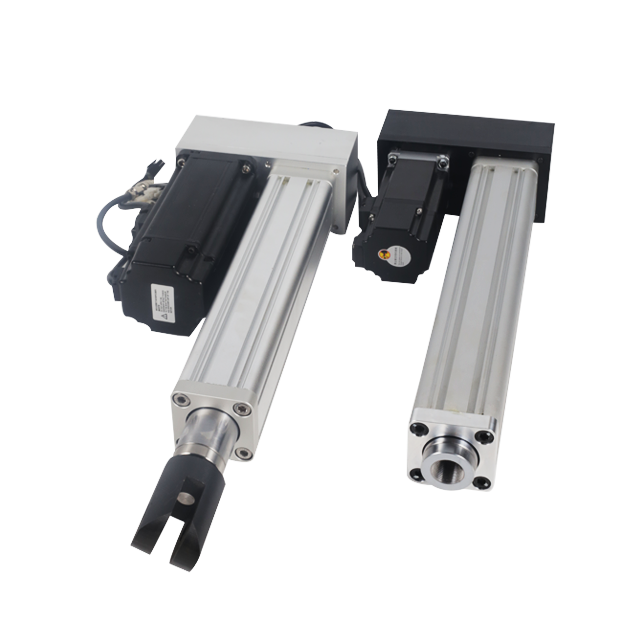
Electric linear actuators generally deliver better efficiency than hydraulic cylinders. High-load scenarios often favor hydraulics, but advanced electric cylinders are closing the gap.
Electric linear actuators are more efficient than hydraulic systems, as they only consume power when motion is required, unlike hydraulic systems that continuously consume energy to maintain pressure.
Recent innovations in electric actuator design have made a difference:
Electric linear Actuators vs. Hydraulic Cylinders: A Comparison highlights these differences and guides application choices.
Key Takeaways
Electric linear actuators are more efficient than hydraulic cylinders, using power only when movement occurs.
Modern electric actuators can handle high loads, making them competitive with hydraulic systems in demanding applications.
Electric actuators require minimal maintenance, reducing downtime and operational costs compared to hydraulic systems.
Hydraulic cylinders excel in high-force applications but have lower efficiency and higher maintenance needs.
Choose electric actuators for precision tasks, energy savings, and cleaner operations in various industries.
Select hydraulic actuators for rugged environments where extreme force and durability are essential.
Consider the total cost of ownership, as electric actuators may have higher upfront costs but lower lifetime expenses.
Evaluate your specific application needs to determine the best actuator type for optimal performance.
Electric Linear Actuators vs. Hydraulic Cylinders: A Comparison
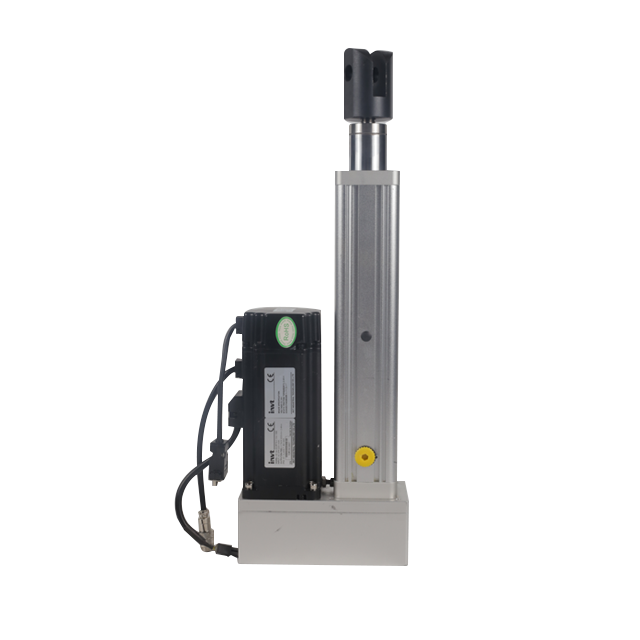
What Is an Electric Linear Actuator
Operation and Features
An electric linear actuator is a device that converts electrical energy into straight-line motion. These actuators use an electric motor to drive a screw mechanism, which moves a load along a linear path. The main components include a motor, lead screw, gears, cylinder, limit switch, and mounting hardware. The actuator’s operation begins when voltage is applied to the motor, creating a magnetic field that turns the rotor. This rotation is transferred to the lead screw through gears, causing the attached nut or guide to move in a straight line. Safety stops and wipers protect the actuator from overextension and contamination.
Electric actuators are known for their compact design and fewer components compared to hydraulic actuators. They offer programmable control, high flexibility, and efficiency rates between 75% and 80%. Modern electric actuators, such as the FDR Electric Cylinder, provide reliable and powerful linear motion, even in demanding industrial environments.
Common Uses
Electric linear actuators are widely used in many industries due to their precision and cleanliness. Common applications include:
Material handling in manufacturing operations.
Robotics for improved production quality and cost control.
Food and beverage manufacturing, where cleanliness and corrosion resistance are important.
Other uses include window automation for ventilation, agricultural machinery for precise movements, solar panel positioning, and laboratory automation. Electric actuators are also found in cutting equipment and valve operation in processing plants.
What Is a Hydraulic Linear Actuator
Operation and Features
A hydraulic linear actuator uses pressurized fluid, usually oil, to create linear motion. The system consists of a cylinder, piston, rod, inlet and outlet ports, seals, and hoses. When hydraulic fluid enters the cylinder, it pushes against the piston, causing the rod to extend or retract. The actuator’s movement depends on the pressure and flow of the hydraulic fluid. Seals prevent leaks and maintain pressure, while valves control the direction and speed of the piston.
Hydraulic actuators have more components than electric actuators, including a power unit, reservoir, and control valves. They are designed for high-force applications and can achieve significant output due to high operating pressures. However, their efficiency is typically lower, ranging from 40% to 55%.
Common Uses
Hydraulic actuators are essential in industries that require high force and durability. Typical applications include:
Heavy machinery in construction and mining.
Industrial presses and material forming equipment.
Agricultural and forestry equipment for lifting and moving heavy loads.
Hydraulic actuators are also used in marine and aerospace systems, where robust performance is necessary. They are preferred in environments where electric actuators may not provide enough force.
The table below summarizes the main differences between electric linear actuators and hydraulic cylinders:
Feature | Electric Linear Actuators | Hydraulic Cylinders |
System Components | Fewer components: motor, gearbox, cables, drive | More components: cylinder, power unit, valves, hoses |
Footprint | Smaller overall footprint due to compact design | Larger footprint due to hydraulic power unit (HPU) |
Force Capabilities | Limited by motor torque and mechanical advantage | High forces achievable due to high operating pressures |
Motion Control | Programmable control with high flexibility | Requires operator intervention for mid-stroke positioning |
Efficiency | 75-80% efficiency | 40-55% efficiency |
Electric linear actuators vs. hydraulic cylinders: a comparison shows that electric actuators excel in efficiency, control, and maintenance, while hydraulic actuators dominate in high-force applications. Choosing the right actuator depends on the specific application and operational requirements.
Efficiency Comparison
Energy Consumption
Electric Actuators Efficiency
Electric actuators have become the preferred choice in many industries because of their high energy efficiency. These actuators convert electrical energy directly into linear motion, which reduces wasted energy. Most electric actuators achieve efficiency rates between 75% and 80%. Some advanced models, such as the FDR Electric Cylinder, reach over 90% transmission efficiency. This high efficiency means less energy is lost during operation, resulting in lower electricity bills and a smaller environmental footprint.
Electric actuators only use power when movement is required. This feature leads to significant energy savings compared to systems that must maintain pressure or standby power.
The FDR Electric Cylinder series stands out for its energy-saving design. It provides up to 40-70% energy savings compared to pneumatic systems. The clean operation and precise control also contribute to reduced energy consumption.
The following table shows the energy efficiency of different actuator systems:
System Type | Energy Efficiency (%) |
Pneumatic | 23%-30% |
Hydraulic | 40% |
Electric | 80% |
Hydraulic Cylinders Efficiency
Hydraulic actuators rely on pressurized fluid to generate motion. This process involves several stages of energy conversion, which leads to lower overall efficiency. Most hydraulic actuators operate at efficiency levels between 40% and 55%. Energy is lost through heat, friction, and fluid leakage. Hydraulic systems also require continuous power to maintain pressure, even when no movement occurs.
Hydraulic actuators are often used in applications where high force is needed. However, their energy consumption is higher than electric actuators. The table below compares energy consumption ratings:
System Type | Energy Consumption Rating |
Pneumatic | 0.92 |
Electric | 6.08 |
Conversion Losses
Electric System Losses
Electric actuators experience minimal conversion losses. The main sources of loss are friction in the mechanical components and heat generated by the motor. Modern electric actuators use precision components and servo control to reduce these losses. The FDR Electric Cylinder, for example, uses high-quality materials and advanced engineering to achieve stable operation and long service life.
High transmission efficiency with precision components
Stable operation and long service life
Energy-saving and clean operation
Hydraulic System Losses
Hydraulic actuators face greater conversion losses. Energy is lost during the pressurization of fluid, through friction in hoses and valves, and from heat generated by the system. Hydraulic actuators also suffer from fluid leaks, which further reduce efficiency. The complexity of hydraulic systems increases the number of points where energy can be lost.
System Type | Efficiency Range | Key Characteristics |
Electromechanical | 10-40% | High friction, limited service life, suitable for light duty applications, lower power consumption. |
Hydraulic | High | Continuous lubrication, long service life, high efficiency, reduced wear and tear between components. |
Standby Power and Leakage
Hydraulic actuators require continuous power to maintain system pressure, even when the actuator is not moving. This standby power increases energy consumption and operational costs. Hydraulic actuators also have a high likelihood of oil leaks, which can cause environmental concerns and require frequent maintenance.
Electric actuators do not need standby power. They only consume energy when activated. Electric actuators also eliminate the risk of fluid leaks, making them safer and more reliable in sensitive environments.
Actuator Type | Leakage Rates | Maintenance Needs |
Hydraulic Actuators | High likelihood of oil leakages | Extensive maintenance required due to complex systems |
Electric Actuators | No fluid leaks | Minimal maintenance requirements |
Actuator Type | Points of Failure | Maintenance Complexity |
Hydraulic Actuators | Multiple (hoses, valves, etc.) | Labor-intensive maintenance |
Electric Actuators | Fewer points of failure | Easier maintenance |
Electric actuators offer fewer maintenance challenges and minimal points of failure. Hydraulic actuators require more attention due to potential leaks and multiple components prone to failure.
Performance Factors
Force and Load
High-Load Applications
Force and load capacity are critical when selecting actuators for industrial tasks. Hydraulic cylinders have long been the standard for high force applications, often delivering up to 66.3 kN (15,000 lbf) with a 3-inch cylinder at 2200 psi. However, modern electric actuators, especially roller screw types, now exceed 225.5 kN (over 50,000 lbf). This advancement allows electric actuators to compete directly with hydraulics in many demanding environments.
Electric actuators also offer precise control and energy efficiency in high-load scenarios. Their sealed design reduces maintenance and eliminates hydraulic leaks, which improves safety and reliability. These features make electric actuators a strong choice for high force applications where both power and accuracy are required.
Medium and Low Loads
For medium and low load tasks, electric actuators provide a wide range of options. Models like the OSPE50-ST and ETH032 deliver maximum thrusts of 2,500 N (562 lbs) and 3,700 N (832 lbs), respectively. These actuators are ideal for assembly lines, robotics, and laboratory automation. Hydraulic cylinders can handle these loads as well, but electric actuators offer better energy savings and simpler installation.
Speed and Response
Acceleration
Speed and acceleration are important for many automation processes. Electric actuators typically respond faster than hydraulic cylinders because they use direct motor control. This quick response improves overall system performance and reduces cycle times. Hydraulic systems can achieve high speeds, but their response depends on fluid dynamics, which can introduce delays.
Feature | Electric Linear Actuators | Hydraulic Cylinders |
Speed | Generally faster due to direct control | Can be swift but depends on hydraulic system |
Response Time | High precision and quick response capabilities | Slower response due to fluid dynamics |
Consistency
Electric actuators excel in providing smooth and consistent motion. They maintain steady acceleration and deceleration throughout the cycle, reducing shocks and impacts. This consistency enhances reliability and extends equipment life. Hydraulic cylinders may experience fluctuations in speed and force due to changes in fluid pressure, which can affect performance.
Precision and Control
Positioning Accuracy
Positioning accuracy is a key factor in many industrial applications. Electric actuators typically achieve higher accuracy than hydraulic cylinders. High-end electric actuators can reach repeatability levels of ±0.01 mm, making them suitable for tasks that require exact placement. Hydraulic cylinders, even at their best, usually offer accuracy between ±0.5 mm and ±0.1 mm.
Actuator Type | Positional Accuracy |
Electric Actuators | Higher than hydraulic |
Hydraulic Cylinders | ±0.01mm (high-end) |
| ±0.5 mm to ±0.1 mm (commercial) |
Repeatability
Repeatability measures how well an actuator can return to a set position over multiple cycles. Electric actuators provide excellent repeatability due to advanced control systems and minimal wear. They can hold positions without drift and repeat motions with micron-level accuracy. Hydraulic cylinders, on the other hand, may suffer from leaks and wear, which reduce repeatability and require frequent adjustments.
Electric actuators deliver consistent performance, precise control, and reliable operation, making them the preferred choice for applications where accuracy and repeatability are essential.
Duty Cycle and Environment
Continuous Use
Duty cycle describes how long an actuator can operate before it needs to rest. This factor is important in applications that require frequent or continuous movement. Electric linear actuators and hydraulic cylinders both serve in continuous-use environments, but their performance depends on design and application.
Electric actuators can be tailored for different duty cycles. Some models, like those with brushed DC motors, work well for low-duty-cycle tasks. These are cost-effective but may not last long under constant use. For high-duty-cycle or continuous-use applications, manufacturers use robust brushless motors. These motors handle frequent starts and stops without overheating or wearing out quickly. For example, the Ewellix CAHB22E linear actuator is designed for medium-duty-cycle applications. It can push up to 10,000 N and pull up to 20,000 N. This makes it a maintenance-free alternative to pneumatic or light hydraulic cylinders in many industrial settings.
Hydraulic cylinders are also common in continuous-use environments. They can run for long periods because the hydraulic fluid helps cool and lubricate moving parts. However, they require regular maintenance to check for leaks and ensure the system stays clean. Over time, seals and hoses may wear out, especially if the system runs non-stop.
When choosing between electric and hydraulic actuators for continuous use, consider the specific demands of the application. Electric actuators offer maintenance-free operation and precise control. Hydraulic cylinders provide high force and durability but need more upkeep.
Harsh Conditions
Industrial environments often expose actuators to harsh conditions. These include extreme temperatures, dust, moisture, and chemical exposure. Both electric and hydraulic actuators face challenges in such settings.
Thermal cycling, which means repeated heating and cooling, causes expansion and contraction in actuator components. This stress can reduce the life of seals and bearings in both types.
Hydraulic systems often deal with high pressure, high temperature, and fluid contamination. These factors can degrade seals, leading to hardening, cracking, and loss of elasticity. When seals fail, leaks and power loss occur. In severe cases, the actuator may stop working altogether.
Hydraulic systems may also experience changes in fluid viscosity due to temperature swings. This can affect performance and may require extra temperature control measures.
Electric actuators generally handle extreme temperatures better. Some models, like those with protective enclosures or high IP ratings, resist dust and water. However, they may still need extra protection in very harsh environments.
Tip: When selecting an actuator for harsh conditions, look for features like sealed housings, corrosion-resistant materials, and high ingress protection (IP) ratings. These features help extend service life and maintain reliable performance.
Choosing the right actuator for continuous use and harsh environments ensures long-term reliability and reduces downtime. Electric actuators, especially those designed for industrial use, offer strong performance with less maintenance. Hydraulic cylinders remain a solid choice for high-force tasks but require careful monitoring and regular service.
Electric Actuators: Pros and Cons
Advantages
Efficiency
Electric actuators stand out for their impressive efficiency in industrial and automation settings. They convert electrical energy directly into linear motion, which reduces energy loss. Unlike hydraulic systems, electric actuators do not require continuous pump operation. This means they only use power when movement is needed. Their compact design saves space and eliminates the need for external pumps or motors. Quick installation is possible with simple wiring, making setup efficient and cost-effective.
Electric actuators are more energy-efficient, especially under partial load conditions.
They do not experience the energy losses that hydraulic systems face during pump operation.
Their design allows for smooth operation and repeatable performance.
Precision
Precision is a key advantage of electric actuators. These actuators provide precise motion control, which is essential for applications that require accurate positioning. Integration with digital control systems is seamless, and feedback mechanisms can be added for even greater accuracy. Electric actuators deliver consistent speed and repeatability, making them ideal for tasks that demand high levels of control.
Note: Electric actuators offer smooth and repeatable capabilities, which increases productivity and ensures reliable results.
Maintenance-Free
One of the most attractive features of electric actuators is their low maintenance requirement. They do not use hydraulic fluid, so there is no risk of leaks or contamination. This leads to a cleaner work environment and reduces the need for regular maintenance checks. The absence of complex components, such as hoses and valves, means fewer points of failure. As a result, electric actuators help lower long-term operational costs and minimize downtime.
Feature | Electric Actuators | Hydraulic Cylinders |
Maintenance Needs | Minimal | Frequent |
Cleanliness | High | Risk of fluid leaks |
Installation | Simple wiring | Complex setup |
Disadvantages
Force Limits
Electric actuators face limitations when compared to hydraulic cylinders, especially in high-load applications. These actuators may struggle to meet the highest load ratings and can be affected by shock loads. Overheating can occur during extreme duty cycles. Maintaining a locked position or avoiding backlash can also be challenging for electric actuators, while hydraulic systems handle these demands more easily.
Initial Cost
The initial cost of electric actuators is typically higher than that of hydraulic cylinders. However, electric actuators often lead to lower total costs over time. Reduced maintenance and lower utility expenses contribute to long-term savings. For example, while a pneumatic actuator may cost less upfront, an electric actuator can last much longer and provide better value throughout its service life.
Tip: Consider both the initial investment and the total cost of ownership when selecting actuators for your application.
Hydraulic Linear Actuator: Pros and Cons
Advantages
High Force Output
Hydraulic linear actuators are well known for their ability to deliver high force. These actuators use incompressible fluids to generate motion, which allows them to produce significant forces. Many industries rely on hydraulic actuators when they need to move or lift heavy loads. The force and torque produced by these actuators remain stable during operation. This stability comes from the nature of hydraulic fluids, which do not compress under pressure. As a result, hydraulic actuators can maintain consistent performance without frequent pressure adjustments.
Hydraulic actuators often outperform pneumatic systems in terms of force output.
These actuators can handle demanding tasks in construction, mining, and heavy manufacturing.
The design of hydraulic actuators allows pumps and motors to be installed away from the actuator itself. This flexibility helps engineers optimize system layouts with minimal energy loss.
Durability
Durability is another strength of hydraulic actuators. These actuators are built to withstand harsh environments and continuous use. The robust construction of hydraulic actuators makes them suitable for outdoor and industrial settings. Many hydraulic actuators operate reliably for years, even under tough conditions. Their ability to handle shock loads and resist damage adds to their appeal in heavy-duty applications.
Disadvantages
Lower Efficiency
Despite their strengths, hydraulic actuators have some drawbacks. One major concern is lower efficiency. Hydraulic actuators lose energy through heat, friction, and fluid movement. The process of pressurizing fluid and moving it through hoses and valves leads to energy loss. Hydraulic actuators also require power to maintain system pressure, even when the actuator is not moving. This constant energy use increases operational costs over time.
Note: Hydraulic actuators are less efficient than electric actuators, especially in applications where energy savings are important.
Maintenance Needs
Maintenance is a key consideration for hydraulic actuators. These actuators need regular attention to keep them running smoothly. Common maintenance tasks include oil changes, filter replacements, and hose inspections. Hydraulic actuators are prone to fluid leaks, which can cause environmental issues and require immediate repairs. The complexity of hydraulic systems means that downtime for maintenance can be longer compared to electric actuators.
Hydraulic actuators require frequent oil and filter changes.
Hoses and seals must be checked and replaced as needed.
Regular maintenance helps prevent leaks and ensures reliable operation.
In contrast, electric actuators have fewer moving parts and need less maintenance. This difference leads to less downtime and higher efficiency for equipment that uses electric actuators.
Application Suitability
When to Choose Electric Linear Actuators
Best Applications
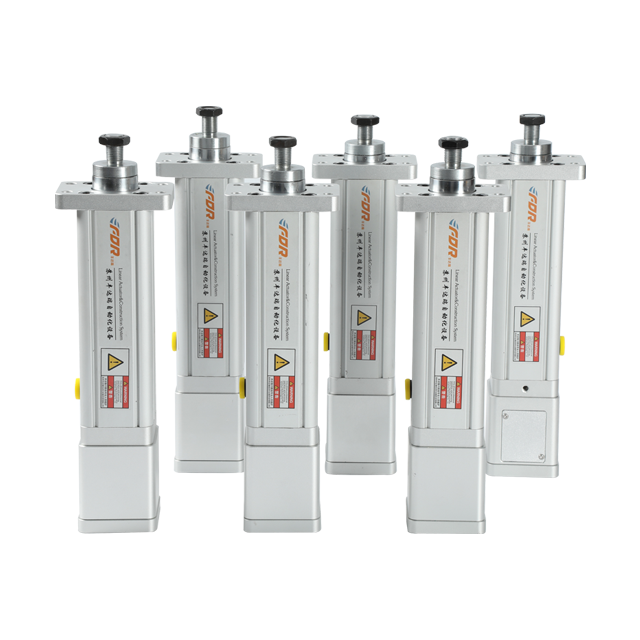
Electric actuators are ideal for tasks that require precision, energy efficiency, and clean operation. These actuators excel in environments where programmable control and minimal maintenance are important. The FDR Electric Cylinder demonstrates suitability for high load capacity, harsh conditions, and applications demanding precise movement. Electric actuators are increasingly replacing hydraulic systems in many industries due to their reliability and performance.
Medical technology: surgical tools and MRI machines
Automotive: automated steering and seat adjustments
Industrial automation: pressing, lifting, and positioning materials
Agriculture: tractors and harvesters for efficient operation
Aerospace: flaps and landing gear control
Home automation: window and blind adjustment
Renewable energy: solar panel and wind turbine positioning
Marine: boat hatches and rudders
Entertainment: stage equipment
Robotics: robotic arms and mobile robots
HVAC systems: airflow and temperature regulation
Adjustable furniture: office and home comfort
Industry Examples
Electric actuators are common in manufacturing, robotics, and laboratory automation. They power assembly lines, automated production machines, and material handling systems. FDR Electric Cylinders provide reliable linear motion in CNC machines, laser cutting systems, and automated inspection stations. These actuators support rehabilitation devices and surgical robots, offering precise control for medical procedures.
When to Choose Hydraulic Cylinders
Best Applications
Hydraulic actuators are preferred for applications that require extreme force and durability. These actuators perform well in heavy-duty environments where rugged performance is necessary. Hydraulic systems are suitable for tasks involving continuous operation and high-pressure demands.
Construction and heavy equipment: excavators, loaders, bulldozers
Manufacturing and automation: factory machines with tie-rod cylinders
Material handling and logistics: forklifts and lift tables
Agriculture and farming: tractors and irrigation systems
Oil and gas industry: drilling rigs with specialized cylinders
Industry Examples
Hydraulic actuators are found in construction machinery, mining equipment, and large-scale manufacturing. They operate in environments where electric actuators may not provide enough force. Hydraulic systems are essential in oil and gas drilling, material handling, and agricultural machinery.
Cost and Sustainability
Upfront vs. Lifetime Cost
Electric actuators often have a higher upfront cost than hydraulic systems. However, their lower energy use and minimal maintenance result in better lifetime value. Hydraulic actuators may cost less initially but require frequent maintenance and consume more energy over time.
System Type | Upfront Cost | Maintenance Cost | Lifetime Value |
Electric actuators | High | Low | High |
Hydraulic actuators | Lower | High | Moderate |
Environmental Impact
Electric actuators convert electrical energy directly into mechanical motion, reducing power requirements and carbon emissions. These actuators do not use oil, eliminating the risk of leaks that can harm soil and water. Hydraulic systems pose environmental hazards due to potential fluid leaks and resource depletion from metal extraction. Manufacturing hydraulic actuators is energy-intensive and can contribute to greenhouse gas emissions.
Electric actuators offer a cleaner, more sustainable solution for many applications, supporting industry trends toward greener operations.
Future Trends
Electric Actuator Innovations
The world of actuators is changing quickly. Electric actuators are leading this change with new features and smarter designs. Many companies now use advanced sensors and feedback systems in their electric actuators. These sensors help the actuators move with greater accuracy and repeatability. Some electric actuators can now reach a repeatability of ±0.01mm, which is important for tasks that need exact movement.
Another trend is the use of programmable controls. Users can set different force and speed profiles for each job. This flexibility allows electric actuators to work in many industries, from robotics to automotive manufacturing. The FDR Electric Cylinder is an example of how electric actuators are closing the gap with hydraulic systems in high-load applications. These actuators also last longer and need less maintenance, which saves money over time.
Hydraulic System Advances
Hydraulic actuators still play a big role in heavy-duty industries. Recent advances focus on making these actuators more efficient and reliable. New sealing technologies help reduce leaks and extend the life of hydraulic actuators. Some systems now use smart sensors to monitor pressure and temperature. These sensors alert users to problems before they cause damage.
Manufacturers are also working on compact designs. Smaller hydraulic actuators fit into tight spaces while still delivering high force. Improved materials, such as advanced alloys and coatings, help these actuators resist wear and corrosion. These changes make hydraulic actuators more dependable in harsh environments.
Sustainability Trends
Sustainability is a growing concern in the world of actuators. Many companies want to lower their energy use and reduce waste. Electric actuators help meet these goals because they only use power when moving. This feature leads to lower energy bills and less pollution. Electric actuators do not use oil, so there is no risk of leaks that can harm the environment.
Hydraulic actuators are also becoming greener. Some new systems use biodegradable fluids instead of traditional oils. Others recycle energy from the actuator’s movement to power other parts of the system. Both electric and hydraulic actuators are moving toward designs that last longer and require less maintenance. These trends help industries save resources and protect the planet.
Tip: When choosing actuators for future projects, consider both efficiency and environmental impact. New technologies make it easier to find actuators that are powerful, precise, and sustainable.
Electric actuators deliver better efficiency in most scenarios. For tasks that require high force, hydraulic actuators remain strong options. Consider these points for your actuator choice:
Use electric actuators for precision, energy savings, and clean operation.
Select hydraulic actuators for extreme force and rugged environments.
Advanced electric actuators, such as the FDR Electric Cylinder, now handle high-load and precision tasks.
Evaluate your needs carefully before selecting an actuator for your application.
FAQ
What makes electric linear actuators more efficient than hydraulic cylinders?
Electric actuators convert electrical energy directly into motion. They only use power when moving. Hydraulic cylinders lose energy through heat, friction, and fluid leaks. This difference gives electric actuators higher efficiency.
Can electric actuators replace hydraulic cylinders in all applications?
Electric actuators now handle many tasks once reserved for hydraulics. However, hydraulic cylinders still excel in extreme force or shock load situations, such as heavy construction equipment.
How much maintenance do electric actuators require?
Electric actuators need very little maintenance. They have fewer moving parts and no fluid to check or replace. Most models only require occasional inspection for wear or loose connections.
Are electric actuators suitable for outdoor or harsh environments?
Yes. Many electric actuators, like the FDR Electric Cylinder, feature sealed housings and high IP ratings. These designs protect against dust, water, and temperature changes.
Which actuator type is better for precise positioning?
Electric actuators offer superior precision. Many models achieve repeatability as fine as ±0.01 mm. This makes them ideal for robotics, laboratory automation, and manufacturing.
What are the main environmental benefits of electric actuators?
Electric actuators do not use oil or hydraulic fluid. This eliminates the risk of leaks and contamination. They also consume less energy, which reduces carbon emissions.
How do initial costs compare between electric and hydraulic actuators?
Electric actuators usually cost more upfront. However, they save money over time through lower energy use and reduced maintenance. Hydraulic systems may cost less at first but often have higher lifetime expenses.
Can electric actuators handle high-load applications?
Yes. Modern electric actuators, including the FDR Electric Cylinder, can deliver high thrust—up to 20,000 kg. They now compete with hydraulic cylinders in many heavy-duty tasks.


