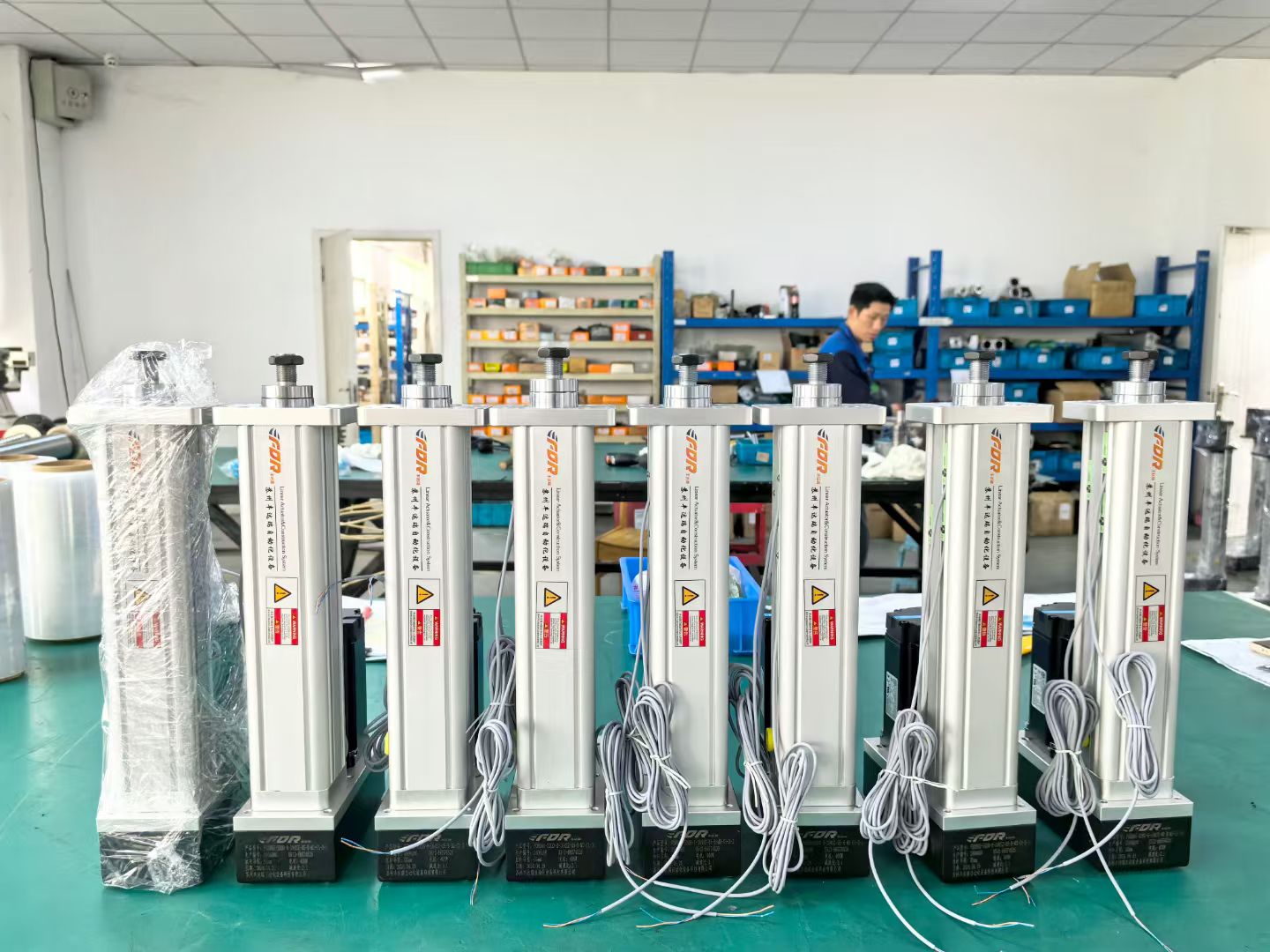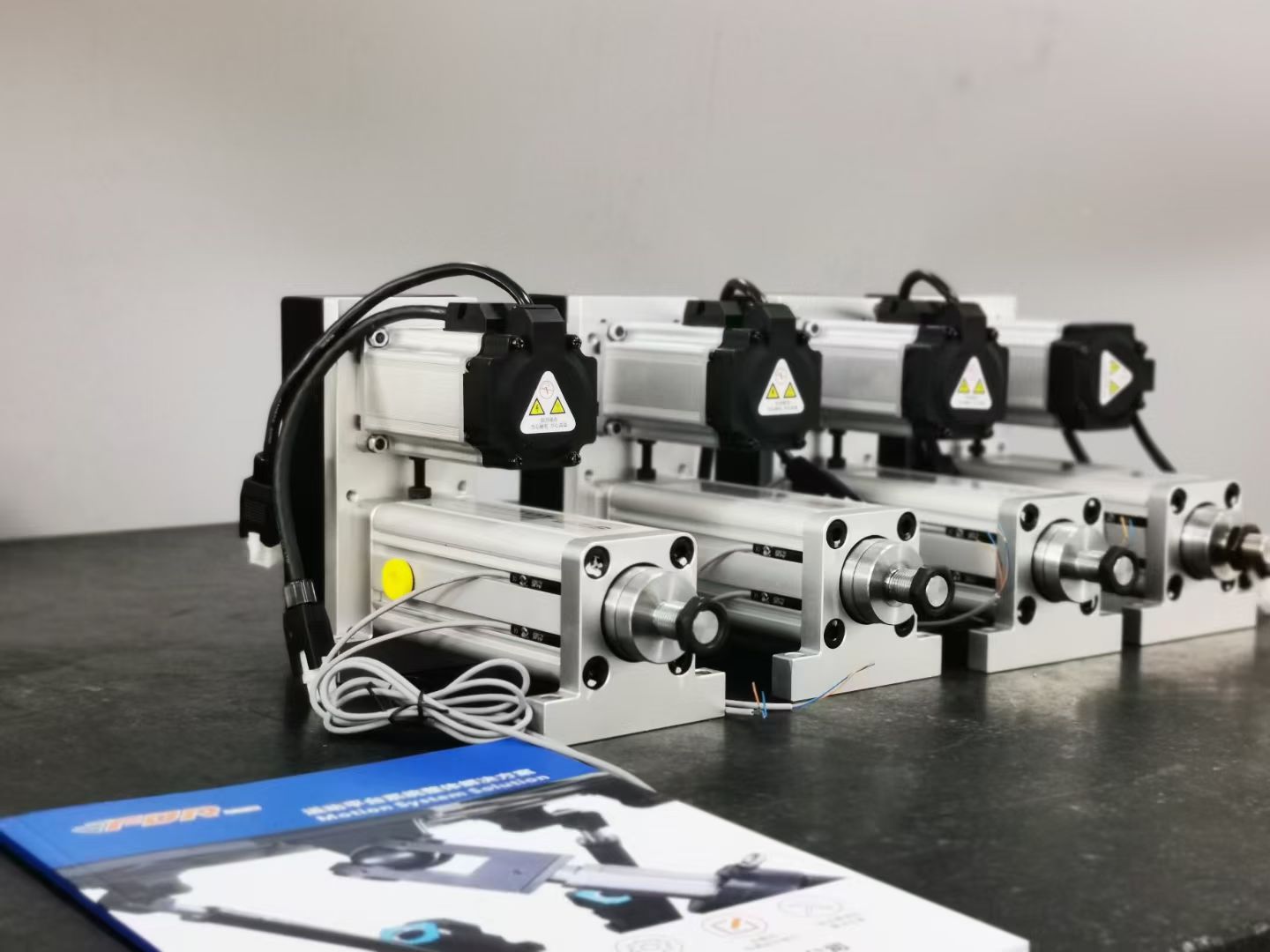
You want to know how to choose an electric linear actuator? Start with your application needs. The right selection gives you precision, reliability, and long-term value. FDR Electric Cylinder stands out as a high-performance actuator that matches demanding requirements. You achieve better results when you focus on selection based on load, speed, and environment. Electric cylinders deliver up to 80% energy efficiency and offer unmatched durability. Compare the systems below to see why electric actuator selection matters:
System Type | Energy Efficiency | Durability Considerations |
Pneumatic | 10% - 25% | Efficiency drops over time due to seal degradation and leaks. |
Hydraulic | ~40% | Requires continuous pump operation, leading to higher maintenance. |
Electric | Up to 80% | Draws power only during motion, resulting in lower energy consumption and longer asset life. |
You gain confidence in actuator selection when you match the right actuator to your needs. Discover how to choose an electric linear actuator? and make the best selection for your project.
Key Takeaways
Start by understanding your application needs. Match the actuator's capabilities to your project's requirements for optimal performance.
Calculate the required load and speed. Always add a safety margin of 20-30% to ensure reliability and extend actuator life.
Consider environmental factors like temperature and humidity. Choose actuators designed for harsh conditions to avoid unexpected failures.
Define stroke length accurately. Measure the minimum and maximum positions needed, and allow for overtravel to protect the actuator.
Select the right control and feedback options. Automated control and position sensors enhance precision and safety in your applications.
Review actuator datasheets carefully. Focus on key parameters like thrust, speed, and environmental ratings to make informed comparisons.
Use sizing tools to streamline your selection process. These tools help ensure you choose an actuator that meets all your specific needs.
Prioritize suppliers with strong after-sales support. Reliable technical assistance can help you maintain your actuator's performance over time.
Application requirements for actuator selection
Choosing the right electric linear actuator starts with a clear understanding of your application requirements. You need to match the actuator’s capabilities to the unique demands of your project. The following table highlights the most common requirements that influence actuator selection in industrial settings:
Requirement | Description |
Stroke Length | Maximum distance the actuator can extend and retract, impacting functionality and installation. |
Speed | Measured in mm/s, varies with load; critical for applications needing controlled or fast movement. |
Load Capacity | Static and dynamic force ratings essential for safe operation; must consider push/pull differences. |
Voltage Requirements | Common voltages include 12V to 220V; impacts power consumption and application suitability. |
Noise Levels | Varies by technology; important for applications requiring low acoustic performance. |
Reliability and Durability | Service life expectations and environmental resistance are crucial for long-term performance. |
Application-Specific Needs | Considerations for medical, industrial, and automation applications, focusing on specific requirements. |
Load and force needs
Static and dynamic loads
You must determine the force your application demands. Start by calculating the weight of the object and any friction the actuator must overcome. Consider both static loads (when the actuator holds a position) and dynamic loads (when the actuator moves the load). The orientation of the load and actuator also plays a role. For example, vertical lifting requires more force than horizontal movement. If your load is externally guided, you can reduce the force needed. FDR Electric Cylinder offers a thrust range from 200 kg up to 20,000 kg, making it ideal for both light and heavy-duty applications.
Safety margin
Never select an actuator that matches your calculated force exactly. Always add a safety margin—typically 20-30% above your maximum expected load. This margin protects your system from unexpected shocks or overloads. It also extends the service life of your actuator. The FDR Electric Cylinder’s robust design and zero-maintenance features ensure reliable performance, even under demanding conditions.
Speed requirements
Cycle time
You need to know how fast your application must move. Cycle time refers to the total time required for the actuator to complete one full movement. In packaging or assembly line applications, actuators often need to match the speed of conveyor belts or robotic arms. Some heavy-duty actuators can reach speeds up to 5 m/s, while others are designed for slower, more controlled movements.
Force-speed relationship
The force and speed requirements directly affect the actuator’s motor and screw selection. High force at high speed often requires a servomotor and a specific lead screw pitch. If you choose the wrong combination, you risk losing accuracy or power. The FDR Electric Cylinder delivers up to 100 mm/s speed with repeat accuracy of ±0.01mm, making it perfect for applications that demand both precision and efficiency.
Stroke length and space
Minimum/maximum positions
You must define the minimum and maximum positions your actuator needs to reach. The stroke length should cover the full range of motion required by your application. FDR Electric Cylinder offers stroke lengths from 50 mm to 1000 mm, giving you flexibility for different setups.
Spatial constraints
Installation space can limit your actuator choice. Compact actuators are essential for tight spaces, but you must ensure the stroke length still meets your application’s needs. The FDR Electric Cylinder’s IP67 rating and compact design allow for installation in challenging environments without sacrificing performance.
Tip: Always measure your available space and required stroke before finalizing your actuator selection. This step prevents costly mistakes and ensures smooth integration into your system.
By focusing on these application requirements, you set the foundation for a successful actuator selection. The FDR Electric Cylinder meets the highest standards for thrust, precision, and durability, making it a smart choice for any industrial application.
Environmental factors
When you select an electric linear actuator, you must consider the environment where your application will operate. Environmental factors can directly impact the performance and lifespan of your actuator. If you ignore these conditions, you risk unexpected failures and costly downtime.
Temperature and humidity
Temperature and humidity play a major role in actuator reliability. High temperatures can degrade lubricants, soften seals, and damage electronic components. Low temperatures may cause stiff movement and make materials brittle. Humidity can lead to corrosion and accelerate wear on metal parts. You should always match your actuator to the specific conditions of your application. The table below shows how these factors affect actuator performance:
Environmental Factor | Effect on Performance |
High Temperatures | Degrade lubricants, soften seals, affect electronic components |
Low Temperatures | Cause stiff movement, brittle materials |
Humidity | Lead to corrosion, accelerate wear on metal components |
If your application involves extreme temperatures or high humidity, choose an actuator designed for these challenges. The FDR Electric Cylinder features an IP67 rating and a maintenance-free design, making it ideal for harsh industrial environments. You gain peace of mind knowing your actuator will deliver consistent performance, even under tough conditions.
IP rating and protection
You must also consider the level of protection your actuator needs. The IP rating indicates how well the actuator resists dust and water. For example, an IP67 rating means the actuator is dust-tight and can withstand temporary immersion in water. This level of protection is essential for applications in food processing, outdoor automation, or any setting exposed to moisture and debris. The FDR Electric Cylinder’s robust enclosure ensures your actuator remains reliable, reducing the risk of contamination or failure.
Precision and repeatability
Precision and repeatability are critical for applications that demand exact positioning and consistent results. If your application involves laboratory automation, robotics, or high-precision assembly, you cannot compromise on these factors.
Tolerance needs
You should start by quantifying your entire moving load, including all parts connected to the actuator. Next, define your motion goals. How accurate must each movement be? What level of repeatability does your application require? The FDR Electric Cylinder delivers repeatability of ±0.01mm, ensuring your actuator meets the strictest tolerance needs.
Impact on application
Precision and repeatability influence every aspect of your application. Follow these steps to ensure you select the right actuator:
Quantify your moving load and all connected parts.
Set clear goals for accuracy and repeatability.
List other priorities, such as noise level or cleanliness.
Evaluate the working environment for dust or moisture.
Consider expected maintenance and operator handling.
Match the actuator’s capabilities to your application’s requirements.
When you choose an actuator with high precision and repeatability, you guarantee reliable results and reduce the risk of errors. The FDR Electric Cylinder stands out as a top choice for demanding applications, offering unmatched accuracy and durability.
Force and speed calculation for linear actuator selection
Choosing the right actuator means you must calculate the force and speed your system needs. This step ensures your actuator delivers reliable performance and long service life. You want to avoid underpowered or oversized actuators. Follow these guidelines to make your linear actuator selection process accurate and efficient.
Calculating force
Basic formulas
You must know how much force your actuator needs to move or hold a load. Use these common formulas:
Dynamic Force (F): F > (W × x) / y, where W is the weight and y is the distance from the point of rotation.
Static Force: The maximum weight your actuator can hold when stationary.
Friction Force (f): f = u × N, where u is the coefficient of friction and N is the normal force.
For motion at an angle: F > W × sin(θ) + u × N.
For rotational motion: Calculate torque based on distances from the rotation point.
Always add a safety margin to your calculations. This step protects your actuator from overload and extends its lifespan.
Friction and incline
Friction and incline change the force your actuator must deliver. Use the table below to see how these factors affect your calculations:
Parameter | Formula |
Mechanical Power Out (P0) | P0 = F × v |
Electrical Power In (Pi) | Pi = E × I |
Friction Considerations | Lower friction improves efficiency and actuator life. |
If your application involves ramps or sliding surfaces, reduce friction with lubrication and choose materials with a low coefficient of friction. This approach boosts efficiency and protects your actuator.
Calculating speed
Required travel time
You must know how fast your actuator needs to move. Start by measuring the distance your actuator must travel and the time allowed for each movement. Divide the distance by the required time to find the minimum speed.
Matching actuator speed
Check supplier performance charts to match your speed and force needs. If you need more speed, you can:
Always balance speed and force. High speed with high force may require a more powerful actuator. Use these steps to make your linear actuator selection precise and reliable.
Duty cycle and thermal limits
Continuous operation
Duty cycle tells you how long your actuator can run before it needs to cool down. Continuous operation builds up heat. Too much heat can damage insulation, brushes, or magnets. This damage shortens actuator life and causes failures.
Note: At low loads, your actuator can run longer. At maximum loads, you must allow more cooling time. Hot environments lower the safe duty cycle.
Overheating prevention
You can prevent overheating and extend actuator life by following these steps:
Choose an actuator that operates below its maximum capacity.
Improve ventilation around the actuator.
Lubricate moving parts regularly.
Inspect for wear, leaks, and alignment issues.
Use feedback sensors for predictive maintenance.
Smart linear actuator selection protects your investment and keeps your system running smoothly.
Stroke and mounting for actuator selection
Stroke measurement
Application tips
You must measure stroke length with care. Start by identifying the minimum and maximum positions your actuator needs to reach. Use a ruler or digital caliper for accuracy. Record the total distance your actuator must travel. If you work with automated machinery, check the specifications for each movement. You want to avoid errors that could lead to misalignment or wasted energy. Choose an actuator that matches your stroke requirements. FDR Electric Cylinder offers stroke lengths from 50 mm to 1000 mm, giving you flexibility for many applications.
Tip: Always measure twice before you select your actuator. This step prevents costly mistakes and ensures smooth operation.
Overtravel allowance
You should allow for overtravel in your design. Overtravel means extra stroke length beyond your minimum and maximum positions. This allowance protects your actuator from mechanical stops and unexpected loads. Add 5-10% to your calculated stroke length. This margin helps prevent damage and extends the life of your actuator. Overtravel also improves safety and reduces maintenance needs.
Stroke Planning Step | Benefit |
Measure required stroke | Ensures correct fit |
Add overtravel allowance | Prevents damage, improves safety |
Confirm installation space | Guarantees smooth integration |
Mounting options
End/side mounting
You have several mounting options for your actuator. End mounting attaches the actuator at one end, making it ideal for linear push or pull tasks. Side mounting secures the actuator along its body, allowing for more stability and easier access. Choose the mounting style that fits your equipment and workflow. FDR Electric Cylinder supports both end and side mounting, so you can adapt it to your needs.
Integration with equipment
You must consider how your actuator integrates with your equipment. Inline motor mounts connect directly, reducing backlash and improving accuracy. This option works well when you need precise movement and fewer components. Reverse parallel motor mounts offer more flexibility in positioning, but they may introduce extra parts. You gain easier integration with complex machinery, but you must check for compatibility. Select the mounting option that matches your application and installation space.
Note: Proper mounting improves actuator performance and extends service life. You protect your investment and achieve reliable results.
When you follow these steps, you ensure your actuator fits your application perfectly. FDR Electric Cylinder delivers versatile mounting options and precise stroke lengths, making it a smart choice for industrial automation. You gain confidence and efficiency with every installation.
Control and feedback in linear actuator selection
Choosing the right control and feedback options for your actuator gives you a competitive edge. You gain more than just movement—you achieve precision, safety, and seamless integration with your automation system. Let’s break down what you need to know.
Control types
Manual/automated
You can control an actuator manually or automate its operation. Manual control works well for simple tasks or when you need direct human input. You use switches, buttons, or handwheels to move the actuator. Automated control, on the other hand, lets you program movements for repeatable, hands-free operation. This approach increases productivity and reduces errors. Automated actuators fit perfectly in modern production lines, where speed and consistency matter most.
PLC integration
You can connect your actuator to a programmable logic controller (PLC) for advanced automation. PLC integration allows you to synchronize the actuator with other machines and sensors. You set up complex motion profiles, monitor performance, and adjust parameters in real time. This level of control boosts efficiency and ensures your system responds quickly to changes in demand. With PLC integration, you future-proof your automation and open the door to smart manufacturing.
Feedback systems
Limit switches
Limit switches help you define the start and end points of your actuator’s travel. When the actuator reaches a set position, the switch sends a signal to stop movement. This feature prevents overtravel and protects your equipment from damage. You can rely on limit switches for basic safety and position control in many industrial applications.
Position sensors
Position sensors take your actuator’s accuracy to the next level. These sensors enable closed-loop control, which means the system measures and adjusts the actuator’s position in real time. You benefit from enhanced repeatability and reliability, even when loads change. Position feedback keeps the control system aware of the exact rod position at all times, allowing for fine motion adjustments. You get consistent results and reduce the risk of errors.
Feedback systems enable closed-loop control for real-time measurement and adjustment.
You achieve better repeatability and reliability, especially under varying load conditions.
Position feedback ensures precise awareness of the actuator’s position, supporting fine adjustments.
Safety features
Overload protection
You must protect your actuator and your team from unexpected problems. Overload protection stops the actuator if it detects excessive force or resistance. This feature prevents mechanical damage and reduces the risk of accidents. You keep your operations running smoothly and avoid costly repairs.
Emergency stop
Emergency stop features give you peace of mind. If something goes wrong, you can halt the actuator instantly with a single button. This quick response helps prevent workplace accidents and equipment damage. Modern actuators also include sensors that monitor position, speed, and load. If any parameter exceeds safe limits, the system triggers safety protocols and makes real-time adjustments to keep everything within safe boundaries.
Electric actuators provide precise motion control, reducing the chance of errors that cause accidents.
Built-in safety features include overload protection and emergency stop capabilities.
Sensors monitor key parameters and trigger safety actions if limits are exceeded.
Fail-safe features, such as spring returns or backup power, ensure safe positioning during power loss.
Limit switches and emergency stop buttons help prevent workplace injuries.
Tip: Always choose an actuator with robust safety features. You protect your investment and create a safer work environment.
By focusing on control, feedback, and safety, you ensure your actuator delivers reliable, precise, and safe performance in any application.
Matching actuator specifications to application
You want your actuator selection to deliver the best results for your project. You need to match the actuator’s specifications to your application with care. This step ensures you get the right performance, reliability, and value. The FDR Electric Cylinder datasheet gives you all the details you need to make a smart choice. You can choose from Large Thrust, Medium Thrust, or Low Thrust models, each designed for specific needs.
Reviewing datasheets
Key parameters
When you review an actuator datasheet, focus on the parameters that matter most for your application. You should check:
These parameters help you compare options and find the actuator that fits your needs. The FDR Electric Cylinder stands out with its high thrust range, repeatability of ±0.01mm, and IP67 protection. You get energy efficiency, precision, and durability in one package.
Comparing models
You should compare models side by side. Create a table to see how each actuator matches your requirements:
Parameter | FDR Large Thrust | FDR Medium Thrust | FDR Low Thrust |
Thrust Range | 5,000–20,000 kg | 1,000–5,000 kg | 200–1,000 kg |
Stroke Length | 50–1000 mm | 50–1000 mm | 50–1000 mm |
Repeatability | ±0.01 mm | ±0.01 mm | ±0.01 mm |
IP Rating | IP67 | IP67 | IP67 |
Maintenance | Free | Free | Free |
This table makes actuator selection clear and simple.
Using sizing tools
Step-by-step process
Sizing tools help you make the right actuator selection. Follow these steps:
Define your application requirements.
Enter parameters like thrust, speed, stroke length, and duty cycle into the sizing tool.
Review the options the tool suggests based on performance and compatibility.
Verify your selection to ensure it meets all your needs.
You save time and avoid mistakes when you use these tools.
Common mistakes
Many users make errors during actuator selection. Watch out for these common mistakes:
Using rigid, non-pivoting mounts that cause hidden side loads
Letting the actuator act as a guide
Allowing off-axis loading
Using flexible brackets or poor hinge geometry
Ignoring friction and geometry
Designing for average instead of worst-case force
Skipping the safety margin
You can avoid these problems by following best practices and double-checking your design.
Compliance and certifications
Industry standards
You must check for industry standards and certifications, especially for medical or food processing applications. Look for:
These certifications show that your actuator meets strict safety and hygiene rules.
Application requirements
Some applications need special features. For example, food and beverage processing may require actuators with IP69K ratings and stainless steel construction. Always match the actuator’s certifications and features to your industry’s needs.
Tip: Choose an actuator that offers energy efficiency, precision, and durability. The FDR Electric Cylinder gives you all three, making your actuator selection process easier and more reliable.
Final actuator selection and support
Shortlisting options
You want to make the smartest choice for your project. Start by shortlisting actuator options that balance performance and cost. Do not settle for the cheapest solution if it cannot deliver reliable results. Use a clear comparison to see which actuator stands out.
Dimension | What to Assess | Red Flags |
Thermal Design & Duty Cycle | Evaluate continuous vs. intermittent ratings and thermal management options. | Lack of derating data or unclear duty cycle specs. |
Feedback Resolution & Repeatability | Assess the type of position feedback and guaranteed repeatability under load. | Vague repeatability claims without context. |
Firmware & Configuration Flexibility | Check if parameters can be tuned easily and if firmware is upgradable. | Proprietary software requirements and no upgrade path. |
You should also consider lead times. Fast delivery can keep your project on schedule. Ask suppliers about current stock and production timelines. If you need a custom actuator, confirm how long it will take to manufacture and ship.
Getting quotes and samples
You need to gather quotes and request samples before you make a final decision. When you contact suppliers, ask about:
Size: Make sure the actuator fits your available space.
Input Voltage: Confirm compatibility with your power system.
Load Speed: Check if the actuator meets your speed requirements.
Load Capacity in Lbs: Ensure it can handle your maximum force.
Environment: Consider temperature, humidity, and exposure to chemicals.
IP Rate: Select the right protection for dust and water.
Production: Ask about lead times and long-term availability.
Material: Choose materials that offer durability and corrosion resistance.
You want to work with a supplier who supports you beyond the sale. Leading manufacturers provide after-sales services that help you get the most from your actuator. Compare support options in the table below:
Manufacturer | After-Sales Support Services |
DH-Robotics | Free consultation, remote support, on-site service, training sessions, technical advice, remote diagnosis, technician visits |
EDrive Actuators, Inc. | Customization support, expert technical support, troubleshooting, maintenance services, quality assurance processes |
Choose a supplier who offers technical advice, training, and fast troubleshooting. This support keeps your system running smoothly and protects your investment.
Final checks
Before you confirm your actuator selection, perform a few final checks. These steps help you avoid costly mistakes and ensure long-term reliability.
Load Guidance: Make sure rails support the load.
Force Calculation: Use the worst-case force for your calculations.
Safety Factor: Apply a margin of 1.5x to 2.0x.
Stroke Check: Verify the retracted length fits your space.
Duty Cycle: Confirm the actuator can cool down as needed.
Control: Decide if you need position feedback.
Curve Check: Review the Speed vs. Load curve for full-load performance.
Safety: Remember that slower speeds can be safer in some applications.
You should also review warranty terms and technical support. A strong warranty gives you peace of mind. Reliable technical support ensures you get help when you need it. Choose an actuator that comes with clear warranty coverage and access to expert support.
Tip: Take your time with these final steps. The right actuator will deliver years of reliable service and help your project succeed.
You can choose the perfect actuator by following these six steps. FDR Electric Cylinder gives you options for every need—low thrust for precision, medium thrust for balance, and high thrust for heavy-duty tasks. Always evaluate load, stroke, speed, and environment. Make sure your actuator matches your performance and energy goals. For the best results, consult suppliers, use sizing tools, and review checklists. If you want expert advice, reach out and get the right actuator for your project.
FAQ
What is the main advantage of choosing an electric linear actuator over pneumatic or hydraulic systems?
You gain higher precision, energy savings, and lower maintenance. Electric actuators like the FDR Electric Cylinder deliver up to 80% energy efficiency and unmatched repeatability. You also avoid leaks and reduce downtime.
How do I determine the correct thrust for my application?
You calculate the maximum load your actuator must move. Add a 20–30% safety margin. FDR Electric Cylinder offers thrust from 200 kg to 20,000 kg, so you always find a model that fits your needs.
Can I use FDR Electric Cylinders in harsh environments?
Yes! FDR Electric Cylinders feature an IP67 rating. You get protection against dust and water. You can install them in demanding industrial settings without worry.
What maintenance do electric cylinders require?
You save time with FDR Electric Cylinders. They feature a maintenance-free design and a service life over 10,000 hours. You avoid frequent lubrication and part replacements.
How do I select the right stroke length?
You measure the minimum and maximum positions your application needs. Add 5–10% for overtravel. FDR Electric Cylinder offers stroke lengths from 50 mm to 1000 mm, giving you flexibility for any setup.
Can I integrate electric actuators with my automation system?
Absolutely! You connect FDR Electric Cylinders to PLCs and other controllers. You achieve seamless automation, real-time feedback, and precise motion control.
What should I ask suppliers before purchasing?
Ask about lead times, warranty, after-sales support, and technical compatibility. You ensure your actuator matches your project requirements and receive reliable support after purchase.