Introduction
Have you ever wondered how technology enables precise motion in robotics and VR? Six Degree of Freedom (6DoF) systems play a key role.
This article explores the journey from Stewart platforms to modern 6DoF systems. Learn how these systems revolutionized industries needing high precision.
FDR offers advanced 6DoF platforms for exceptional accuracy. Learn more about our products.
The Stewart Platform: The Foundation of 6DoF Motion Systems
What is the Stewart Platform?
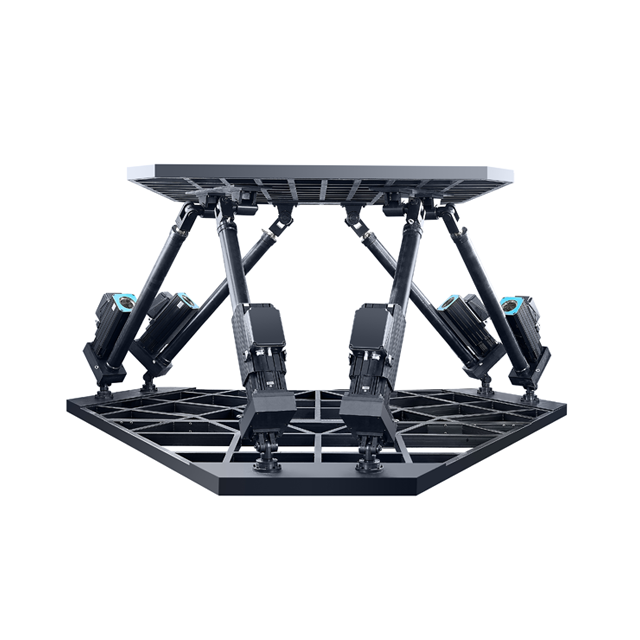
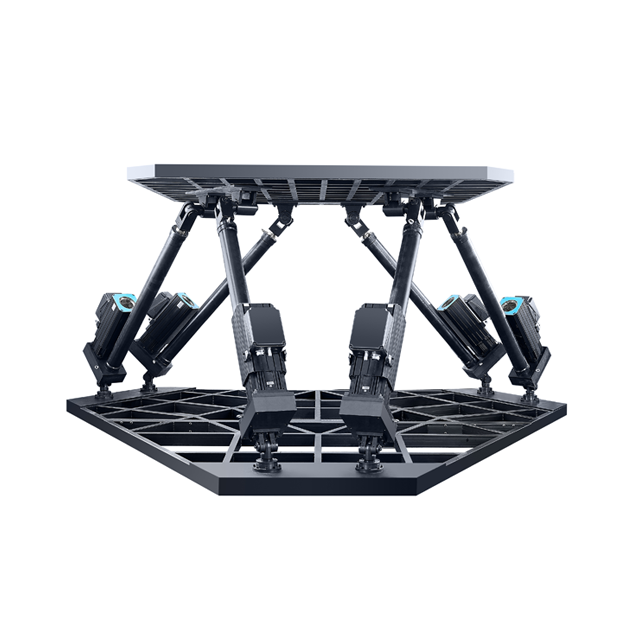
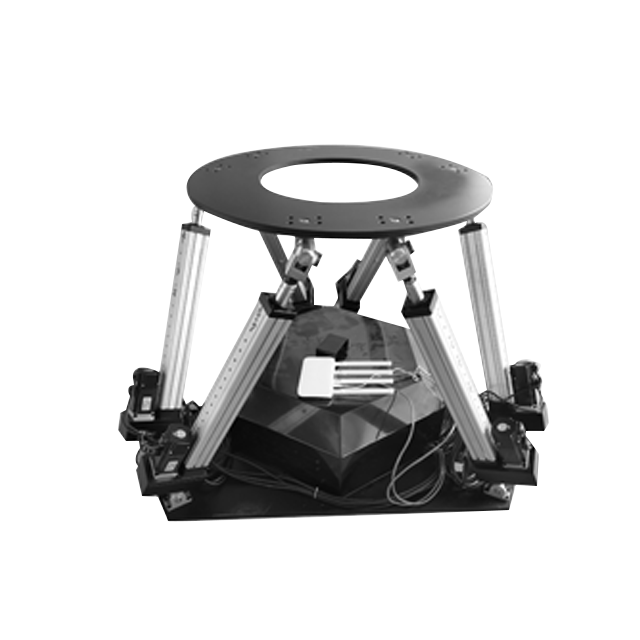
The Stewart platform, also known as the hexapod, is a six-degree-of-freedom parallel manipulator consisting of a fixed base and a movable platform, connected by six actuators. These actuators provide movement in three translational directions (X, Y, Z) and three rotational directions (pitch, roll, yaw). Originally developed in the 1950s by V.E. Gough and later popularized by D. Stewart in the 1960s, this design provided significant improvements in simulation, especially for flight and automotive testing.
The Stewart platform's capabilities, particularly its high stiffness and accurate motion, have made it a cornerstone in simulation systems. Early use cases were mostly limited to flight simulators, where it helped simulate complex flight dynamics like turbulence and emergency maneuvers, providing a safe environment for pilot training.
Key Features of Stewart Platforms
The Stewart platform’s parallel architecture offers high stiffness and superior load-bearing capacity compared to traditional serial manipulators. The six actuators distribute the load evenly, minimizing errors and improving the precision of motion. This makes it an ideal system for simulating dynamic movements, such as in flight simulators, vehicle dynamics, and industrial testing. These platforms, particularly those developed with advanced servo control systems, laid the groundwork for the 6DoF systems that would follow, capable of even greater precision.
Feature | Stewart Platform | Modern 6DoF System |
Degrees of Freedom | 6 (3 translational, 3 rotational) | 6 (3 translational, 3 rotational) |
Applications | Flight simulators, industrial testing | Flight simulators, medical robotics, VR, automotive |
Load Capacity | Moderate | High (up to 5000kg or more) |
Motion Control | Limited to basic testing | Real-time control, advanced algorithms |
Precision | High | Extremely high (with real-time feedback) |
The Evolution of Stewart Platforms to Modern 6DoF Systems
Early Applications and Limitations
Initially, Stewart platforms were mainly used for flight simulation, providing lifelike motion cues that replicated the experience of turbulence, acceleration, and various aircraft maneuvers. However, while these platforms offered high precision, they were limited in their ability to perform more complex tasks, such as micro-movement control or real-time dynamic motion adjustments for a broader range of industries.
As technology advanced, so did the demand for more flexible, adaptable systems. In particular, the need for platforms capable of supporting higher loads and delivering more complex, responsive movements led to the development of modern 6DoF systems.
Advancements in Technology
The evolution of Stewart platforms into modern 6DoF systems involved significant technological advances. Key developments included the integration of sensors like optical encoders, accelerometers, and gyros for closed-loop feedback, enhancing accuracy. Additionally, improvements in control algorithms enabled real-time motion planning, and miniaturization of platforms, using Shape Memory Alloy (SMA) actuators, allowed for more precise micro-movements.
Modern 6DoF platforms are now widely used in industries such as virtual reality, robotic surgery, and vehicle dynamics testing. Their ability to support up to 5000kg in some configurations, along with real-time feedback and precision servo control, has made them indispensable in creating immersive and highly realistic simulations.
Modern 6DoF Systems: A Broader Range of Applications
From Flight Simulators to Robotic and Surgical Precision
Modern 6DoF systems have expanded far beyond the confines of flight simulation. In medical fields, for example, 6DoF systems are used for precise robotic surgeries, such as neuroendoscopy, and in industrial applications for tasks like multi-axis vibration control and fluid dynamics testing. These platforms offer high precision and flexibility, making them essential in scenarios that demand exact motion and control.
The ability to move in all six degrees of freedom has made 6DoF technology especially useful in VR and other immersive environments. For instance, the application of 6DoF in VR motion platforms provides users with an incredibly realistic virtual environment that is crucial for applications in training, gaming, and therapeutic scenarios.
Use in Underwater and Space Exploration
Another significant advancement is the application of 6DoF systems in underwater and space exploration. The ability to precisely control motion in three-dimensional space is essential in these environments, where traditional mechanical systems often fall short. 6DoF platforms are used in underwater vehicles for navigation and exploration, as well as in space missions for accurately docking spacecraft and positioning satellites.
These platforms’ adaptability to extreme conditions, such as those encountered in deep-sea exploration or space, highlights the versatility and potential of modern 6DoF technology.
Industrial Applications
6DoF systems are also being increasingly used in industrial settings. From automotive manufacturing to high-precision research, these systems are employed to simulate realistic forces and motions, ensuring that products meet strict design and safety standards. For example, they are used in automotive testing to simulate road conditions or in aerospace for simulating aircraft motion in a dynamic environment.
The latest 6DoF motion platforms, capable of handling high loads, are particularly useful in industrial applications that require robust, high-performance simulations, such as those in heavy machinery testing or advanced R&D.
Application Area | Use of 6DoF Systems | Key Benefits |
Flight Simulators | Simulating flight dynamics, turbulence, and emergency scenarios | Enhances pilot training with real-world motion |
Medical Robotics | Robotic surgery, neuroendoscopy, and micro-surgeries | Provides precise control for delicate procedures |
Industrial Automation | Multi-axis vibration control, manufacturing robots | Improves production efficiency and product quality |
Space Exploration | Spacecraft docking, satellite positioning | Simulates motion in microgravity environments |
The Key Differences: Classical Stewart Platforms vs. Modern 6DoF Systems
Structural and Functional Differences
While Stewart platforms provide exceptional stiffness and precision, modern 6DoF systems have evolved with the addition of advanced sensors and control mechanisms. These systems leverage sophisticated algorithms to handle real-time motion planning, offering greater flexibility and capabilities than earlier Stewart platforms.
Compared to the simpler Stewart platform, which typically supported only flight simulation and static testing, modern systems support applications requiring highly adaptable movement across multiple industries.
Control and Computation Advancements
The major differences between the Stewart platform and modern 6DoF systems lie in control and computation. Modern systems use advanced AI and machine learning algorithms to improve their performance, reducing errors and enhancing system adaptability in real-time applications, such as surgery or industrial automation.
For example, systems like the ones used for industrial and VR simulations provide real-time feedback and use sophisticated algorithms to ensure smooth, continuous motion that is both accurate and dynamic.
The Role of Advanced Sensors and Control Systems
The Integration of Advanced Sensors
Modern 6DoF systems rely heavily on sensors, including accelerometers, gyros, and optical encoders, to provide real-time feedback and ensure precision. This closed-loop feedback system allows for accurate movement and adjustments, enabling the platforms to perform complex tasks that require high levels of precision.
This level of accuracy, combined with the ability to handle high loads, ensures that 6DoF systems can meet the demanding requirements of industries like aerospace, medical robotics, and advanced industrial simulations.
Advanced Control Systems and Algorithms
The use of advanced algorithms, such as nonlinear model predictive control and adaptive methods, has dramatically improved the control of 6DoF systems. These algorithms enable more accurate trajectory planning, real-time error compensation, and better overall system performance, even in complex, dynamic environments.
With real-time feedback and precision motion control, modern 6DoF platforms are now used in a wide array of industries, from flight simulators to surgical robots.
Challenges and Limitations in Implementing 6DoF Systems
Kinematic and Mechanical Challenges
One of the biggest challenges in implementing 6DoF systems is dealing with the complex kinematics involved. Calculating the motion and controlling each degree of freedom requires advanced mathematical models, and small errors can lead to large discrepancies in the system's performance. Additionally, the mechanical complexity of the actuators and sensors can increase costs and require regular maintenance.
Despite these challenges, modern 6DoF systems have become essential in fields where precision and reliability are paramount, such as aerospace and medical surgery.
Cost and Complexity
6DoF systems can be costly, both in terms of initial investment and ongoing maintenance. The complexity of the system’s design, along with the need for precision components, can make them inaccessible for small organizations or individual users. Furthermore, the systems' high precision and performance requirements can make them challenging to operate and integrate with existing technologies.
Challenge | Description | Impact on Implementation |
High Initial Cost | The advanced technology behind 6DoF systems increases their cost | Makes 6DoF systems less accessible for smaller businesses |
System Complexity | Requires high precision engineering and calibration | Increases the need for skilled operators and regular maintenance |
Large Space Requirements | Some 6DoF systems need significant space for operation | Limits installation options in smaller facilities |
Integration with Existing Systems | Integration of 6DoF with legacy systems requires custom solutions | Increases time and cost of implementation |
The Future of 6DoF Technology: Emerging Trends
AI and Machine Learning in Motion Systems
The integration of artificial intelligence and machine learning is poised to further advance 6DoF technology. AI algorithms can improve the accuracy and reliability of motion systems, enabling more complex and adaptive behavior, especially in applications like surgery, autonomous vehicles, and industrial robotics.
Consumer and Industrial Integration
As 6DoF technology becomes more advanced, it is expected to be integrated into a wider range of consumer and industrial products. For instance, the growing use of 6DoF systems in consumer electronics such as VR headsets and gaming platforms is set to expand further, offering more immersive and interactive experiences for users.
Sustainability and Environmental Considerations
Sustainability in 6DoF systems is becoming increasingly important. Future platforms will likely focus on energy efficiency, reduced environmental impact, and the use of recyclable materials. The shift to electric actuation systems, for example, reduces the reliance on hydraulics and lowers the carbon footprint of manufacturing and usage.
Conclusion
The transition from the Stewart platform to modern 6DoF systems marks a significant evolution in motion technology. With advancements in precision, flexibility, and application, 6DoF systems are now essential across various industries like aerospace and healthcare. As technology progresses, these systems will open new doors for innovation in robotics, space exploration, and consumer electronics.
FDR offers cutting-edge 6DoF platforms that provide unmatched precision. These solutions are vital for industries requiring high-performance motion control.
FAQ
Q: What is a Six Degree of Freedom (6DoF) system?
A: A 6DoF system allows motion across six axes: three translational and three rotational. It provides high precision in various applications, including flight simulators and robotics.
Q: How do modern 6DoF systems improve precision motion control?
A: Modern 6DoF systems use advanced sensors and algorithms for real-time feedback. This ensures greater accuracy, flexibility, and precision in industries like aerospace, healthcare, and VR.
Q: Why are Stewart platforms considered the foundation of 6DoF systems?
A: Stewart platforms provided a stable base for early motion simulators. They paved the way for modern 6DoF systems with enhanced capabilities for complex motion control.
Q: What are the advantages of using 6DoF in robotics and automation?
A: 6DoF systems offer precise control for robotic arms, improving accuracy in manufacturing, surgery, and other applications that require intricate movements.


