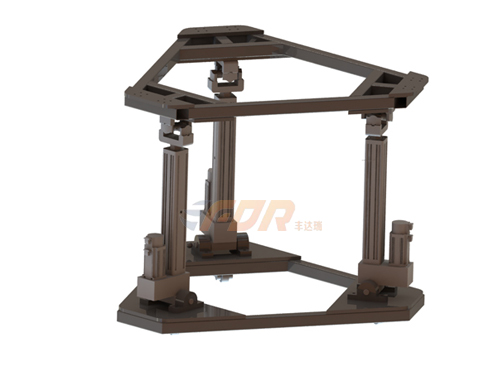
Imagine stepping into a virtual cockpit, drifting across digital waves, or training for high-stakes missions — and feeling every movement, tilt, and vibration.
That’s not science fiction; it’s the power of a 3DOF Motion Platform — also known as a 3-Axis Motion Platform or Three Degree of Freedom System.
These platforms simulate roll, pitch, and heave motion — tilting, rocking, and lifting to mirror real-world dynamics. In Virtual Reality (VR), this transforms ordinary visuals into multisensory experiences that your body can actually feel.
For developers, educators, and industries using VR training simulators, 3DOF motion systems are redefining what immersion means.
The Role of 3DOF Motion Platforms in VR Immersion
Virtual Reality is no longer just visual. Today’s users expect physical realism — the ability to feel motion, gravity, and inertia in sync with what they see in the headset.
A 3DOF Motion Platform bridges that sensory gap by adding realistic movement feedback to the virtual world.
How It Works
Roll – simulates tilting from side to side, like turning a car or aircraft.
Pitch – simulates front-to-back motion, such as climbing or descending.
Heave – provides vertical movement, reproducing lift, bumps, or waves.
When paired with a VR headset, these three degrees of motion align your body’s balance system (the vestibular sense) with your visual experience — eliminating disconnect and dramatically boosting immersion.
VR Insight: Studies show that synchronized motion feedback can improve user presence and realism perception by up to 60%, and reduce VR motion sickness significantly.
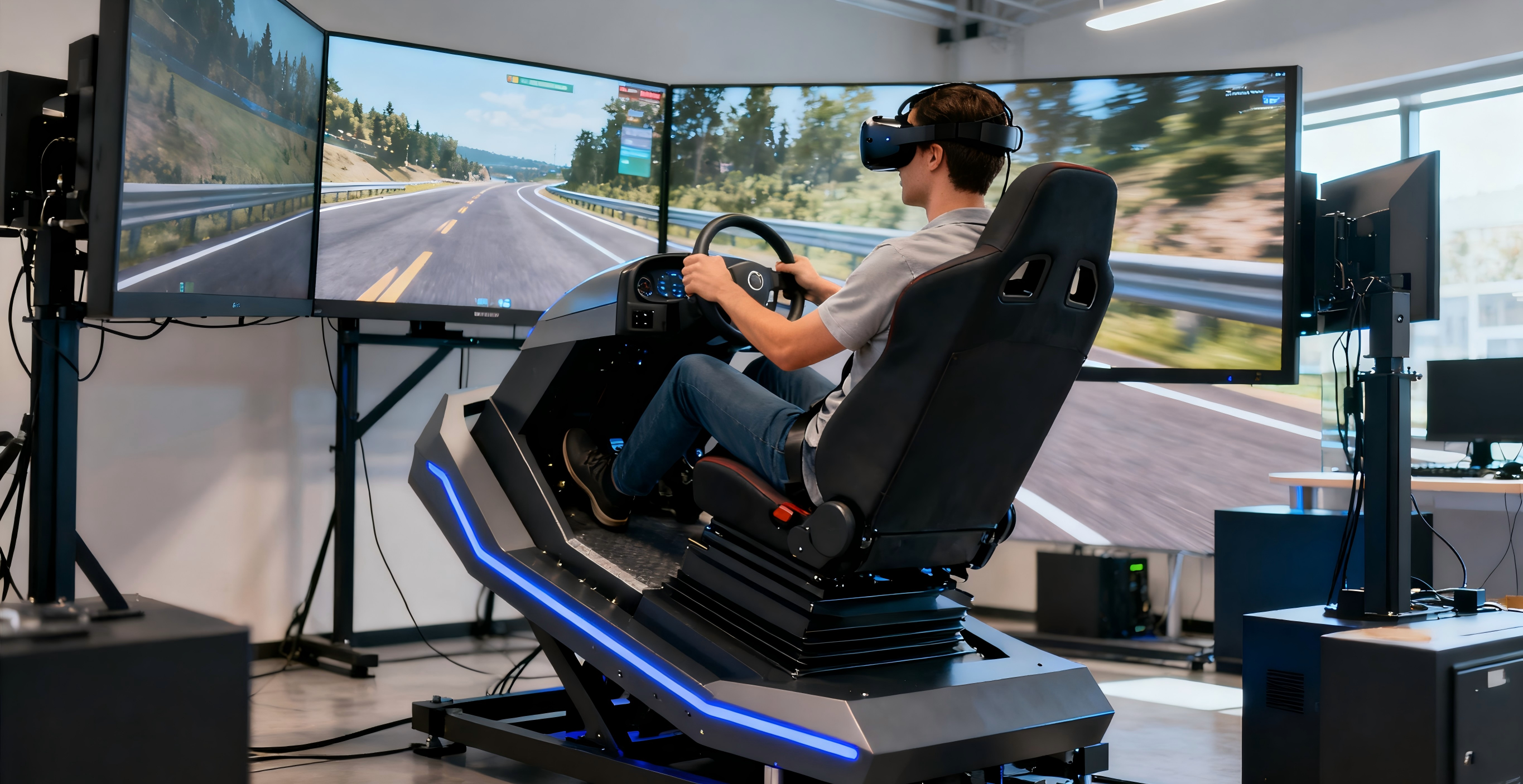
Why VR Developers Choose 3DOF Over Static Simulators
Traditional VR setups rely solely on visuals and sound. While effective, they lack the physical dimension that makes experiences truly believable.
By integrating a 3DOF Motion Platform, you introduce tactile realism — the missing link between virtual vision and real-world sensation.
Core Advantages for VR Applications
Multisensory Immersion: Feel acceleration, tilt, or turbulence in sync with visuals.
Increased Retention & Engagement: Physical feedback enhances cognitive learning and recall in training environments.
Compact Design: The 3-Axis configuration fits in studios, classrooms, and entertainment centers without the complexity of higher-degree systems.
Plug-and-Play Compatibility: Works with major VR engines such as Unity, Unreal Engine, or SimTools.
Scalable Motion Profiles: From smooth medical testing to high-energy gaming, tailor motion intensity to the experience.
Real-World Applications of 3DOF Motion Platforms
1. VR Training and Simulation
Organizations worldwide are adopting 3DOF simulators to train drivers, pilots, operators, and emergency responders in safe, repeatable virtual environments.
A 300 kg payload platform supports full seating modules and equipment, giving trainees physical cues that replicate real-world motion — without risk or cost.
2. Medical and Rehabilitation VR
In healthcare, Three Degree of Freedom Systems create controlled motion environments for rehabilitation, physical therapy, and vestibular research.
Subtle, adjustable motion helps patients retrain balance, coordination, or motor control while clinicians track data in real time.
3. Defense and Safety Training
Military and security organizations use 3-Axis motion simulators to mimic vehicle maneuvers, aircraft turbulence, or marine motion.
The immersive experience builds muscle memory and situational awareness without real-world danger.
4. VR Entertainment and Experiences
From VR roller coasters to racing simulators, 3DOF platforms amplify thrill and realism.
The synchronized motion turns digital scenes into visceral sensations — making users feel they’re flying, driving, or diving.
That emotional connection is what keeps visitors coming back.
VR Tip: Pair a motion platform with spatial audio and haptic feedback for full sensory immersion — users won’t just see the virtual world; they’ll believe it.
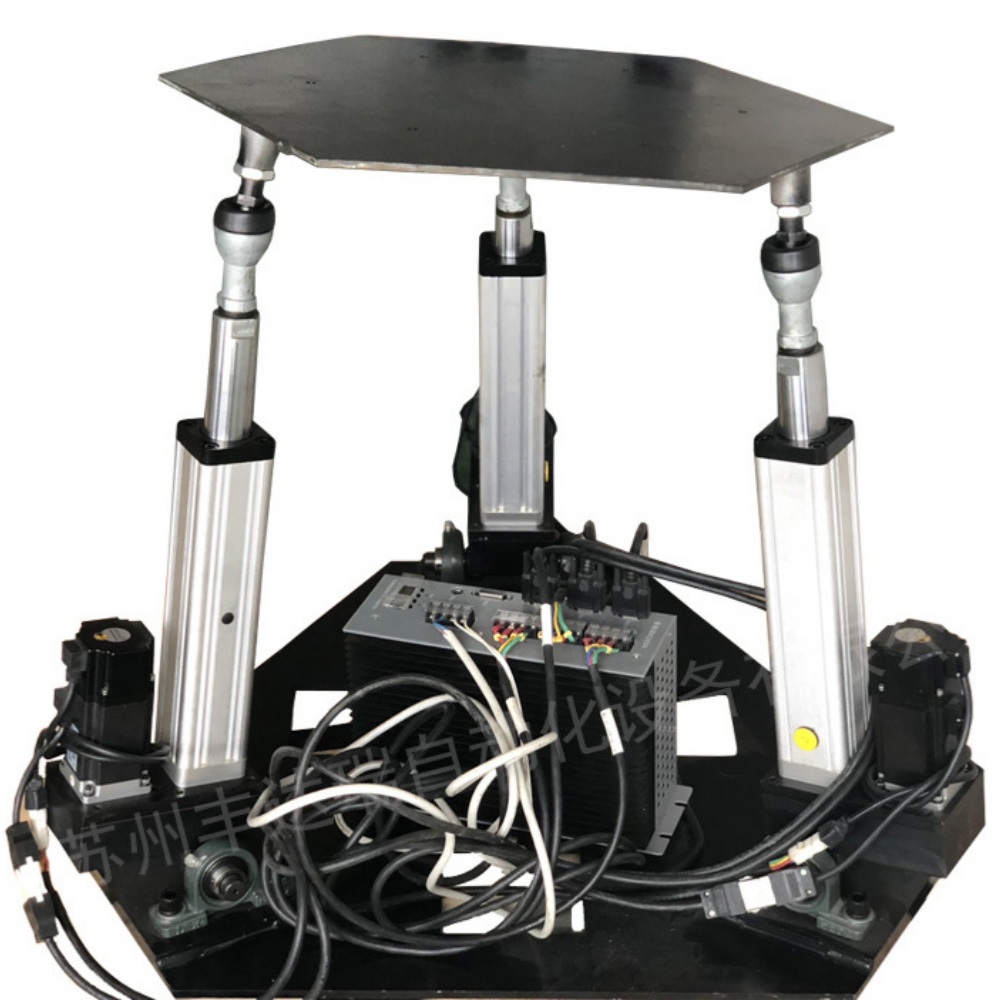
Customization for Every VR Scenario
Every VR application is unique — so your motion platform should be too. The 300 kg payload 3DOF Motion Platform can be tailored to your operational, spatial, and performance needs.
| Customizable Feature | Description | Benefit |
| Payload Capacity | Adjustable around 300 kg | Supports seats, cockpits, or specialized VR rigs |
| Platform Dimensions | Adaptable base/top frame sizes | Fits compact VR pods or larger simulator cabins |
| Control Systems | Analog or PC-based servo control | Integrates with VR engines and real-time motion data |
| Motion Profiles | Tunable speed, stroke, acceleration | Matches application needs (training, therapy, entertainment) |
Integration Tip: Work with your VR content developer and hardware provider together — aligning software motion data with platform behavior ensures lifelike synchronization.
Benefits for VR and Training Environments
Immersive Learning and Skill Retention
In VR training simulators, realistic motion feedback enhances spatial memory, situational awareness, and reaction timing.
Trainees “learn by feeling,” which significantly improves long-term skill retention.
Engagement and Motivation
In both education and entertainment, physical immersion increases emotional connection.
Users are more engaged, perform better, and remember longer when they can physically experience their virtual environment.
Versatility and Low Maintenance
The electric, servo-controlled design ensures smooth, quiet operation — ideal for offices, labs, and VR arcades.
With minimal maintenance and zero hydraulic systems, it’s clean, efficient, and reliable.
Safety and Stability
Built-in safety features like E-stop, mechanical brakes, and limit sensors keep both users and hardware secure.
Perfect for public installations or long simulation sessions.
Technical Highlights
| Feature | Specification |
| Degrees of Freedom | 3 (Roll, Pitch, Heave) |
| Payload Capacity | 300 kg |
| Actuation Type | Electric servo, closed-loop feedback |
| Noise Level | <55 dB – quiet enough for medical and VR labs |
| Control Compatibility | Unity, Unreal Engine, SimTools |
| Safety Features | Emergency stop, mechanical lock, limit detection |
| Power Supply | 220 V AC (single or three-phase) |
The Future of Motion-Enhanced VR
As virtual reality training expands in defense, healthcare, and entertainment, 3-Axis Motion Platforms are becoming indispensable.
They bridge the sensory gap between virtual and physical worlds, delivering authentic experiences that visuals alone cannot achieve.
Emerging VR ecosystems now integrate AI-based motion tuning and biometric feedback — allowing the platform to adjust dynamically to a user’s comfort level, heart rate, or motion response.
The result? A future where VR doesn’t just simulate reality — it feels like it.
FAQ
Q: What makes a 3DOF Motion Platform essential for VR?
A: It adds physical realism by simulating roll, pitch, and heave, letting users feel acceleration, gravity, and terrain changes in sync with visual VR content.
Q: Can I use a 3-Axis Motion Platform for both training and entertainment?
A: Yes. Its flexible motion profiles adapt to use cases ranging from professional flight or medical simulators to amusement rides and VR arcades.
Q: How does it improve VR training outcomes?
A: Motion feedback enhances spatial awareness, balance, and decision-making — making training safer, faster, and more memorable.
Q: Is the 3DOF system compatible with modern VR software?
A: Absolutely. It integrates with leading engines like Unity and Unreal, plus motion middleware such as SimTools for real-time motion synchronization.
Q: What’s the maintenance like?
A: The platform uses electric servo systems — no hydraulics — meaning lower noise, minimal upkeep, and long-term reliability for continuous operation.
Conclusion
A 3DOF Motion Platform is more than equipment — it’s the bridge between imagination and physical reality.
By merging movement, vision, and emotion, it transforms virtual experiences into tangible, unforgettable journeys.
Whether you’re developing training simulators, medical research tools, or entertainment experiences, the Three Degree of Freedom System delivers the realism your users crave.
Explore advanced 3-Axis Motion Platforms and VR solutions at FDR Automotive Industry.


