Introduction
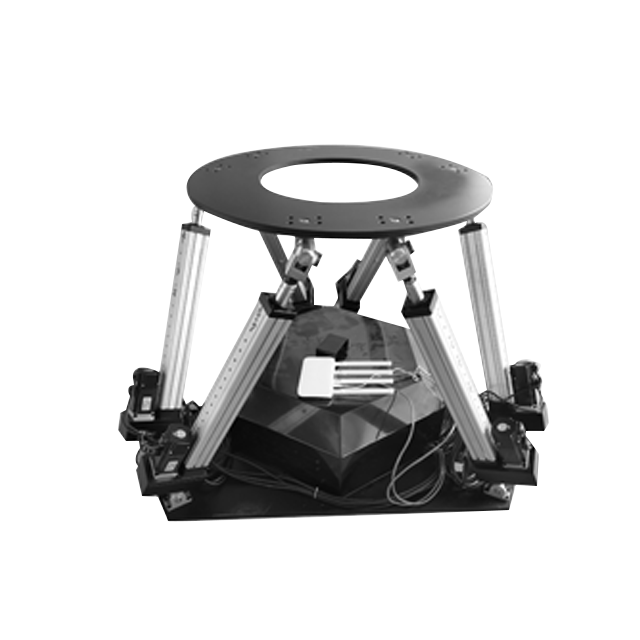
How do you make simulations feel like real life? The answer lies in Six Degree of Freedom (6DoF) technology. With its ability to move in all six axes—three translational and three rotational—6DoF provides unparalleled realism in simulation environments.
In this article, we will explore how 6DoF systems enhance training, research, and entertainment. You will understand how these systems create immersive, lifelike experiences that are crucial for industries like aerospace, robotics, and virtual reality.FDR offers advanced 6DoF platforms that bring realistic simulations to life. Learn more about our products.
Enhancing Realism with 6DoF in Simulation Environments
Realism in simulations is critical, particularly in training environments where the goal is to prepare individuals for real-world challenges. 6DoF technology enhances simulations by providing accurate motion feedback, enabling users to interact with virtual worlds in a manner that mirrors real physical dynamics.
Full Immersion in Training Simulations
Flight simulators are one of the most advanced applications of 6DoF technology. These simulators replicate not just the visual aspects of flight, but also the physical forces that pilots experience, such as turbulence, altitude changes, and sharp maneuvers. By simulating these conditions in full 6DoF, pilots gain a richer, more realistic training experience.
Similarly, in professional racing simulators, 6DoF systems can simulate high-speed dynamics and precise vehicle movements, giving drivers the ability to experience real-world conditions without leaving the training room. The accurate portrayal of motions like rapid deceleration or cornering at high speeds helps drivers refine their skills and prepare for real-world challenges.
Increased Interactivity in Virtual Environments
6DoF technology significantly enhances the interactivity of virtual environments. In VR applications, this level of motion tracking allows users to walk, lean, crouch, or rotate in any direction. This not only improves immersion but allows for complex user interactions with the virtual environment, making it feel like a natural extension of the real world.
The addition of full spatial freedom through 6DoF systems in VR gaming and training provides a more realistic and engaging user experience, which is crucial for applications ranging from entertainment to professional training.
Accurate Replication of Real-World Physics
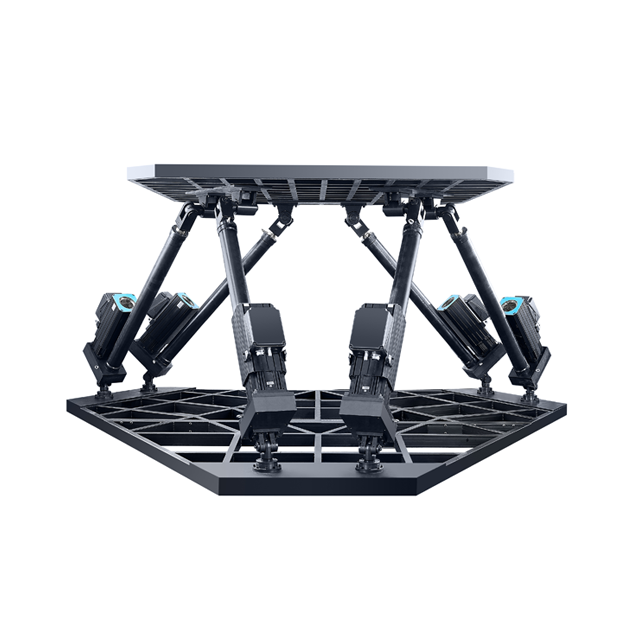
One of the key aspects of realism in simulations is the accurate replication of real-world physics. With 6DoF systems, physical interactions such as gravity, inertia, and acceleration can be simulated with high precision. This enables the creation of simulations that closely mimic real-world conditions, such as the forces at play in aviation, automotive engineering, or robotics.
For example, in a robotic simulation, the ability to move a robotic arm with 6DoF allows for the replication of real-world tasks like picking up objects from various angles, mimicking how a robot would interact in an actual environment.
Simulation Type | Key Benefits | Role of 6DoF in Realism |
Flight Simulators | Realistic flight dynamics and emergency training | Simulates turbulence, altitude changes, sharp turns |
Racing Simulators | Vehicle dynamics, high-speed maneuver training | Replicates acceleration, deceleration, and cornering |
Driver Training | Handling complex driving scenarios | Real-world feel of vehicle response and forces |
VR Simulations | Immersive interaction and physical movement | Provides full spatial freedom and real-time feedback |
Key Applications of 6DoF Systems in Real-World Simulations
6DoF technology has broad applications across various industries. It provides not only realism but also flexibility and accuracy in recreating real-world scenarios for training, research, and development.
Flight Simulators and Aerospace Training
In aerospace, flight simulators have become an essential tool for pilot training. 6DoF systems replicate the movements and forces experienced during flight, such as turbulence and maneuvering. This realistic environment prepares pilots for a wide range of situations, from routine flights to emergency scenarios. The ability to simulate these complex movements makes 6DoF systems invaluable for ensuring pilots receive the highest quality training.
Robotics and Industrial Applications
In robotics, 6DoF platforms are used for tasks that require high precision, such as manufacturing, assembly, or surgery. These systems enable robots to move and manipulate objects with great accuracy, making them essential in industrial automation and medical applications. For instance, a robotic arm equipped with 6DoF can replicate human-like movements, allowing for complex procedures that require dexterity and flexibility.
Vehicle Dynamics and Driver Training
6DoF motion platforms are equally beneficial in driver training and vehicle dynamics testing. In this context, the system replicates the motion and forces a driver would experience in real-world driving conditions, including acceleration, braking, and handling in various terrains. This makes it possible to simulate hazardous or high-risk scenarios safely, without the need for actual driving.
For automotive R&D, 6DoF platforms offer valuable insights into vehicle performance, helping engineers test and refine vehicle systems under realistic conditions. Whether it's for testing suspension systems, handling under extreme speeds, or analyzing crash simulations, 6DoF motion technology is critical for modern vehicle development.
Military and Defense Simulations
For military training, 6DoF systems offer simulations of combat, navigation, and mission execution in a realistic environment. Soldiers and pilots can train in virtual environments that simulate real-world battlefield dynamics. The level of immersion offered by 6DoF ensures that trainees gain valuable experience in a safe but highly accurate environment.
The Benefits and Challenges of 6DoF Simulation Systems
6DoF systems are powerful tools for creating realistic simulations, but like any advanced technology, they come with both advantages and challenges.
Key Benefits of 6DoF Systems
● Realism and Immersion: The most significant advantage of 6DoF systems is their ability to replicate realistic motions. Whether it's turbulence in a flight simulator or acceleration in a car, these systems provide a more immersive experience that enhances the learning process.
● Precision and Flexibility: 6DoF systems offer precise motion tracking, making them ideal for applications requiring high accuracy, such as robotics or surgery. Additionally, their ability to simulate a wide range of movements makes them highly flexible for use in various industries.
● Improved Training Outcomes: By offering realistic simulations, 6DoF systems enhance training effectiveness. Trainees can experience real-world conditions, improving their skills and reactions before encountering those situations in real life.
The Challenges of 6DoF Simulators
● Cost: 6DoF systems tend to be more expensive than simpler alternatives due to their advanced technology and precision. This can make them a significant investment for smaller organizations or individuals.
● Complexity and Maintenance: 6DoF simulators require regular maintenance and calibration to ensure they function properly. This complexity can be a barrier for organizations that lack the technical expertise or resources to maintain these systems.
● Space Requirements: These systems require large physical spaces to accommodate the full range of movement, which can limit their suitability for smaller environments.
Benefit | Description |
Realism and Immersion | Enables lifelike movement and interaction, increasing engagement in simulations. |
Precision and Flexibility | Allows for accurate simulations across industries like robotics, automotive, and aerospace. |
Improved Training Outcomes | Provides realistic conditions for better skill development and faster learning curves. |
Enhanced User Engagement | The immersive experience ensures that users are fully engaged in training or entertainment environments. |
Comparing 3DoF vs. 6DoF for Simulation Environments
When choosing between 3DoF and 6DoF systems, it is essential to consider the specific needs of the simulation.
Key Differences in Motion Control
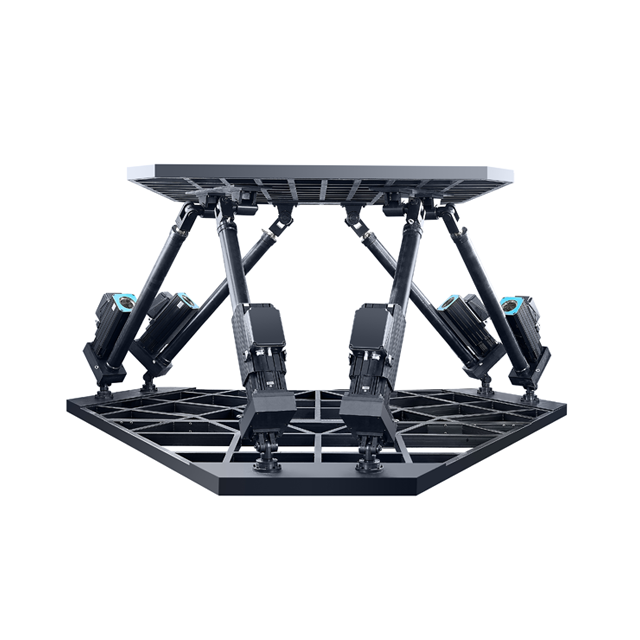
While 3DoF systems offer motion in three axes, they are limited in terms of the range of movement compared to 6DoF. 3DoF systems typically provide rotational movements (pitch and roll) and one translational movement (heave), which are suitable for simpler simulations. 6DoF, on the other hand, provides comprehensive control, offering six distinct motions that replicate real-world dynamics more accurately.
Choosing the Right System for Your Needs
For basic simulations or environments where full spatial freedom is not required, a 3DoF system may suffice. However, for applications where high levels of realism and interaction are needed—such as flight training, robotics, or VR—6DoF systems are the better choice.
Feature | 3DoF System | 6DoF System |
Motion Axes | 3 (Roll, Pitch, Yaw) | 6 (Surge, Sway, Heave, Roll, Pitch, Yaw) |
Simulation Accuracy | Limited to rotational movements | Full range of movements for accurate, dynamic simulations |
Realism | Basic realism for simpler applications | High realism for immersive, high-precision training and entertainment |
Applications | Basic simulations (e.g., entry-level flight simulators) | Advanced applications (e.g., aviation, robotics, vehicle dynamics) |
Future Trends and Advancements in 6DoF Technology
As technology continues to advance, we can expect several developments that will improve the accessibility and performance of 6DoF systems.
Advancements in Sensor and Control Technologies
The integration of advanced sensors and control systems, including AI and machine learning, will improve the accuracy and responsiveness of 6DoF systems. These innovations will make 6DoF technology more accessible, reducing costs and increasing system reliability.
Integration with Consumer Electronics and Extended Reality (XR)
With the growth of XR technologies, we can expect 6DoF systems to become more integrated into consumer electronics, making immersive experiences available to a broader audience. This will open up new opportunities for entertainment, education, and remote work applications.
6DoF in Space Exploration
As space exploration advances, 6DoF technology will be crucial for training astronauts and controlling spacecraft in microgravity environments. The ability to simulate movement in space is vital for astronaut training, navigation, and mission execution.
Conclusion
Six Degree of Freedom (6DoF) technology enhances realism, precision, and interactivity in simulations. Whether in flight simulators, robotics, or VR platforms, 6DoF systems improve training effectiveness and user engagement. As AI, sensors, and XR technologies evolve, 6DoF will become increasingly vital across industries.
FDR offers high-performance 6DoF systems that bring unparalleled realism and precision to simulations. Their advanced platforms provide significant value in training, entertainment, and professional applications.
FAQ
Q: What is Six Degree of Freedom (6DoF) technology?
A: 6DoF refers to the ability to move in all six axes: three translational and three rotational. This enables realistic simulations, especially in flight simulators, robotics, and VR platforms.
Q: How does 6DoF enhance training simulations?
A: 6DoF provides realistic motion feedback, allowing trainees to experience real-world dynamics. It improves interactivity and immersion in simulations, from flight training to automotive testing.
Q: Why is 6DoF important for VR and gaming simulations?
A: 6DoF allows users to move freely in any direction, offering a more immersive experience. It tracks all physical movements, making VR simulations feel more lifelike and interactive.
Q: What are the main advantages of 6DoF systems in robotics?
A: 6DoF enables precise robotic movements, allowing for complex tasks like assembly and surgery. It offers flexibility and accuracy in industrial applications and research.


